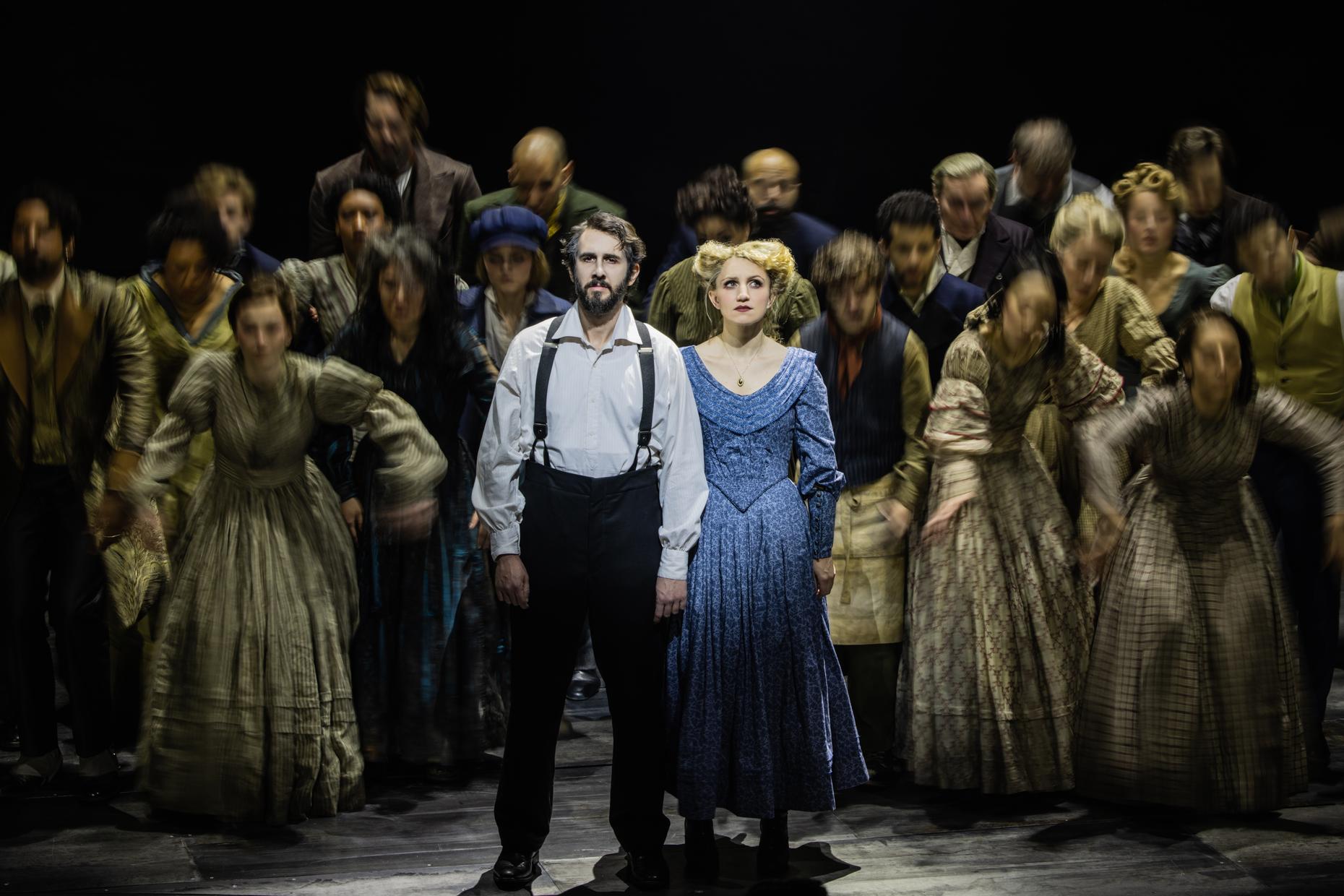
You probably think you know the tale of Sweeney Todd. Most folks do. They picture Johnny Depp with a streak of white hair, singing while he slashes throats in a dark, Victorian attic. Or maybe they think of the Broadway stage, where the "Demon Barber of Fleet Street" serves as a tragic anti-hero seeking revenge against a corrupt judge.
But honestly? The real story is way messier. And it’s definitely weirder.
Most people are shocked to find out that Sweeney Todd wasn’t originally a hero. He wasn't even a victim. When he first appeared in the mid-19th century, he was a straight-up villain with no excuses. He didn't have a tragic backstory. He just liked money and didn't mind killing people to get it.
The tale of Sweeney Todd isn't just a spooky legend; it’s a masterclass in how a character can be completely rewritten over two centuries to fit what an audience wants to see.
Where did the Demon Barber actually come from?
The character first popped up in a "penny dreadful" called The String of Pearls, published between 1846 and 1847. If you aren't familiar with penny dreadfuls, think of them as the 19th-century version of clickbait. They were cheap, sensationalized serial stories sold to the working class for a penny. They were violent. They were crude. And they were wildly popular.
Thomas Peckett Prest is usually credited with writing it, though some historians point toward James Malcolm Rymer. Regardless of who held the pen, the Sweeney Todd they created was a monster. In The String of Pearls, Todd is described as having a "revolting" appearance. He’s tall, awkward, and has a laugh that sounds like a "discordant howl."
There was no Judge Turpin. No Lucy. No daughter named Johanna that he was trying to rescue.
Basically, he was just a barber who had a clever chair. He’d pull a lever, the customer would flip through a trapdoor into the cellar, and if the fall didn't kill them, Todd would go down and "polish them off" with his razor. Then, of course, Mrs. Lovett—who was his partner in crime, not a love interest—would bake them into pies.
It was a business transaction. Pure and simple.
The big debate: Was he real?
This is where things get kind of heated among historians. For decades, people have tried to prove that Sweeney Todd was a real person. You’ll find articles claiming he was born in Stepney in 1756 and executed at Newgate in 1802.
But there’s a problem.
There is zero record of a "Sweeney Todd" being executed at Newgate during that time. There’s no trial transcript. No police report. Nothing. Peter Haining, an author who wrote The Mystery of Sweeney Todd, claimed he found evidence of the barber’s existence, but most modern scholars—like Mack and Manley—have debunked his findings. They argue Haining might have "embellished" his research to make a better story.
It’s more likely that the tale of Sweeney Todd is a "city myth" based on real-life fears.
London in the 1800s was terrifying. It was overcrowded, filthy, and people disappeared all the time. The idea that the person grooming you—someone holding a blade to your throat—could be a killer was a very real, visceral anxiety.
There were, however, real-life inspirations.
In 1800, a Parisian barber and a pastry cook were reportedly arrested for a similar "human pie" scheme. The Journal des Débats covered it, and the story eventually made its way to London. It’s highly probable that Prest or Rymer took that nugget of truth from France and transplanted it into the foggy streets of London to scare the locals.
How Sondheim changed everything
If we only had the penny dreadfuls, Sweeney Todd would have been forgotten. He’d be just another forgotten villain from a cheap magazine.
But then came Christopher Bond.
In 1973, Bond wrote a play that gave Todd a motive. He introduced the idea that Todd was a wrongly exiled convict named Benjamin Barker who returned to London to find his life destroyed. Suddenly, he wasn't just a murderer; he was a victim of a broken justice system.
Stephen Sondheim saw that play and thought, "This needs to be an opera."
Sondheim’s 1979 musical transformed the tale of Sweeney Todd into a masterpiece of psychological horror and social commentary. He added the music. He added the complexity. He made us actually feel bad for the guy. That’s the version most of us know today—the one where the "meat pie" element is a commentary on how "man devours man" in a capitalist society.
It’s a far cry from a guy in 1846 just trying to steal a sailor’s pocket watch.
The Mrs. Lovett Factor
We have to talk about Mrs. Nellie Lovett. In the original stories, she was arguably more cold-blooded than Sweeney. She ran the shop with an iron fist and famously kept a "captive" in the basement to help bake the pies. If they went crazy or tried to escape, she’d just kill them and find a new worker.
In modern versions, she’s often portrayed as a pining, lonely woman who is "hopelessly in love" with Todd.
Angela Lansbury played her as a comedic, manipulative opportunist. Helena Bonham Carter played her as a goth, lovestruck waif. But the truth is, in the historical context of the story, she represents the most chilling part of the tale: the person who profits from the violence without getting their hands (mostly) bloody.
Why the story still creeps us out
Why do we keep retelling this? We’ve had movies, ballets, plays, and even a TV movie starring Ray Winstone.
It’s because the tale of Sweeney Todd taps into "urban legends" that never really go away. It’s the "fear of the unknown ingredient." It’s the same reason people joke about what’s really in a hot dog or a fast-food nugget.
There is something deeply disturbing about the perversion of the domestic. A pie is supposed to be comforting. A barber shop is supposed to be a place of trust. When you take those "safe" things and turn them into a conveyor belt for murder, it sticks in the brain.
Also, London itself is a character in this story.
The Victorian era was obsessed with the "double life." On the surface, everything was polite and proper. Underneath? It was all sewer water and crime. Sweeney Todd is the personification of that duality. He’s a "respectable" businessman by day and a butcher by night.
Spotting the myths in the modern retellings
When you’re watching a version of the tale of Sweeney Todd, it’s fun to look for the "inventions" that weren't in the original lore.
- The "Beadle" and the Judge: These are mostly later additions to give Todd a "boss" to fight.
- The Barber's Chair: The original chair was much more mechanical and complex than the simple "dumping" chairs seen in movies.
- Tobias Ragg: In the original, he’s just a kid who gets suspicious. In the musical, he’s a tragic figure who ends up in an asylum.
If you want to get closer to the "real" Sweeney, you have to look past the makeup and the singing. You have to look at the grimy, 1840s London where people were genuinely afraid that the guy cutting their hair might just be looking at the gold chain around their neck.
Actionable insights for fans and researchers
If you're fascinated by the Demon Barber, don't just stop at the movies. To really understand the legend, you should look into the actual history of the "penny bloods."
- Read the original text: You can find The String of Pearls online for free. It’s long, rambling, and surprisingly funny in a dark way. It’ll give you a much better sense of the character’s roots.
- Check out the Old Red Lion: If you're ever in London, visit the areas around Fleet Street. While the specific shop at "186 Fleet Street" is a myth, the atmosphere of the narrow alleys helps explain why these stories felt so real to Victorians.
- Study the French Connection: Research the "Barber and Pastry-cook of the Rue de la Harpe." It’s the most likely real-world origin for the story and offers a fascinating look at how news traveled in the 18th century.
- Look for the "Penny Dreadful" museum exhibits: Occasionally, the British Library or the Museum of London will run exhibits on these publications. Seeing the original lurid illustrations changes how you view the "high art" versions of the story.
The tale of Sweeney Todd is constantly evolving. It started as a cheap thrill for the poor, became a grand tragedy for the elite, and now exists as a staple of pop culture. Whether he was a real man or just a campfire story told in the slums, he remains the most famous barber in history for a reason. Just maybe... think twice next time you're offered a "meat pie" in a weird part of town.
To explore more about the dark side of Victorian London, you might want to look into the "Newgate Calendar," which was a real-life record of criminals that inspired many of the fictional stories of that era. It’s a rabbit hole, but a fascinating one.