It’s just a tiny, rectangular scrap of blue paper. If you saw it on the floor of a dusty attic, you might honestly sweep it into the trash without a second thought. But in the high-stakes world of philately—that’s stamp collecting for the rest of us—this specific scrap is basically the Holy Grail. We are talking about the 1868 1-cent Z Grill. It isn't just a hobbyist’s dream; it’s a financial titan.
In 2024, this single stamp sold at a Robert A. Siegel Auction Galleries event for a staggering $4.385 million. That is more than most people earn in a lifetime, all for a piece of adhesive paper that originally cost a penny.
Why? It’s not because it looks particularly beautiful. It’s not made of gold. The value comes from a weird technical experiment by the U.S. Post Office that failed. They were trying to stop people from cleaning the cancellation ink off stamps to reuse them. To do this, they pressed a "grill" into the paper—a pattern of tiny indentations designed to break the paper fibers so the ink would soak in deep. The "Z" grill was one of these experimental patterns. It turns out, they didn't make many. Only two are known to exist in the entire world. One is locked away in the New York Public Library. The other? That’s the one that just shattered records.
What Makes the Most Expensive US Stamp So Rare?
Most people assume "old" means "expensive." That’s a total myth. There are millions of stamps from the 1800s that are worth about fifty cents because the Post Office printed billions of them. Rarity is the only thing that actually moves the needle in this market.
The 1-cent Z Grill features Benjamin Franklin. At a glance, it looks exactly like the common 1-cent stamps of the era. To find the treasure, you have to flip it over and look at the "grill" marks. The "Z" pattern is distinguished by its specific dimensions and the horizontal ridges. If the ridges were vertical, it’d be a different, much cheaper grill. We are talking about differences measured in fractions of a millimeter. It’s the kind of thing that requires a magnifying glass and a very steady hand.
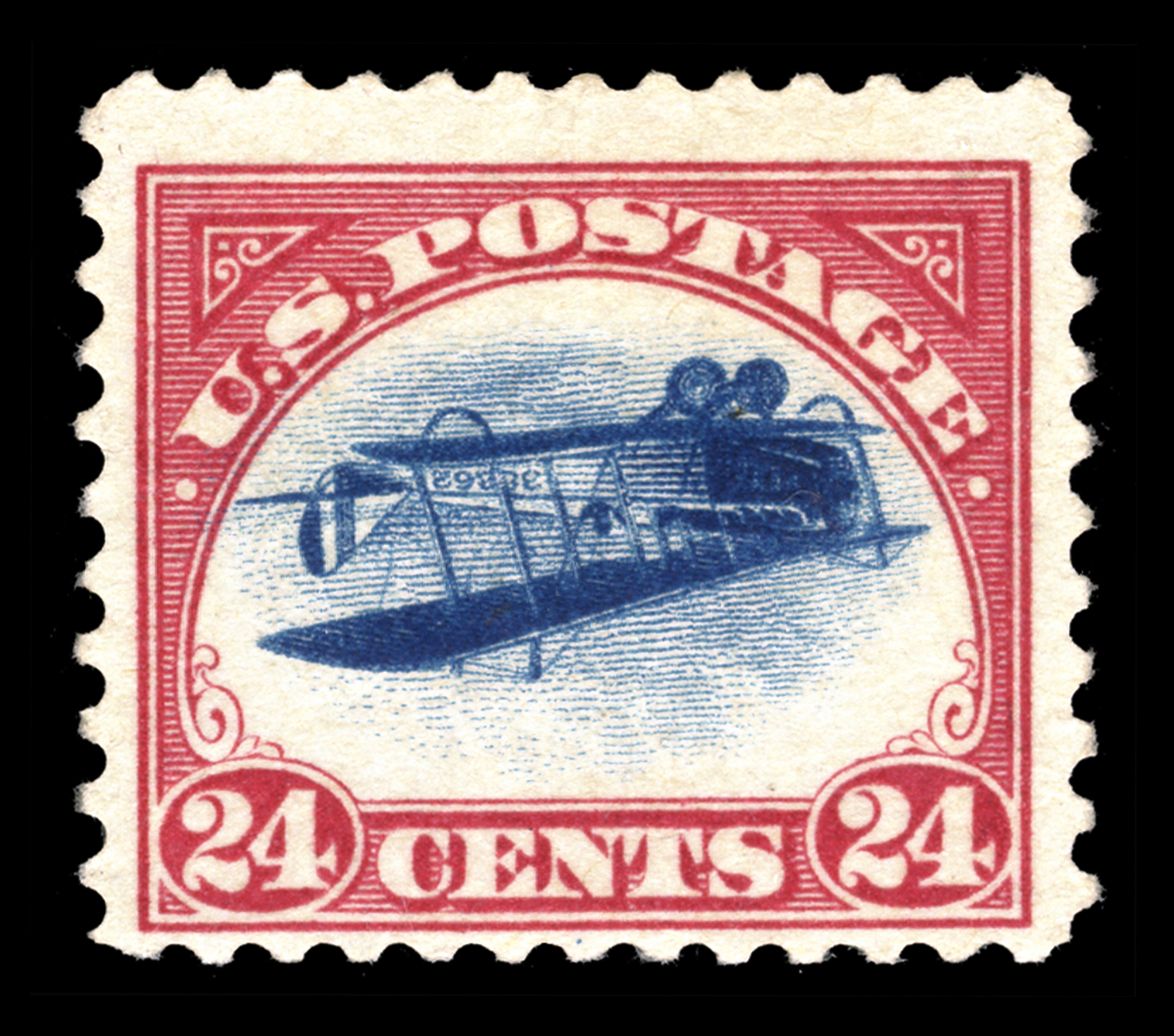
There's a bit of drama in the history here, too. For a long time, the most famous "expensive" stamp was the Inverted Jenny—the one with the upside-down airplane. While the Jenny is iconic and certainly pricey, it’s actually common compared to the Z Grill. There are 100 Inverted Jennies. There are only two 1-cent Z Grills. When billionaire investor Bill Gross decided to sell his legendary collection in 2024, the philatelic world held its breath. Gross had actually traded a block of Inverted Jennies just to get his hands on that Z Grill years prior. That tells you everything you need to know about the hierarchy of rarity.
The Mystery of the Second Stamp
You might be wondering where the other one is. If there are two, why can't you buy the other one? Well, it’s currently part of the Benjamin Miller Collection, which was donated to the New York Public Library back in 1925. It’s basically off the market forever. This creates a "monopoly of one."
If you want to own the most expensive US stamp, there is literally only one available for private ownership. When something is that unique, the price isn't determined by a catalog. It’s determined by how much two billionaires are willing to fight over it in a room full of paddles and adrenaline.
Debunking the Inverted Jenny Obsession
If you ask a random person on the street to name a valuable stamp, they’ll say "the upside-down plane one." The 1918 24-cent Inverted Jenny is the celebrity of the stamp world. It’s got a great story—a postal clerk in Washington D.C. sold a full sheet of 100 errors to a collector named William T. Robey.
But here is the truth: the Inverted Jenny is the "entry-level" elite stamp. Because there are 100 of them, they come up for auction fairly regularly. You can usually snag one for somewhere between $500,000 and $2 million depending on the condition. That’s "rich person" money, but the Z Grill is "museum-level" money.
The Z Grill is the quiet, unassuming king that sits in the corner while the Inverted Jenny takes all the photos. It’s the difference between owning a very nice Ferrari and owning the only prototype of a car that was never released.
The Technical Side: Why "Grilling" Happened
Back in the 1860s, the U.S. government was terrified of "washers." These were people who would take used stamps, use chemicals to wash off the cancellation mark, and then glue them back onto envelopes. It was a massive loss of revenue.
The solution was the "grill." This was a machine-pressed pattern that embossed the paper.
- A Grill: Covered the entire stamp (didn't work well, made the paper brittle).
- D through Z Grills: Various sizes and shapes of rectangles.
The Z Grill pattern was only used for a tiny window of time in 1868. By the time they realized the 1-cent Ben Franklin stamps were being grilled with the Z pattern, they had already moved on to other designs. It was a momentary blip in postal history that created a multi-million dollar asset 150 years later.
How Condition Dictates the Price Tag
You could have the rarest stamp in the world, but if someone spilled coffee on it or ripped a corner, the value would plummet. Philatelists use a grading scale from 1 to 100. They look at "centering"—how perfectly the design sits within the white margins. They look at the "perforations"—the little teeth around the edges.
The Gross Z Grill was special because it was in remarkably good shape for a piece of paper that survived the Civil War era. It’s been "certified" by the Philatelic Foundation, which is the gold standard for authentication. Without that certificate, a stamp is basically just a piece of paper. The expert consensus is what creates the value. Honestly, the market is built entirely on trust and history.
Is Stamp Collecting Dead?
You hear people say that hobbies like this are dying out because kids today only care about digital assets and NFTs. But the 2024 auction proved the opposite. High-end collectibles are increasingly seen as "alternative assets." When the stock market is volatile, people put their money into tangible things that have a proven track record of holding value.
The most expensive US stamp is more like a Van Gogh or a rare diamond than a hobby item. It’s a store of wealth. It’s portable, it’s historically significant, and it’s finite. You can't print more 1868 Z Grills.
What to Do If You Find an Old Collection
Kinda hoping you have a million-dollar stamp in that shoebox in the garage? It’s a long shot, but here’s how you actually check without getting your hopes up too high.
First, look for the "grill." Hold the stamp at an angle under a strong light. You’re looking for a textured, waffle-like pattern pressed into the paper. If the stamp is smooth, it's not a Z Grill. If it has a grill, you need to measure it. The Z Grill is about 11mm by 14mm.
But honestly? If you find something you think is valuable, don't try to peel it off the envelope. Keep it exactly as it is. "On cover" (still on the original envelope) is often worth more because it proves the stamp was used genuinely.
Second, get a Scott Catalogue. This is the "Bible" of stamp collecting. It lists every US stamp ever made and gives you a ballpark idea of value. Just remember that the prices in the book are for "retail" in perfect condition; you probably won't get that price from a dealer.
Finally, if you truly think you have a rarity, you have to get it "expertized." Organizations like the American Philatelic Society (APS) or the Philatelic Foundation (PF) will examine the stamp, test the paper, and issue a certificate of authenticity. It costs money, but it’s the only way to turn a "maybe" into a "million."
The Actionable Reality of Rare Stamps
If you’re looking to get into the world of rare stamps, don’t start by looking for a Z Grill. You won't find one. Instead, focus on these steps to build a collection that actually has value:
- Focus on "Classic" Issues: Stamps from 1847 to 1890 generally hold value better than modern "commemoratives" from the 1970s, which were printed in such high numbers they will likely never be worth more than face value.
- Buy the Grade, Not the Stamp: A common stamp in "Gem 100" condition is often worth significantly more than a slightly rarer stamp in "Fine" condition. Quality is king.
- Verify Everything: Never buy a "rare" stamp on eBay or at a flea market without an existing certificate from a reputable body like the PF or PSE. Counterfeits are everywhere, and some are incredibly convincing.
- Join a Community: Groups like the United States Philatelic Classics Society offer deep-dive research that can help you spot the tiny differences between a $10 stamp and a $10,000 one.
The 1-cent Z Grill remains the undisputed heavyweight champion of American philately. It’s a reminder that sometimes, the biggest treasures are hidden in the smallest details—literally in the ridges of a stamp's "Z."