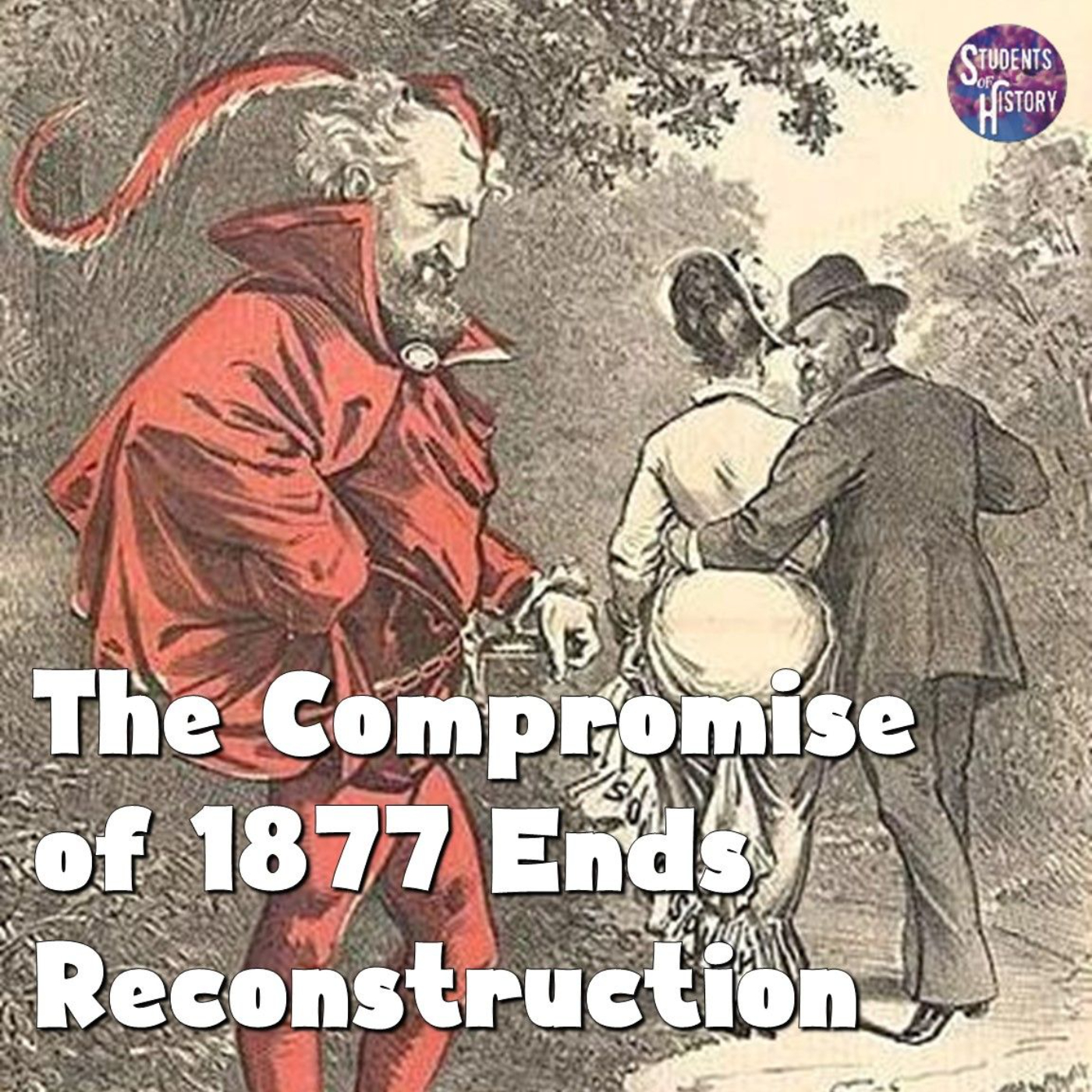
History is messy. It’s rarely about grand speeches on marble steps; more often, it’s about tired men in smoky rooms making deals they know will haunt them. That’s basically the story of the Compromise of 1877. If you’ve ever wondered why the American South looks the way it does today, or why the promise of post-Civil War equality seemed to just... evaporate for a century, this is the moment it happened.
It wasn't a law. Nobody signed a single parchment. Instead, it was a "gentleman's agreement" that traded the presidency for the soul of the South.
The Messiest Election You’ve Never Heard Of
To understand the Compromise of 1877, you have to look at the 1876 election. It makes modern political drama look like a middle school play. Samuel J. Tilden, the Democrat, won the popular vote. He was one electoral vote shy of the presidency. Rutherford B. Hayes, the Republican, was lagging behind.
But there was a catch.
Twenty electoral votes—from Florida, Louisiana, South Carolina, and Oregon—were disputed. Both sides claimed they won those states. There were accusations of massive fraud, intimidation of Black voters, and straight-up bribery. For months, the United States didn't actually have a president-elect. People were genuinely talking about a second Civil War.
"Tilden or Blood" was the slogan. Imagine that.
Congress eventually threw their hands up and created an Electoral Commission. It was supposed to be non-partisan, but it ended up having eight Republicans and seven Democrats. Guess who they voted for? Hayes. Every single time. Democrats were furious. They started a filibuster that threatened to leave the country leaderless on Inauguration Day.
The Wormley House Agreement
This is where the actual Compromise of 1877 happens. Behind the scenes, at the Wormley House hotel in Washington D.C., representatives for Hayes met with Southern Democrats. They needed the filibuster to stop.
The deal was simple. And brutal.
Southern Democrats agreed to let Hayes become President. In exchange, Hayes promised to do a few things. First, he’d pull the remaining federal troops out of the South. These troops were the only thing protecting Black citizens and keeping the "Redeemer" governments from taking over. Second, he’d appoint a Southerner to his cabinet. Third, he’d support federal aid for a Texas and Pacific Railroad.
The Republicans got the White House. The Democrats got the South back.
Why the Compromise of 1877 Was a Disaster for Civil Rights
Let’s be real: the Compromise of 1877 was the death knell for Reconstruction. When those troops left, the protection for formerly enslaved people vanished. Historian Eric Foner has written extensively about this "unfinished revolution." He argues that while the 13th, 14th, and 15th Amendments stayed on the books, they became dead letters in the South for the next eighty years.
The "Redeemers"—white conservative Democrats—immediately moved to disenfranchise Black voters.
They used poll taxes. They used literacy tests. They used the KKK.
Without federal intervention, the "Solid South" was born. It created a one-party system that lasted until the mid-20th century. If you look at the voting patterns and the legal structures that led to Jim Crow, they all trace their lineage back to those meetings in February 1877.
It Wasn’t Just About One Thing
People often think the Compromise of 1877 was just about the troops. It was broader. It was about Northern fatigue. The North was tired of the "Southern Question." There was an economic depression (the Panic of 1873) that made people care more about their wallets than the rights of people hundreds of miles away.
Industrialists wanted stability. They wanted that railroad.
Hayes wasn't necessarily a "bad guy" in the traditional sense. He actually thought—perhaps naively—that Southern leaders would keep their word and protect the rights of Black citizens. He wrote in his diary about his hope for a "new South." He was wrong. Dead wrong.
As soon as the federal bayonets were gone, the state governments in South Carolina and Louisiana collapsed. The Republican governors were ousted. The "Redeemers" took over, and the era of white supremacy was effectively codified into local law.
The Myths vs. The Reality
One big misconception is that the Compromise of 1877 was a formal piece of legislation. It wasn't. Because it was an informal deal, it was easy to break the parts that didn't suit the winners. The railroad money? Most of it never materialized. The protection of Black rights? Ignored.
The only part that was strictly followed was the removal of troops and the cessation of federal interference in Southern elections.
Another myth: that Tilden was "robbed." While he won the popular vote, the fraud in the disputed states was so rampant on both sides that it’s almost impossible to know who actually won. In some districts, the number of votes cast exceeded the number of registered voters by 200%. It was a circus.
How This Shapes Today
You can't understand modern American politics without the Compromise of 1877. It set the stage for the Great Migration, as Black families fled the oppressive systems the compromise enabled. It created the political geography of the "Red States" and "Blue States" that we still see echoes of today.
It also established a precedent: that political power could be traded for human rights.
When we talk about "voter suppression" in the 21st century, we're talking about a legacy that was solidified in 1877. The legal loopholes used to circumvent the 15th Amendment were perfected in the decades immediately following Hayes’ inauguration.
Was There Any Other Way?
Some historians, like C. Vann Woodward, suggest the compromise was inevitable. The country was exhausted. The zeal of the Radical Republicans had faded. Lincoln was long gone. Grant was tired.
But "inevitable" is a dangerous word. Choices were made.
If the North had stayed the course, if the federal government had continued to enforce the Civil Rights Act of 1875, the 20th century might have looked very different. Instead, the Compromise of 1877 chose a fragile peace over a just one.
Moving Forward: What You Should Do Now
Understanding the Compromise of 1877 isn't just a history lesson; it's a blueprint for recognizing how political systems fail when they prioritize short-term stability over long-term justice.
- Read the Primary Sources: Check out the diary entries of Rutherford B. Hayes or the newspaper archives from 1876. The tension in the writing is palpable.
- Analyze Your Local Voting Laws: Look at the history of your own state's voting requirements. Many southern states still have laws on the books that were originally drafted during the post-1877 era.
- Trace the Economic Impact: Study how the withdrawal of federal support affected land ownership in the South. The failure of "40 acres and a mule" was basically set in stone once the federal government stopped overseeing Southern land distribution.
- Watch the Patterns: When politicians today talk about "states' rights," remember that in 1877, that phrase was the code word for ending federal protection of civil rights. Context matters.
The deal made in 1877 was a pivot point. It ended the most hopeful era of racial progress the country would see for another ninety years. By recognizing the mechanics of how that progress was traded away, we're better equipped to see the same patterns when they emerge in our own time.