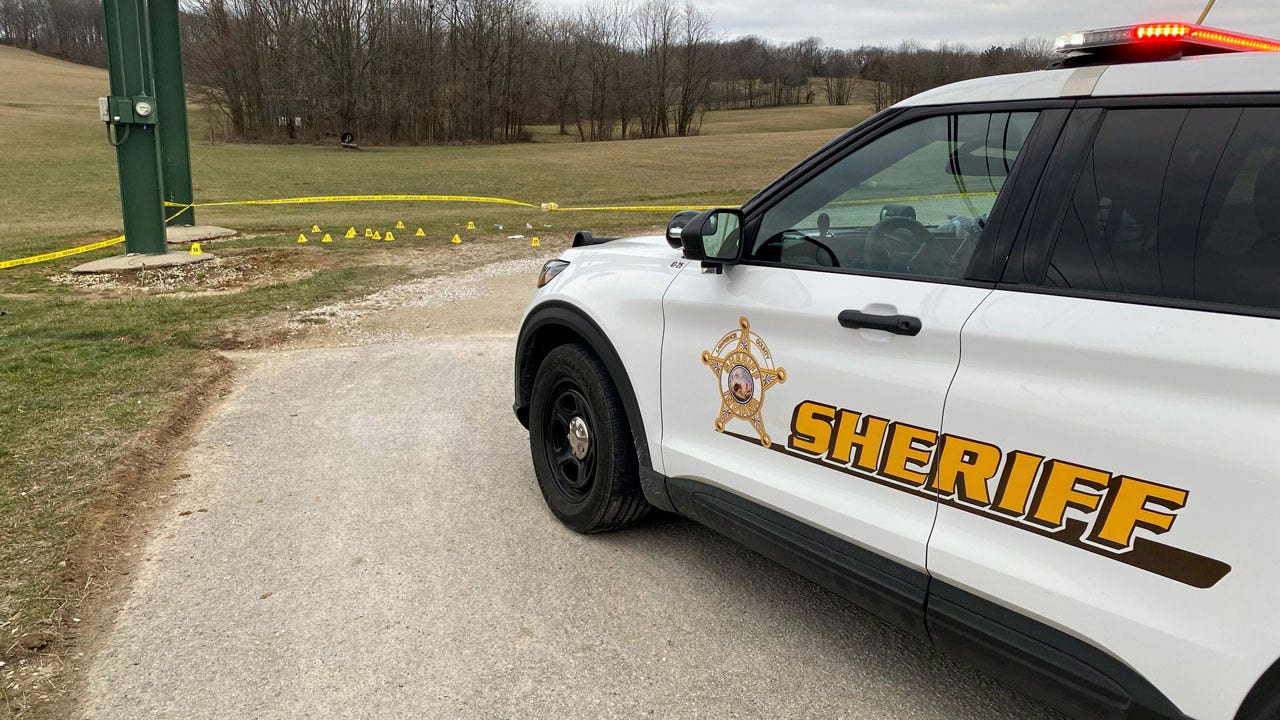
February 13, 2017, started as a normal day off from school in Carroll County. It was unseasonably warm. Abigail Williams and Liberty German, two best friends who basically did everything together, decided to go for a hike. They headed to the Monon High Bridge, an old, towering railroad trestle that sits about 60 feet above Deer Creek. It’s a local spot. Everyone knew it. But by the next afternoon, the town of Delphi would be changed forever when the bodies of the two girls killed in Indiana were discovered in a wooded area near the bridge.
The case haunted the Midwest for years.
Honestly, the most chilling part wasn't just the crime itself; it was the fact that Libby German had the presence of mind to record her killer. She caught him on video. We’ve all seen the graininess of the "Bridge Guy" footage and heard that low, gravelly voice saying, "Down the hill." For a long time, that was all anyone had. People obsessed over the blue jacket, the gait of the man walking on the ties, and the strange silence from investigators that stretched into years of frustration.
The Long Road to an Arrest in the Delphi Case
For over five years, the investigation seemed to stall. People whispered. Internet sleuths pointed fingers at everyone from local residents to convicted criminals in other states. It felt like the case of the two girls killed in Indiana might actually go cold. Then, in October 2022, everything shifted. Authorities arrested Richard Allen, a local pharmacy technician who had been living in Delphi the whole time.
He wasn't a drifter. He wasn't a shadowy figure from out of town. He was a guy who worked at the local CVS. He’d even processed photos for the families of the victims.
The probable cause affidavit revealed some pretty heavy details that the public hadn't known. Specifically, an unspent .40 caliber round was found between the bodies of the girls. Forensic ballistics allegedly linked that round to a Sig Sauer P226 owned by Allen. It’s a specific piece of evidence that really narrows the field, though his defense team has fought tooth and nail to discredit the science behind toolmark identification.
Understanding the Odinism Theory and Legal Maneuvers
If you’ve followed the trial of Richard Allen, you know it’s been a legal circus. His defense attorneys, Andrew Baldwin and Brad Rozzi, didn't just argue he was innocent; they proposed a wild, dark alternative theory involving Odinism. They claimed the crime scene was "ritualistic." They pointed toward a group of people practicing a pagan religion, suggesting the girls were sacrificed.
Judge Frances Gull eventually blocked most of this from being presented to the jury, calling it "unsupported by evidence." But the mere mention of it set the true crime world on fire. It highlights just how complex these cases get when there isn't a "smoking gun" confession right at the start.
The Trial and the "Confessions"
When the trial finally happened in late 2024, the prosecution dropped a bombshell. They claimed Richard Allen had confessed to the murders over 60 times while in prison. Some of these were made to his wife, Kathy, over recorded jailhouse calls. Others were made to a prison chaplain.
The defense tried to explain this away by saying Allen was in a state of "psychotic breakdown" due to the conditions of his confinement. They described him eating his own feces and losing a significant amount of weight. It raises a tough question for anyone following the case: can you trust a confession from a man who is clearly losing his mind? The jury apparently thought so.
In November 2024, Richard Allen was found guilty on all counts. He was convicted of the murders of Abigail Williams and Liberty German. The sentencing brought some level of closure, but the scars in Delphi run deep. You don't just "get over" something like this in a town of 3,000 people.
Why the Case of the Two Girls Killed in Indiana Still Matters
The Delphi murders changed how we think about digital evidence. Libby German is often called a hero because she used her phone as a weapon. Without that recording, we might not even have a description of the killer.
It also exposed the flaws in how tips are processed. Early in the investigation, Richard Allen actually spoke to an officer. He admitted he was on the bridge that day. He told them what he was wearing. But that tip was misfiled or overlooked for years. It’s a sobering reminder that sometimes the answer is sitting in a file cabinet while a community lives in fear.
- Public Safety: The case prompted many parents to rethink how much freedom their children have in "safe" rural areas.
- The Power of Forensics: From ballistics to DNA (which was notoriously thin in this case), the trial showed the limits and the strengths of modern science.
- Community Resilience: The "Abby and Libby Memorial Park" stands today as a testament to the girls' lives, rather than just the tragedy of their deaths.
How to Stay Informed and Safe
Following high-profile criminal cases like this often leaves people feeling helpless, but there are actual takeaways from the tragedy in Delphi.
First, the "Down the Hill" case proves that digital awareness is a literal lifesaver. Teaching kids to use their phones to document suspicious behavior—discreetly—is a modern safety necessity.
Second, pay attention to local court proceedings. Much of what we know about the two girls killed in Indiana came from the persistent work of local journalists who fought to unseal court documents when the state tried to keep them secret. Transparency in the justice system only happens when the public demands it.
If you are looking to support the families or the community, the Abby and Libby Memorial Foundation continues to fund projects that provide safe spaces for kids to play and hike. Supporting these types of local initiatives ensures that the legacy of the victims isn't just a headline, but a positive impact on the next generation. Keep an eye on the appellate process as Richard Allen’s legal team continues to challenge the verdict; in the American legal system, a "guilty" verdict is often just the beginning of a new chapter of litigation.