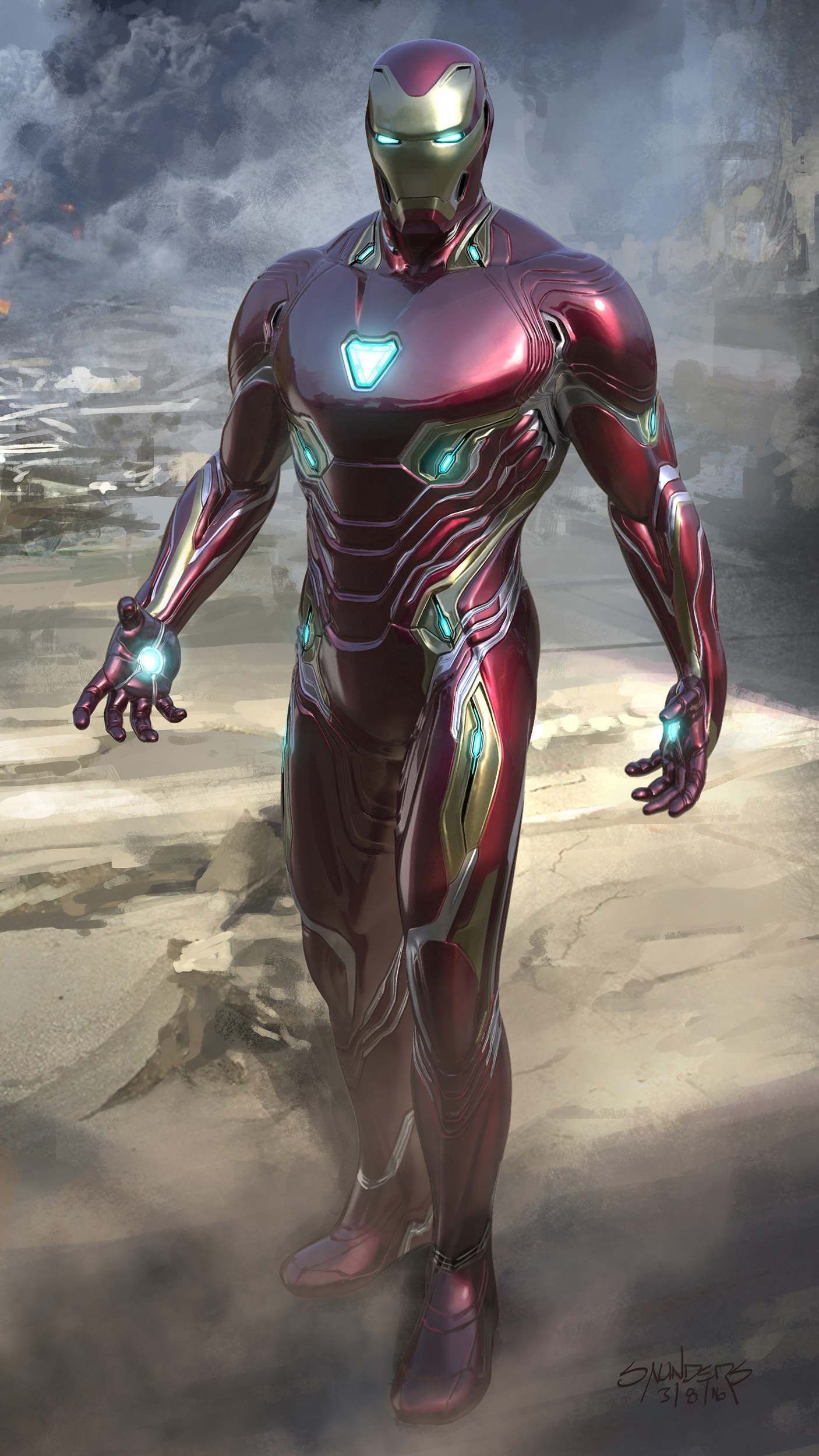
Tony Stark died wearing a piece of jewelry. Well, basically. By the time we get to Avengers: Endgame, the clunky gears and heavy hydraulics of the early 2000s were long gone. The Endgame Iron Man suit, officially known as the Mark 85, represented the absolute peak of nanotechnology. It wasn't just armor; it was a shapeshifting, self-healing organism made of gold-titanium alloy and pure willpower.
Fans often argue about which suit is the "best." Some love the mechanical heft of the Mark 3 from the original movie. Others dig the "Silver Centurion" vibes of the Mark 5 suitcase suit. But if we're talking about pure engineering, the Mark 85 is the undisputed king. It had to be. Stark wasn't just fighting terrorists or rogue AI anymore; he was prepping for a rematch with a purple titan who wiped out half the universe. The stakes changed the design philosophy.
What Made the Mark 85 Different From Everything Else?
If you look back at Infinity War, the Mark 50 was already mind-blowing. It could grow shields and blasters on the fly. However, Thanos still managed to rip it apart quite literally. He peeled the nanites off Tony’s body. The Endgame Iron Man suit fixed those structural vulnerabilities. It felt more "solid." While the Mark 50 looked sleek and almost organic, the Mark 85 brought back the classic muscle-bound aesthetic, specifically echoing the comic book art of Adi Granov.
It wasn't just about looks. The integration was deeper.
Tony spent the five years during the "Blip" refining the lattice structure of the nanites. You can see it in the way the suit handles energy. In the final battle, when Thor hits Tony with a massive blast of lightning, the suit doesn't short out. It absorbs it. It funnels that massive surge into the "Lightning Refocuser"—those weird mechanical petals that pop out of the back. That's a level of energy management we hadn't seen in the previous 84 iterations.
The Nano-Structure Breakdown
Nanotechnology in the MCU works on a "mass-retention" principle. Tony carries a housing unit—the Arc Reactor on his chest—which stores billions of microscopic robots. When he "suits up," these robots flow over his clothing, locking together to form plates, sensors, and weapons.
The Mark 85 used a more advanced "neural interface." In earlier movies, Tony had to give verbal commands to JARVIS or FRIDAY. By Endgame, the suit reacted to his thoughts almost instantaneously. When he needed to steal the Infinity Stones from Thanos's gauntlet, he didn't have to press a button. He just had to touch the gauntlet. The nanites "communicated" with the stones, sliding them from Thanos's hand to his own in a seamless, fluid motion. It was a heist performed at the molecular level.
The Design Philosophy: Nostalgia Meets Lethality
Phil Saunders, the concept artist who worked on the suit, has spoken about how they wanted the Endgame Iron Man suit to feel like a "greatest hits" album.
Notice the gold on the thighs and shoulders? That’s a direct callback to the classic "Model 4" armor from the 1970s comics. It’s a bit of fanservice, sure, but it also serves a narrative purpose. Tony was going back to his roots. He was no longer the "Futurist" obsessed with the next big thing; he was a man trying to protect his family by using everything he had ever learned.
The weaponry was also significantly more diverse. We saw:
- Energy blades for close-quarters combat.
- Heavy-duty shields that could withstand the Power Stone.
- The Nano-Gauntlet integration (the suit's most critical feature).
- Advanced thrusters that allowed for precision flight even in the chaos of a collapsing Avengers Compound.
Why the Mark 85 Failed (and Succeeded)
Honestly, it's weird to think about a "perfect" suit failing. But the Mark 85 couldn't keep Tony alive.
There is a huge misconception that the suit "glitched" when Tony snapped his fingers. It didn't. The suit did exactly what it was designed to do: it acted as a conduit. The Mark 85 was essentially a giant lightning rod for the most powerful energy in the multiverse. When Tony integrated the stones into the right hand of the armor, the suit began to channel Gamma radiation immediately. You can see the energy scorching his arm before he even makes the snap.
The suit's internal life-support systems were working overtime. It was diverting all power to keep his heart beating while the stones were literally melting his cellular structure. No other suit—not the Hulkbuster, not the Mark 7—could have held that energy for even a second. The Mark 85 bought him enough time to say one final sentence. That is its true legacy.
Practical Insights for Fans and Collectors
If you're looking to dive deeper into the technical side of the Mark 85 or perhaps add a representation of it to a collection, there are a few things to keep in mind regarding accuracy.
- The "Battle Damaged" Detail: Most high-end collectibles (like Hot Toys or Iron Studios) offer a battle-damaged version of the Endgame Iron Man suit. If you're looking for accuracy, pay attention to the right arm. The "nanite bleeding" effect where the armor is trying to repair itself while being overwhelmed by the Infinity Stones is the definitive look of this suit.
- Color Palette: The Mark 85 uses a much more vibrant "candy apple red" and a deeper "champagne gold" than the Mark 50. If a replica looks too "orange," it’s probably based on early concept art rather than the final film render.
- The Arc Reactor: In Endgame, the reactor has a unique hexagonal pattern inside the housing. This was a shift from the circular or triangular designs of the past, symbolizing the more complex lattice of the Mark 85's nanobots.
The evolution of Tony Stark’s tech reached its logical conclusion in this armor. It was the moment the man and the machine became truly indistinguishable. He didn't just wear the suit; he was the suit.
Your Next Steps to Mastering MCU Lore
To truly understand the engineering leap between the beginning and the end, you should go back and re-watch the "Suiting Up" scenes from Iron Man (2008) and Avengers: Endgame side-by-side. Notice the sound design. The first suit sounds like a tank—clunky, grinding, and heavy. The Mark 85 is almost silent, sounding more like rushing water or shifting sand.
After that, look into the "Art of the Movie" books for Endgame. They show dozens of rejected designs for the Mark 85, including some that looked much more alien. Understanding why they chose the "Classic" look helps you see the emotional weight behind the technical specs. You can also research the real-world developments in carbon nanotubes and "liquid armor" being tested by organizations like MIT, which are the real-life (though much less cool) ancestors of Stark’s fictional tech.