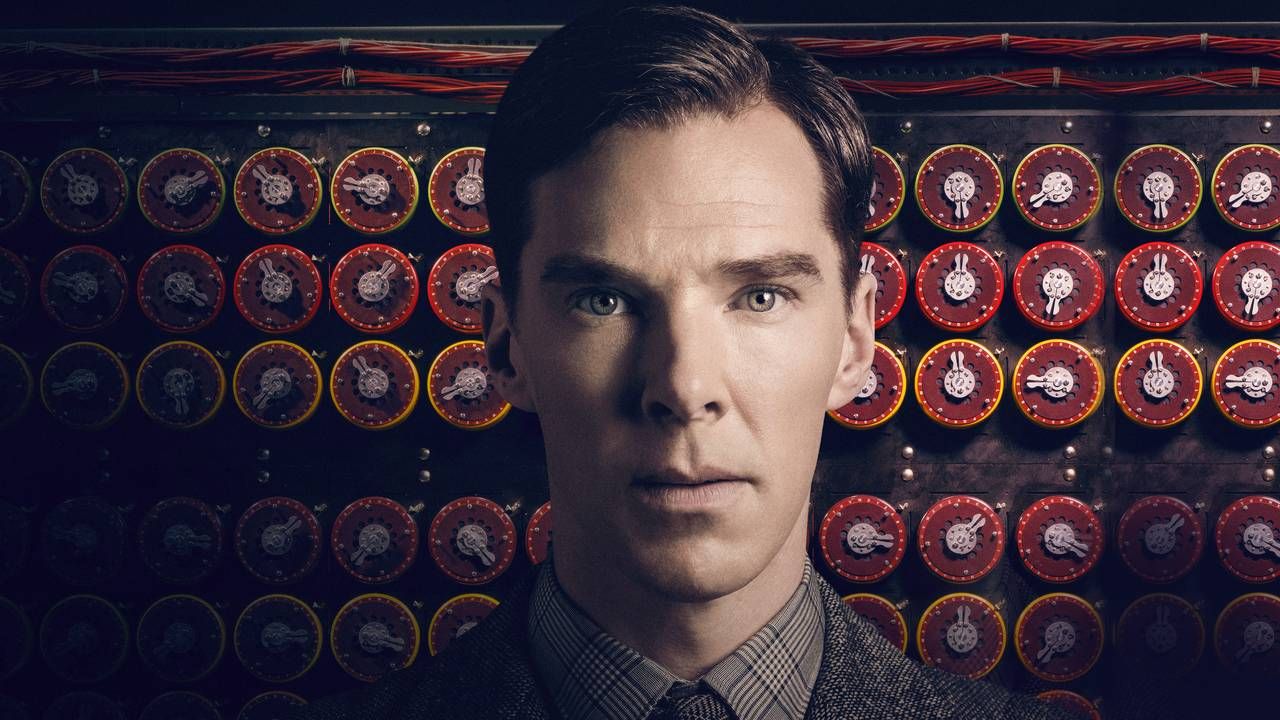
You’ve probably seen the 2014 blockbuster. Benedict Cumberbatch plays Alan Turing as a prickly, socially detached genius who basically wins World War II by himself while a giant clicking machine named Christopher hums in the background. It’s a great movie. It’s also kinda full of holes. When we talk about The Imitation Game films and the various ways Turing’s life has been adapted for the screen, we’re looking at a weird tug-of-war between historical truth and Hollywood’s obsession with the "tortured loner" trope.
The reality? Alan Turing wasn't some cold, robotic outcast.
People who actually knew him, like fellow codebreaker Hugh Alexander (played as a rival by Matthew Goode in the film), described him as having a wicked sense of humor. He was a marathon runner. He was well-liked in his own eccentric way. But if you watch the most famous of The Imitation Game films, you get a version of Turing that feels more like Sherlock Holmes in a sweater vest. It makes for good drama, sure. It just isn't exactly who the man was.
The Big Screen vs. The Hut 8 Reality
The 2014 movie The Imitation Game, directed by Morten Tyldum, did something incredible: it made a dead mathematician a household name. That’s a win for history. But it also simplified the massive, sprawling effort at Bletchley Park into a tiny group of five or six people.
In the real Bletchley Park, thousands of women were doing the heavy lifting. The film focuses heavily on Joan Clarke (Keira Knightley), and while her role was vital, the movie suggests she was basically the only woman in the room. Honestly, Bletchley was an industrial-scale operation. There were over 10,000 people working there by the end of the war, and about 75% of them were women.
The "Christopher" Myth
One of the most persistent things people get wrong because of The Imitation Game films is the machine itself. In the movie, Turing names his code-breaking computer "Christopher" after his childhood friend who passed away. It’s a heartbreaking narrative beat. It’s also totally made up.
The machine was actually called the Bombe.
And it wasn't just Turing’s invention. He built on the work of Polish mathematicians—Marian Rejewski, Jerzy Różycki, and Henryk Zygalski—who had already cracked early versions of Enigma before the war even started. The film gives them a brief shout-out, but in reality, Turing’s genius was in industrializing a process the Poles had pioneered. Without their initial breakthrough, the war might have lasted years longer.
Before Cumberbatch: The Other Imitation Game Films
Most people think the 2014 movie is the only one. It isn't.
If you really want to understand how Turing has been portrayed, you have to look at Breaking the Code from 1996. It starred Derek Jacobi, who also played Turing on Broadway. If you compare the two, Jacobi’s Turing is night and day compared to Cumberbatch’s. He’s more stuttering, more vulnerable, and significantly more open about his identity as a gay man.
- The 1996 Version: Focuses heavily on the fallout of Turing's conviction for "gross indecency." It’s less about the "thriller" aspect of the war and more about the tragedy of a state destroying the man who saved it.
- The 2014 Version: A glossy, high-stakes thriller. It uses the Enigma plot to keep the audience engaged while sprinkling in the tragedy as a framing device.
- Enigma (2001): This one is the weirdest. It’s a film about Bletchley Park based on a Robert Harris novel. It basically erases Turing entirely, replacing him with a fictional character named Tom Jericho. It’s a decent spy flick, but as a historical document, it’s basically fan fiction.
Why the Accuracy Matters Now
Why do we care if a movie gets a few facts wrong? Because The Imitation Game films shape how the public perceives science and heroism.
When the movie portrays Turing as a "difficult" person who didn't understand how to make friends, it reinforces the "autistic genius" stereotype that isn't always true or helpful. Turing was definitely an oddball—he used to chain his mug to the radiator so people wouldn't steal it—but he wasn't the antisocial jerk the movie portrays. He had friends. He had a life.
There’s also the issue of Commander Alastair Denniston. In the movie, Charles Dance plays him as a bureaucratic villain who is constantly trying to shut Turing down. Denniston’s family was actually pretty upset about this. In real life, Denniston was a pioneer of British signals intelligence who actually recruited many of the Bletchley greats. He wasn't the obstacle; he was the architect.
The Tragic Ending we often skim over
The 2014 film ends with a few cards of text explaining Turing's chemical castration and his death by suicide. It’s heavy. But even here, there’s debate.
While the official verdict in 1954 was suicide by cyanide-laced apple, some historians and biographers, like Jack Copeland, argue it might have been an accident. Turing had laboratory equipment in his house and was notoriously careless with his experiments. Whether it was intentional or a tragic mishap, the underlying truth remains: the British government treated a national hero like a criminal because of who he loved.
The Legacy of the Codebreaker
Despite the inaccuracies, The Imitation Game films did something that decades of history books failed to do. They forced a formal apology from the British government. In 2009, Prime Minister Gordon Brown issued a statement. In 2013, Queen Elizabeth II granted Turing a posthumous pardon.
None of that happens without the cultural momentum generated by these stories.
What to watch if you want the real story
If you're tired of the Hollywood gloss and want to see what Bletchley Park was actually like, you’ve got a few options that are arguably better than the big-budget movies.
- The Bletchley Circle: It’s a TV show, not a film, but it captures the vibe of the women who worked there and how their skills were ignored after the war ended.
- Codebreaker (2011): This is a "drama-documentary." It mixes real interviews with dramatized scenes. It’s much more grounded in the actual mathematics and the reality of Turing’s life.
- The Bletchley Park Museum: If you’re ever in the UK, just go. You can see the actual huts. You can see the reconstructed Bombe. Standing in the room where it happened hits differently than watching it on Netflix.
Actionable Steps for History Buffs
If you’ve watched The Imitation Game films and find yourself hooked on the world of WWII intelligence, don't stop at the credits. There's a whole world of primary sources and better representations of what happened.
- Read the definitive biography: "Alan Turing: The Enigma" by Andrew Hodges. This is the book the 2014 movie was "based" on, though the movie took massive liberties. The book is dense, but it’s the gold standard.
- Check out the Polish contribution: Search for "The Enigma Relay." It’s vital to understand that the British didn't do this in a vacuum.
- Listen to the Bletchley Park Podcast: They interview survivors and historians who clarify exactly what the movies got wrong.
- Explore the "Turing Test": Look into his 1950 paper "Computing Machinery and Intelligence." Before he was a war hero, he was the guy asking if machines could think. Most of what we call AI today starts with his work.
The story of Alan Turing is a lot messier, a lot more collaborative, and significantly more human than any two-hour movie can show. By looking past the cinematic tropes, you find a man who was much more interesting than a "difficult genius." He was a person who fundamentally changed the world, only to be betrayed by it. That’s the real imitation game.
Next Steps for Deepening Your Knowledge
To truly grasp the impact of Turing beyond the screen, look into the Turing Archive for the History of Computing. It contains digital copies of his original papers. Also, research the 1952 Gross Indecency trial records to understand the legal context of his persecution. Understanding the legal framework of the 1950s provides a much clearer picture of why his story ended the way it did, far more than the dramatized versions ever could.