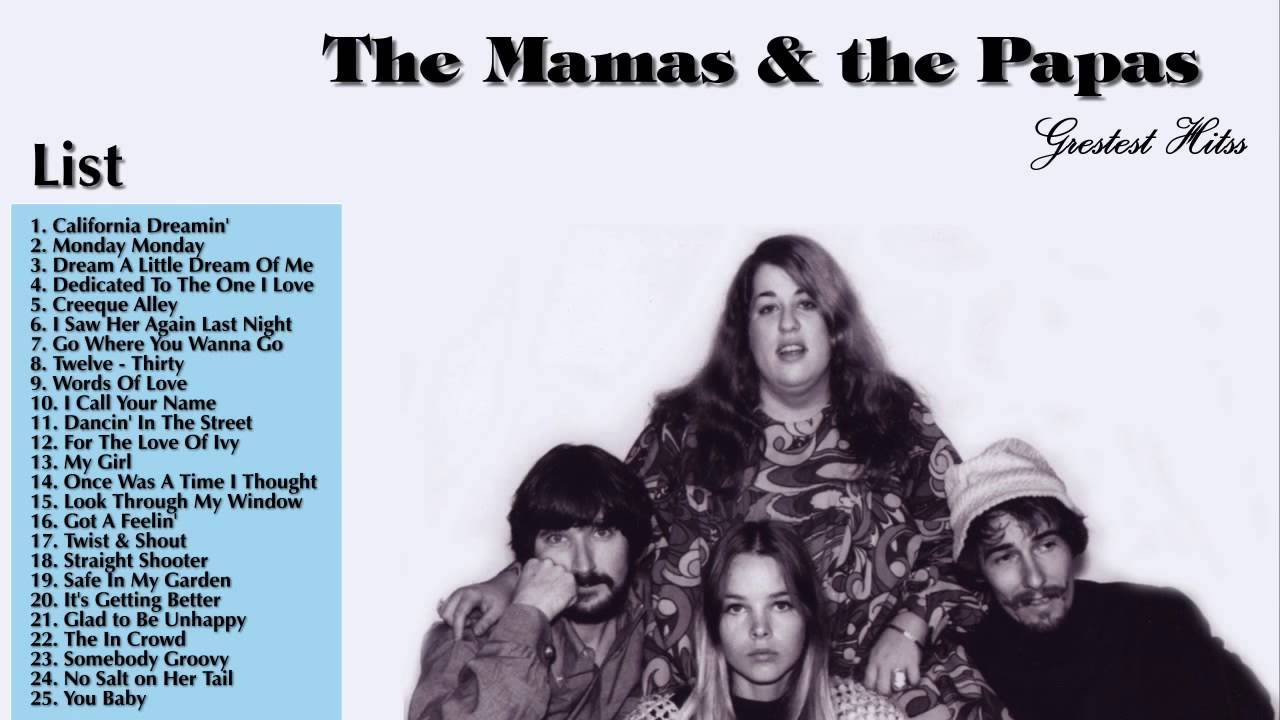
They weren't around long. It’s the first thing you notice when you look at the Mamas and Papas discography. Between their 1965 debut and their messy, contractual-obligation breakup in 1968, only three years passed. One more album followed in 1971, but that was basically a ghost of a record, recorded because a lawyer said they had to.
Four albums. That’s the core.
Yet, those four albums changed how we hear vocal harmony. They sold millions. They made sunshine pop feel dangerous. When John Phillips, Michelle Phillips, Denny Doherty, and Cass Elliot stood around a microphone, something happened that shouldn't have worked. You had a former naval officer’s son, a Canadian tenor, a teenage model, and a powerhouse from Baltimore with a voice that could knock down walls.
It was lightning in a bottle. Then the bottle broke.
The Big Bang of 1966: If You Can Believe Your Eyes and Ears
If you want to understand the Mamas and Papas discography, you start here. Released in February 1966, If You Can Believe Your Eyes and Ears is arguably the most perfect pop debut of the decade. It hit number one on the Billboard 200. Why? Because it sounded like California felt—or at least how everyone wanted California to feel.
"California Dreamin'" is the obvious standout. Interestingly, it wasn't even their song first; Barry McGuire recorded it with the group on backing vocals. But when John Phillips took the arrangement back, added that haunting alto flute solo by Bud Shank, and let the group’s four-part harmonies soar, it became an anthem for a generation.
The album isn't just one hit, though. "Monday, Monday" is on there. So is "Go Where You Wanna Go." John Phillips was a meticulous arranger. He was obsessed with the "Wall of Sound" but wanted it to be built out of voices rather than just drums and reverb. He used the "Wrecking Crew"—that legendary group of LA session musicians like Hal Blaine and Joe Osborn—to provide the muscle.
Honestly, the mix of covers and originals on this first record is fascinating. They took The Beatles' "I Call Your Name" and slowed it down into a jazzy, swinging shuffle. They took "Spanish Harlem" and made it sound like a sunset. It was sophisticated. It was adult pop that teenagers loved.
The Sophomore Slump That Wasn't (Technically)
The self-titled second album, The Mamas & the Papas, came out later in '66. It’s a weirder record. This is where the internal drama started leaking into the lyrics. John and Michelle’s marriage was cratering because of affairs—specifically Michelle’s brief fling with Denny Doherty.
John wrote "I Saw Her Again" about that exact situation. Think about how insane that is. He made the person who cheated with his wife sing lead vocals on a song about the cheating.
Musically, it’s still brilliant. "Words of Love" features Cass Elliot at her absolute peak. The brass arrangements are tighter. But you can hear the strain. The "mamas and papas discography" began to shift from pure "sunshine" into something a bit more neurotic and observational. They were becoming the Fleetwood Mac of the 60s before Fleetwood Mac even existed.
Deliver and the End of the Golden Era
By 1967, the wheels were starting to wobble, but Deliver still managed to be a massive success. It features "Creeque Alley," which is basically a musical autobiography. If you’ve ever wondered how they all met, just listen to that song. It mentions Roger McGuinn, Zal Yanovsky, and the "mugwumps." It’s a history lesson with a catchy chorus.
"Dedicated to the One I Love" showed they could still dominate the charts with a cover. But the sessions were becoming a nightmare. John was a perfectionist. Cass was tired of being sidelined or mocked for her weight. Michelle had been kicked out and then brought back.
The sound was evolving, though. There was more folk-rock influence creeping in. They were moving away from the purely orchestrated pop of the first two records toward something a bit more organic. But the unity was gone.
The 1968 Collapse and The Papas & The Mamas
Their fourth album, The Papas & The Mamas, is the dark horse of the Mamas and Papas discography. It’s not as "happy" as the early stuff. It’s psychedelic, it’s cynical, and it’s deeply underrated.
"Safe in My Garden" is a beautiful, melancholic track about the growing tension in the world (and within the band). "For the Love of Ivy" showed John was still a genius at melody, but the group was barely speaking. They recorded their parts separately in many cases. The magic of four people around one mic was being replaced by the isolation of multi-track recording and personal resentment.
Then they quit.
They officially split in 1968. Cass went solo and became an even bigger star. John went into a tailspin. Michelle started acting. Denny moved back to Canada.
The People Like Us "Lawyer" Album
People often forget about the 1971 album People Like Us.
You should probably forget about it too.
It was recorded because Dunhill Records threatened to sue the members for $250,000 if they didn't deliver one more album. They showed up. They sang. They left. It lacks the sparkle. It lacks the "ping" of those early harmonies. It’s the sound of four people checking their watches. While it’s technically part of the Mamas and Papas discography, it feels like a postscript rather than a final chapter.
Misconceptions and the "Cass" Factor
A lot of people think Cass Elliot was the leader of the group because she had the most famous voice. She wasn't. John Phillips was the architect. He wrote almost everything. He dictated every note.
There's also this persistent myth that Cass died choking on a ham sandwich. It’s false. She died of a heart attack in London in 1974, likely brought on by years of extreme dieting and the physical toll of her fame. It’s a tragic footnote to a discography that was so full of life.
Why You Should Care in 2026
The Mamas and Papas discography is more than just "California Dreamin'." It is the blueprint for vocal arrangement in modern pop. When you hear groups today layering harmonies in a DAW, they are chasing the sound that John Phillips achieved with four mics and a lot of cigarettes in 1966.
If you’re diving into their music for the first time, don't just stick to the Greatest Hits.
- Listen to "Rooms" from the fourth album for a glimpse into the isolation of fame.
- Check out "Strange Young Girls" for some of the earliest "social commentary" pop.
- Really listen to the bass lines on "Monday, Monday"—they are surprisingly complex.
Actionable Listening Steps
- Start with the Mono Mixes: If you can find them, the mono versions of the first two albums punch much harder than the stereo versions. The stereo mixes of that era often panned the vocals awkwardly to one side.
- Watch the Monterey Pop Festival Footage: They closed the festival in 1967. It wasn't their best vocal performance because they were exhausted and under-rehearsed, but it captures the exact moment the 60s shifted from "pop" to "rock."
- Trace the "Creeque Alley" Names: Look up The Mugwumps and The Journeymen. Following the threads of their discography leads you to the history of the entire 1960s folk-rock scene in Greenwich Village and Laurel Canyon.
The music remains timeless because the harmonies are perfect even when the people making them were falling apart. It’s a reminder that beauty often comes from friction.
Next Steps for Deep Listening
To truly appreciate the evolution of this sound, listen to If You Can Believe Your Eyes and Ears back-to-back with The Papas & The Mamas. You will hear the sound of the 1960s losing its innocence in real-time. After that, seek out Cass Elliot's solo debut, Dream a Little Dream, to hear how she finally stepped out from John Phillips' shadow to define her own legacy.