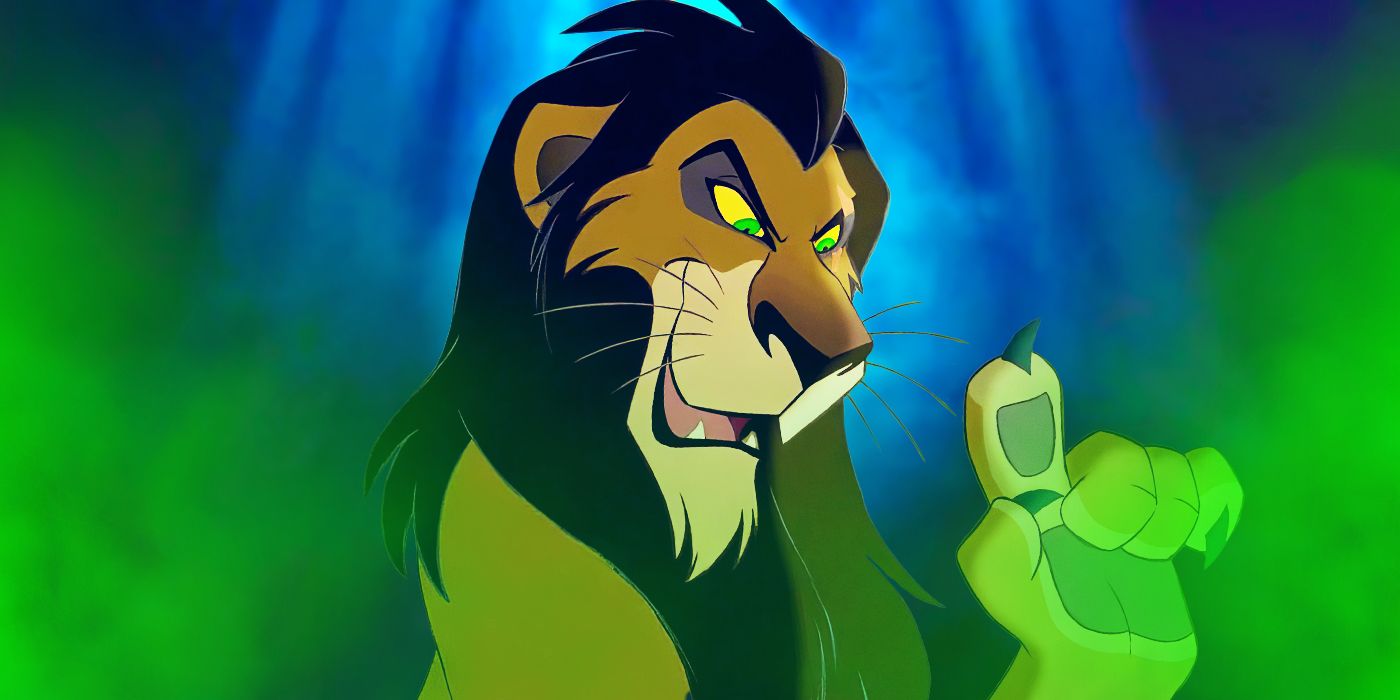
Honestly, we’ve all been looking at Scar the wrong way for thirty years. Since 1994, he was just the skinny, Shakespearean uncle with a black mane and a chip on his shoulder. But the new movie, Mufasa: The Lion King, totally flips the script. It turns out the guy we knew as the ultimate villain started out as something completely different.
He wasn't always Scar.
He was Taka.
And he wasn’t even Mufasa’s biological brother.
That’s the big twist Barry Jenkins dropped on us. In this new photorealistic prequel, we find out that Mufasa was actually a "stray"—an orphaned cub lost in a flood. Taka, the lion who would become Scar, was the one with the "royal bloodline." He’s the one who found Mufasa and insisted his parents, Obasi and Eshe, take the little guy in.
It’s kinda tragic when you think about it. The lion who eventually murders Mufasa is the same one who saved him and called him "brother" when they were kids.
What Mufasa: The Lion King Scar Movie Changes Forever
For decades, the lore said Scar was the resentful younger brother passed over for the throne. If you read the old 90s books like A Tale of Two Brothers, his name Taka literally translated to "trash" or "waste" in Swahili. Imagine your parents naming you "Garbage" and wondering why you grew up to be a jerk.
But the 2024 film complicates this.
Kelvin Harrison Jr., who voices Taka, plays him with this genuine warmth early on. He’s not a villain yet. He’s a prince who wants a friend. The movie shows them traveling together to find a place called Milele, which is basically the "promised land" or the Pride Lands we know today.
Why the name Taka matters now
Language is tricky. While some translations of Taka mean "rubbish," in other Swahili contexts, it actually means "to want" or "to desire."
That’s the version the movie leans into. Taka is the lion who wants. He wants a brother. He wants to protect his pride. Eventually, he wants the lioness Sarabi, but she ends up falling for Mufasa instead.
Talk about a gut punch. You save a stray, you make him your brother, and then he gets the girl and the kingdom you were born to inherit? You don't have to be a lion to feel that sting.
How He Actually Got the Scar
There have been like three different versions of how he got that mark over his eye.
- The Buffalo Version: In the old books, Taka tries to trick Mufasa into fighting a Cape buffalo named Boma. It backfires, the buffalo attacks Taka, and Mufasa has to save him.
- The Snake Version: In the Lion Guard series, he gets bitten by a cobra. The venom supposedly "corrupted" his mind. A bit too magical for some fans.
- The New Movie Version: In the Barry Jenkins prequel, it’s much more personal. During a massive fight with an enemy pride of "Outsiders" led by a lion named Kiros, Taka jumps in to save Mufasa’s life. He takes a brutal swipe to the face that was meant for his brother.
He literally wears the proof of his love for Mufasa on his face.
But then things sour. Taka decides to keep the name "Scar" as a permanent reminder of the betrayal he feels. It’s a badge of resentment. He feels like Mufasa "stole" his destiny, even though Mufasa didn't really ask for it. It makes the ending of the original 1994 movie way darker. When Scar whispers "I killed Mufasa" into Simba's ear, he’s not just killing a king. He’s killing the orphan he rescued and loved.
The Voice Behind the Villain
We have to talk about the performances. Jeremy Irons set the bar so high in the original that it’s almost impossible to touch. He was campy, terrifying, and sophisticated.
Then Chiwetel Ejiofor took a crack at it in the 2019 remake, making him feel more like a battle-hardened, scrappy outcast.
In Mufasa: The Lion King, Kelvin Harrison Jr. has to do something even harder: make us like him. He has to show the "heroic possibilities" that withered away. You see the transition from a prince with a "bright future" to a lion consumed by bitterness. It’s not a sudden snap. It’s a slow burn.
Real-world themes in the pride
Barry Jenkins has mentioned in interviews that this movie is really about nature versus nurture.
Mufasa had nothing and became a legend. Taka had everything and lost it all to his own ego. It’s a heavy theme for a "kids' movie," but that’s why The Lion King sticks around. It’s basically Hamlet with fur, and this prequel adds a layer of Cain and Abel to the mix.
Is He Actually Sympathetic Now?
Kinda. But also no.
Understanding why someone becomes a monster doesn't make them less of a monster. Scar still murdered his brother in front of his nephew. He still let the Pride Lands rot and starved the lionesses.
What the new movie does is take away the "born evil" trope. It shows that Scar was a product of his choices. He had the chance to be the greatest advisor a king ever had. Instead, he chose to be a shadow.
If you're watching the movies in order now, the experience is totally different. You aren't just watching a villain; you're watching a tragedy.
Actionable Insights for Fans
If you want to really get the full "Scar Experience," you should probably do a bit of a marathon. Don't just stick to the movies.
- Watch the 1994 original first to remember why he’s the GOAT of Disney villains.
- Check out the 2024 prequel specifically to track the body language changes in Taka as he gets closer to becoming Scar.
- Listen to the soundtrack by Lin-Manuel Miranda for the prequel. The music reflects the shift in his personality way better than dialogue sometimes can.
- Look for the "claws out" detail. In the original films, Scar is the only lion whose claws are always extended. In the prequel, watch for the moment he stops retracting them. It’s a tiny visual cue that he’s always ready for a fight.
The biggest takeaway? Families are messy, even in the animal kingdom. Sometimes the person who saves you is the one you have to watch out for the most.
Stop looking at Scar as just a "bad guy" and start looking at him as Taka—the prince who gave up his name because his heart broke. It makes those 1994 scenes hit a lot harder.
To get the most out of the new lore, re-watch the scene in the original movie where Scar tells Mufasa, "I'm at the shallow end of the gene pool." Knowing now that they aren't even blood-related makes that line a biting, meta-commentary on his part rather than just a joke about his scrawny frame.