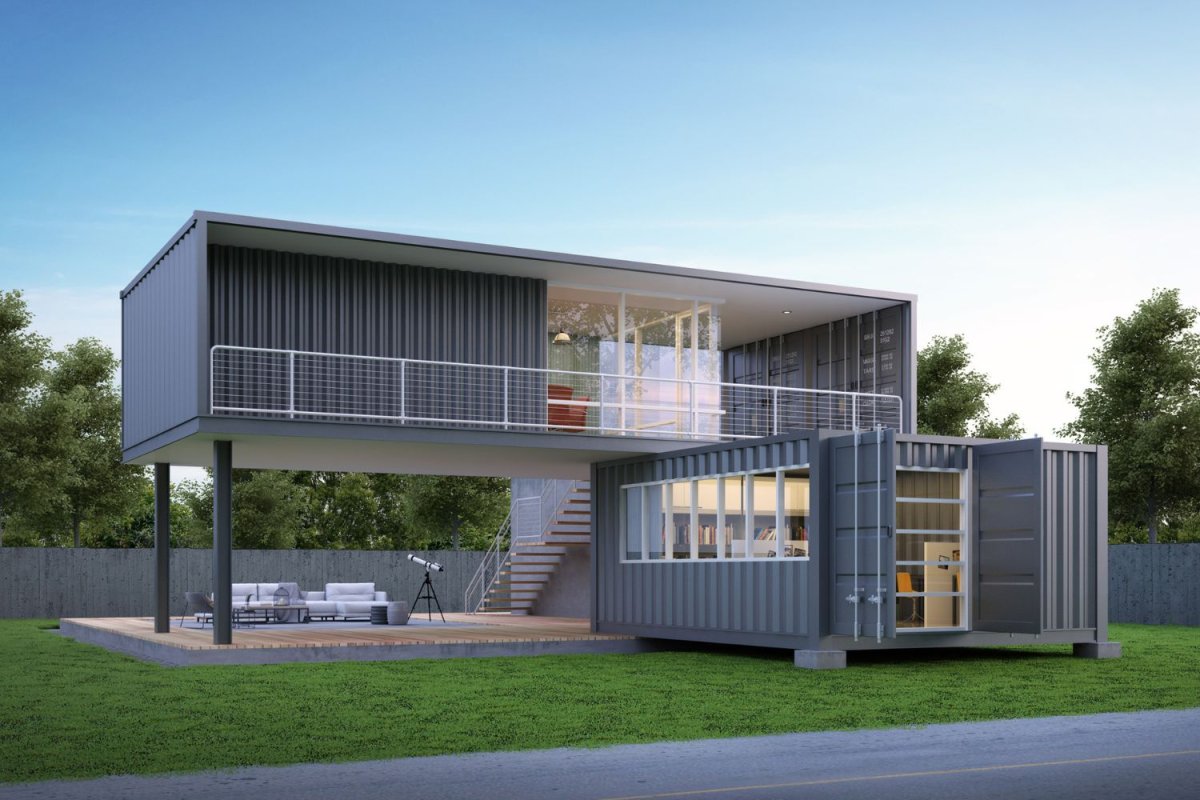
You've seen the TikToks. A rusted, 40-foot metal box gets dropped onto a lush hillside, some guy with a beard cuts out a few windows, and suddenly—boom—it’s a minimalist masterpiece. It looks cheap. It looks fast. It looks like the ultimate hack for a housing market that has basically gone off the rails. But if you actually sit down and look at the cost of container home construction, you’ll realize that "cheap" is a relative term that gets thrown around way too loosely.
Actually, I’ll just say it: most people are dreaming of a $30,000 house and ending up with a $150,000 mortgage.
The math isn't as simple as buying a box and moving in. A used 20-foot container might only set you back $2,500, but that’s just a steel shell that smells like industrial chemicals and floor wax. By the time you’ve dealt with local zoning boards that think you’re building a junkyard, and contractors who have never even touched a welding torch, the "savings" start to evaporate. Building with containers is less about saving money and more about a specific aesthetic and a desire for structural overkill.
Where the Money Actually Goes
Stop thinking about the box. Think about the dirt.
Before a single container arrives on a flatbed, you’re looking at site prep. This is the silent budget killer. If your land isn’t perfectly flat and geologically stable, you’re digging. Deep. A standard concrete slab for a small container home can easily run $5,000 to $10,000. If you want a pier foundation—which looks cooler because it makes the house look like it’s floating—you might save a bit on concrete but spend it all back on structural engineering.
Engineering is non-negotiable.
Most traditional builders use wood. Wood is easy. Steel is a different beast. When you cut a massive hole in a container to put in a sliding glass door, you’ve just compromised the structural integrity of the entire "monocoque" system. You have to weld in steel reinforcements (C-channels or box tubing) to keep the roof from sagging. Welders don’t work for cheap. In 2024 and 2025, labor rates for specialized metalwork have stayed stubbornly high, often ranging from $75 to $150 per hour depending on your zip code.
The Shell vs. The Finished Product
Let’s talk numbers. Real ones.
A "one-trip" (basically new) 40-foot High Cube container currently fluctuates between $4,500 and $7,000. You’ll see them cheaper on Facebook Marketplace, but be careful. Those "cargo worthy" units have been beat up, dropped, and sprayed with pesticides that you probably don’t want to breathe in while you’re sleeping.
Once the shell is secured, you hit the "Big Three" of expenses:
- Insulation: You can't use traditional fiberglass. It’s too thick and causes condensation issues against the steel. You need closed-cell spray foam. It’s expensive. For a 40-foot container, expect to pay $3,000 to $5,000 just for the foam.
- HVAC: Steel boxes are giant radiators. They get incredibly hot and incredibly cold. You need a high-efficiency mini-split system.
- Interior Framing: You’re essentially building a wooden house inside a steel house. This eats up your internal square footage. A container is only 8 feet wide. After framing and insulation, you’re down to about 7 feet of living width.
The Stealth Costs of "Alternative" Living
Permits. Oh, the permits.
In many counties across the U.S., building codes haven't caught up to the container trend. You might spend $2,000 on a set of architectural plans only to have the city council tell you that "temporary structures" aren't allowed for permanent residency. Or, they might demand a "snow load" calculation that the container wasn't designed for. This back-and-forth with the building department can add months to your timeline and thousands to your cost of container home project in administrative fees and "consultation" hours.
Shipping isn't free either.
Unless you live right next to a port like Long Beach or Savannah, you’re paying for a heavy-duty hauler. Delivery fees are usually calculated per mile. If you’re building in a remote, "off-grid" location—the dream, right?—the driver might charge a premium just to navigate the dirt roads. I’ve seen delivery quotes jump from $500 to $3,000 because the site was "inaccessible" for a standard crane truck.
Then there is the issue of the floors.
Standard shipping container floors are made of marine-grade plywood. Sounds okay, right? Wrong. That plywood is treated with harsh pesticides like Radox or Basileum to prevent tropical bugs from hitching a ride across the ocean. Most serious builders recommend either sealing the hell out of those floors with high-grade epoxy or ripping them out entirely and replacing them with subflooring. Neither option is cheap.
Comparing the Reality: Container vs. Traditional Stick-Built
Is it actually cheaper?
Honestly, if you are hiring a general contractor to do everything, the answer is usually no. A custom-built container home often ends up costing between $150 and $350 per square foot. For context, a standard stick-built home in many parts of the country averages around $150 to $250 per square foot.
You do the math.
The real value isn't in the "savings." It’s in the speed and the durability. If you have the skills to do the welding, plumbing, and electrical yourself, you can absolutely tank the cost. DIYers have pulled off beautiful builds for under $60,000. But that requires hundreds of hours of sweat equity. If you’re paying for labor, you’re paying a premium for the "cool factor" of living in a box.
Don't forget the financing hurdle.
Banks are notoriously weird about "non-traditional" structures. Getting a standard 30-year fixed mortgage on a container home is significantly harder than getting one for a colonial-style house. You might end up stuck with a personal loan or a construction loan with a much higher interest rate. That interest adds up over twenty years, making the total cost of container home ownership much higher than it looks on a spreadsheet.
Strategies to Keep the Budget Under Control
If you're still committed, there are ways to avoid a total financial meltdown.
First, stick to a single container. The moment you start stacking them or cutting out entire side walls to join two containers together, your structural engineering costs skyrocket. A single-container "ADU" (Accessory Dwelling Unit) is much more predictable.
Second, go for "One-Trip" units. Yes, they cost more upfront. But they are straight. They are clean. They don't have dents that make it impossible to get your interior framing flush. The time you save in labor more than makes up for the $2,000 price difference between a new box and a "retired" one.
Third, source your windows and doors from "B-stock" or architectural salvage yards. Container homes usually require custom-sized openings anyway, so being flexible with what you find can save you a fortune. Just make sure you have the steel frames ready before the windows arrive.
Actionable Steps for the Prospective Builder
If you are serious about moving forward, do not buy a container tomorrow. Start here:
- Check the Zoning First: Go to your local building department. Ask specifically about "ISO shipping container residences." If they look at you like you have three heads, you’re in for a long, expensive fight.
- Get a Soil Test: Before you buy land or a container, find out if you’re building on rock, clay, or sand. This determines your foundation cost, which is the biggest "hidden" variable.
- Interview a Welder: Find a local professional and show them some container home photos. Ask for a day rate. This will be your most important relationship during the build.
- Draft a Realistic Budget: Take your "estimated" cost and add 30%. Between shipping hikes, steel price fluctuations, and the inevitable "I forgot about the septic system" moment, you’ll need that cushion.
- Source "One-Trip" Containers: Contact local port liquidators directly. Avoid the middleman "container brokers" on social media who often mark up the price by 40% just for making a phone call.
The cost of container home living is ultimately a choice between two paths: the high-end architectural statement or the grueling DIY project. Both have their merits, but neither is the "free lunch" that the internet often pretends it is. Plan for the steel, but budget for the dirt.