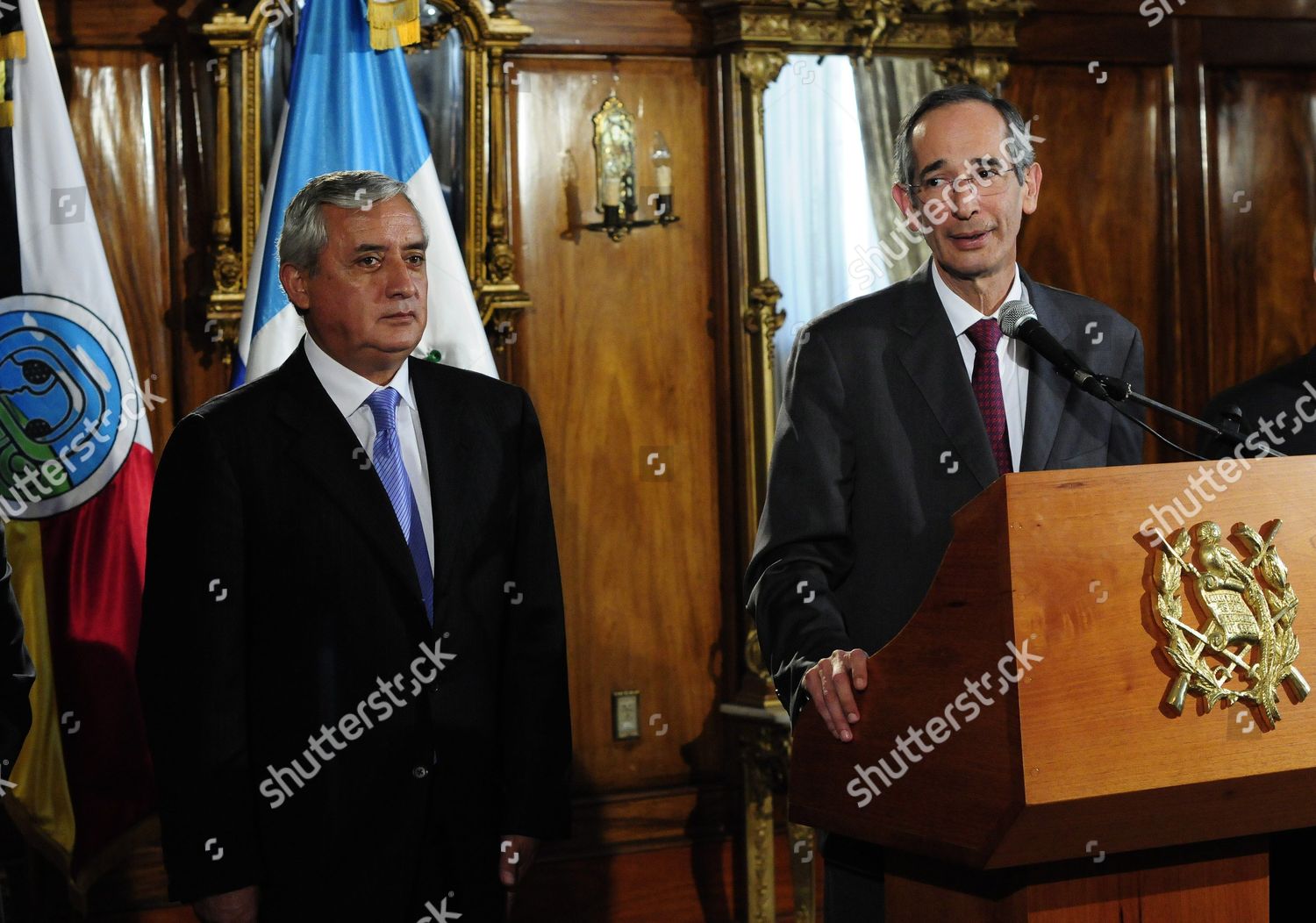
Otto Pérez Molina didn't just fade away into the history books. He crashed out. For anyone following Latin American politics in the 2010s, his name became synonymous with a specific kind of hope that turned into a very public, very messy disaster. You might remember the headlines from 2015. Tens of thousands of people in Guatemala City, standing in the rain, demanding a sitting president step down. It wasn't a coup. It was a collapse.
Honestly, the story of Otto Pérez Molina is a bit of a rollercoaster. He started as a military hero—or a villain, depending on who you ask—and ended up as the first Guatemalan president to be stripped of immunity while in office. It’s a wild tale of "La Línea," secret meetings, and a massive customs fraud ring that eventually brought the whole house down.
The General Who Wanted to Lead
Before he was a politician, Pérez Molina was a "Kaibil." If you know anything about the Guatemalan Civil War, that name should give you pause. The Kaibiles are the elite special forces, known for being incredibly tough and, frequently, accused of brutal human rights violations. During the 1980s, Pérez Molina operated under the alias "Major Tito Arias."
Critics, including human rights activists like those at the National Security Archive, have pointed to his role in the scorched-earth campaigns in the Ixil Triangle. It's a dark chapter. Yet, paradoxically, he was also one of the key military figures who signed the 1996 Peace Accords. He transitioned from a man of war to a man of "Mano Dura"—the Iron Fist.
That was his brand.
He ran for president on the promise of crushing crime. Guatemala was, and still is, struggling with insane levels of violence. People were desperate. They wanted someone who looked like they could handle a gun and a cabinet meeting. In 2011, they got him. He won.
What Was La Línea?
You can't talk about Otto Pérez Molina without talking about La Línea. This wasn't some minor accounting error. It was a massive, systemic customs fraud scheme. Basically, importers would call a specific "line" (hence the name) and negotiate bribes. In exchange for these kickbacks, the importers paid much lower customs duties to the state.
The money didn't go to schools or hospitals. It went into the pockets of high-level officials.
How it worked in the real world
- Importers paid a "commission" to the ring.
- The Superintendency of Tax Administration (SAT) looked the other way.
- Millions of dollars in tax revenue simply vanished.
- The "top" of the pyramid, referred to in wiretaps as "The Number 1" and "The Number 2," were widely understood to be Pérez Molina and his Vice President, Roxana Baldetti.
The International Commission Against Impunity in Guatemala (CICIG), backed by the UN, spent months wiretapping phones. They had thousands of hours of audio. They had spreadsheets. When they went public in April 2015, the country exploded.
The 2015 Protests: A Turning Point
It started small. A few hundred people on Facebook saying "enough." Then it became thousands. Then tens of thousands.
Guatemala’s central plaza, the Parque Central, became the heartbeat of the movement. You had grandmothers standing next to university students. Business leaders next to indigenous farmers. It was a rare moment of national unity. They weren't just mad about the money; they were tired of being treated like they didn't matter.
Pérez Molina tried to hold on. He really did. He gave these televised speeches where he looked defiant, almost angry, insisting he hadn't taken a cent. But his inner circle was fleeing or being arrested. Baldetti resigned first. Then, the inevitable happened.
In September 2015, Congress stripped him of his legal immunity. He resigned at midnight. By the next morning, he was in court.
The Trial That Took Forever
If you think the legal system moves slowly in your country, look at Guatemala. The case against Otto Pérez Molina dragged on for years. There were endless appeals, medical excuses, and legal maneuvers. It felt like the "Trial of the Century" was never actually going to end.
Finally, in December 2022, a court sentenced him to 16 years in prison for racketeering and customs fraud. He was also slapped with a massive fine of about $1 million. Interestingly, the court acquitted him of "illicit enrichment" charges because they couldn't prove exactly where the money ended up, even though they proved he ran the scheme.
But wait, it gets more complicated.
In 2023, he took a plea deal in a separate case—the "Cooptation of the State" case—where he admitted to money laundering and fraud. This was a "guilty by confession" move to get a reduced sentence.
Why This Still Matters Today
People often ask why we should care about a disgraced former president from a relatively small Central American country. The answer is simple: the "Guatemalan Spring" of 2015 showed that peaceful protest could actually topple a corrupt regime.
However, it also serves as a warning. After Pérez Molina fell, the system fought back. The CICIG was eventually kicked out of the country by the next president, Jimmy Morales. Many of the prosecutors and judges who put Pérez Molina behind bars are now in exile themselves. It’s a reminder that getting rid of one guy—even the guy at the top—doesn't fix the whole machine.
The legacy of Otto Pérez Molina is a split screen. On one side, it's a victory for the rule of law. On the other, it's a cautionary tale about how deeply corruption can be rooted in the soil of a government.
What We Can Learn from the Fallout
If you're looking for the "so what" here, it's about transparency. The "La Línea" scandal was only uncovered because of independent, international oversight. When that oversight was removed, the old ways started creeping back in.
Guatemala’s struggle is a blueprint for what happens when a population finally loses its fear. But it also shows that "Mano Dura" politics—the idea that a strongman can solve all your problems—usually ends up with that strongman using his power to serve himself.
Actionable Insights for Following Global Politics
- Look for the "Customs" red flag: In many developing nations, the customs office is the primary source of corruption because that's where the most "liquid" cash flows.
- Watch the Judiciary: A country's health isn't measured by its president, but by whether or not a judge can actually arrest that president.
- Follow CICIG-style models: Keep an eye on international anti-corruption bodies. They are often the only entities with the resources to track high-level money laundering.
- Question "Iron Fist" Rhetoric: When a candidate promises to solve crime through pure force, history (like the Pérez Molina era) suggests they may also use that force to bypass democratic checks and balances.
Ultimately, the fall of Otto Pérez Molina proved that no one is "untouchable," even if the victory for justice feels fragile in the years that follow.