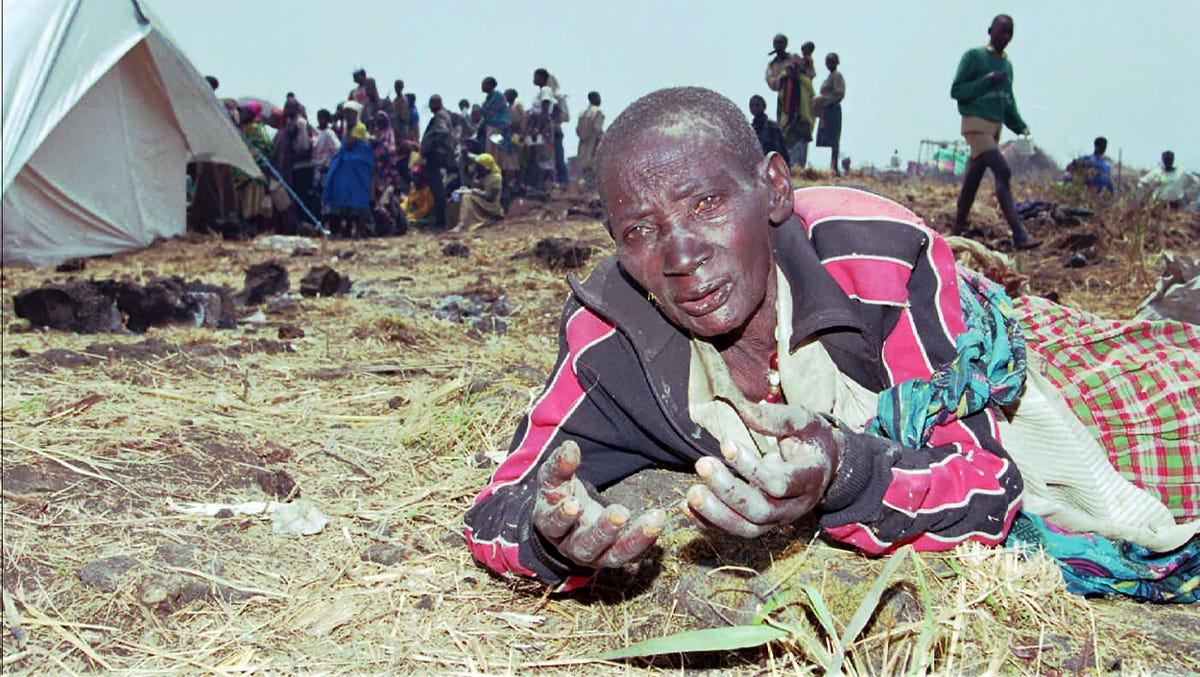
If you’re looking for a quick answer, the Rwandan genocide took place in 1994. Specifically, it ignited on April 7 and tore through the country for roughly 100 days until mid-July.
But honestly, just knowing the year doesn't even scratch the surface. It was a period where the world basically looked the other way while neighbors murdered neighbors with machetes. We're talking about a scale of violence that’s still hard to wrap your head around today.
What Triggered the 1994 Genocide?
The "start" button was pressed on the evening of April 6, 1994. A plane carrying the Rwandan President, Juvénal Habyarimana, and the Burundian President was shot down over Kigali. Everyone on board died.
Who did it? Even now, in 2026, people still argue about that. Some blame Hutu extremists who thought the president was getting too soft; others blame the Tutsi-led Rwandan Patriotic Front (RPF). Regardless of who pulled the trigger, Hutu radicals used the crash as the ultimate excuse. Within hours, roadblocks went up. The killing began almost instantly.
It wasn't just random "chaos," though it looked like it to the outside world. It was a weirdly organized nightmare.
The 100-Day Timeline
Most historians settle on 100 days as the duration. It ended around July 18 or 19, 1994, when the RPF, led by Paul Kagame, finally seized control of Kigali and forced the genocidal government to flee.
The numbers are staggering:
- Between 800,000 and 1 million people were killed.
- The majority were Tutsis, but moderate Hutus who refused to participate were also targeted.
- Around 250,000 to 500,000 women were survivors of sexual violence.
It’s often called the "Genocide against the Tutsi." That’s the official term used in Rwanda today because it acknowledges the specific group that was targeted for total extermination.
Why it got so bad so fast
The speed was because of the Interahamwe militias and the "Hutu Power" movement. They didn't just use guns. They used radio. A station called RTLM (Radio Télévision Libre des Mille Collines) broadcasted names and addresses of people to be killed. They literally called Tutsis "cockroaches" and told Hutus to "go to work."
Imagine your local radio host telling you to kill your neighbor, and half the town actually doing it. That was the reality in 1994.
It wasn't just about 1994
You’ve gotta look back at the colonial stuff to get why this happened. When Belgium ran the place, they used these pseudo-scientific "measurements" to say Tutsis were superior to Hutus. They actually issued ethnic ID cards in the 1930s.
Basically, they took two groups of people who spoke the same language and lived in the same villages and told them they were different races. When the Belgians left in 1962, the Hutus took power and the resentment that had been simmering for decades just... boiled over. There were smaller massacres in 1959, 1963, and 1973. 1994 was just the horrific finale of a very long, very toxic history.
Where is Rwanda now?
If you visited Kigali today, you’d probably be shocked. It’s one of the cleanest, safest cities in Africa. Since 1994, the country has made this massive push for "Unity and Reconciliation." They even banned the use of "Hutu" or "Tutsi" labels in official life. You’re just Rwandan.
But it’s complicated. President Paul Kagame has been in charge since the end of the genocide. While he’s credited with the country's huge economic growth (around 8% annually for years), critics say it’s come at the cost of political freedom.
There's also the Gacaca courts. These were community trials where perpetrators faced their victims in their own villages. It was a way to process over 100,000 prisoners when the standard legal system was totally broken. Some people found peace through it; others felt it was just a way for the government to solidify control.
Actionable Insights for Today
Understanding the 1994 genocide isn't just a history lesson. It's a warning about how quickly "othering" people can turn into something unstoppable.
- Visit the Memorials: If you ever travel to East Africa, the Kigali Genocide Memorial is essential. It’s where over 250,000 victims are buried. It's heavy, but it's the only way to truly grasp the scale.
- Support Local Peacebuilders: Organizations like Aegis Trust work on the ground in Rwanda to prevent future atrocities through education.
- Read Survivor Accounts: Don't just look at the stats. Read books like Left to Tell by Immaculée Ilibagiza or Shake Hands with the Devil by Roméo Dallaire (the UN commander who was ignored by his bosses).
- Watch for Early Warning Signs: Genocides don't happen overnight. They start with "us vs. them" rhetoric, dehumanizing language (like "cockroaches" or "vermin"), and the creation of lists. Recognizing these patterns in modern conflicts is the only way to actually fulfill the promise of "Never Again."
The Rwandan genocide was a failure of the international community. The UN peacekeepers (UNAMIR) were there, but they were told not to intervene. They watched it happen. That’s a legacy the world is still trying to live down.