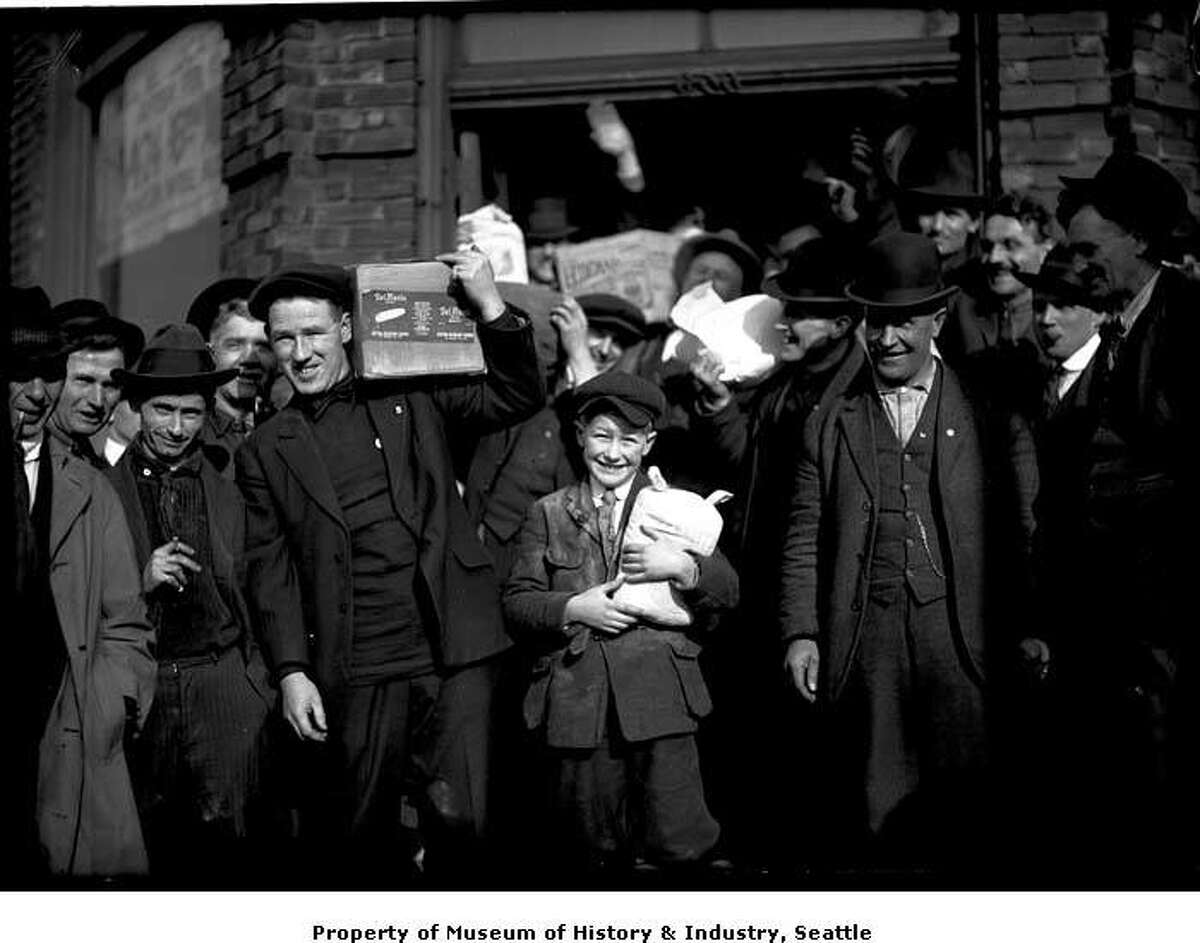
It was quiet. Weirdly quiet. On the morning of February 6, 1919, the streetcars in Seattle just stopped. No bells. No screeching metal. By noon, around 65,000 workers had walked off their jobs, leaving the city in a state of suspended animation. This wasn't just a minor squabble over a few cents an hour. The Seattle Strike of 1919 was the first major general strike in United States history, and for five days, it looked like the Pacific Northwest might actually be the starting point for a full-blown American revolution.
People were genuinely scared. If you look at the newspapers from that week, the headlines were screaming about "Bolshevism" and "Red Rule." The Mayor, Ole Hanson, was basically convinced that Seattle was about to become the next Petrograd.
What actually triggered the Seattle Strike of 1919?
To understand why this happened, you've got to look at the shipyards. During World War I, the federal government basically controlled wages through the Macy Board. Workers had agreed to keep their tools moving to support the war effort, even as inflation made their paychecks feel like pocket change. But once the Armistice was signed in November 1918, the "patriotism" argument lost its teeth.
In January 1919, 35,000 shipyard workers in Seattle walked out. They wanted a raise. The problem was that the Emergency Fleet Corporation—a government entity—refused to budge, even threatening to pull the contracts if the yard owners gave in. The shipyard workers then asked the Seattle Central Labor Council for help. They wanted a general strike. They wanted the whole city to shut down in solidarity.
And the crazy part? The Council said yes.
Life in a city that isn't working
Imagine a city of nearly 315,000 people where nothing moves. No taxis. No garbage pickup. No newspapers (except the union-run Seattle Union Record). It sounds like chaos, right? But the reality of the Seattle Strike of 1919 was surprisingly orderly. The strikers didn't want a riot; they wanted to show they could run the city themselves.
The Labor War Chest set up 21 community kitchens. They served over 30,000 meals a day. Strikers and their families could get a full dinner for 25 cents; everyone else paid 35 cents. They had a "War Labor Guard" that patrolled the streets without weapons. Their instructions were basically: don't start anything, don't let anyone else start anything, and stay sober.
Crime actually dropped. It's one of those weird historical footnotes—major Major Ole Hanson was calling in federal troops from Camp Lewis, but the city was probably safer during those five days than it had been in years.
The "General Strike Committee" was the real government
Essentially, a group of 300 rank-and-file workers became the de facto city council. They had to decide who got to work. Did the hospitals need milk? Yes, so the milk wagon drivers got special permits. Did the fire department need to stay active? Of course. It was a massive experiment in "industrial democracy."
But this orderliness is exactly what freaked out the establishment. If workers could organize a city this efficiently without "bosses," what did they need the bosses for? That's the question that kept the wealthy residents of Queen Anne Hill awake at night.
The "Red Scare" begins here
You can't talk about this strike without talking about the political climate. The Russian Revolution was only two years old. Most of the country was terrified that "Reds" were hiding under every bed. Seattle was known as a radical town—the Industrial Workers of the World (the IWW, or "Wobblies") had a huge presence there.
Mayor Ole Hanson became a national hero by painting the Seattle Strike of 1919 as a revolutionary plot. He issued a proclamation demanding the strike end and started hiring hundreds of special police deputies. He told the press he would use "every force" to break the strike.
The national media ate it up. They ignored the fact that the workers just wanted better wages; they focused on the idea that the "Seattle Soviet" was trying to overthrow the U.S. government. This rhetoric basically kickstarted the first American Red Scare. It led directly to the Palmer Raids and a decade of intense crackdowns on unions.
Why did it fail so quickly?
By February 11, it was over. Five days. That’s all it lasted.
Why? For starters, the pressure was immense. International union leaders in the East were terrified of being associated with "revolutionaries" and started threatening to pull the charters of the Seattle locals.
Then there was the sheer exhaustion of it. The strike committee was under constant threat of arrest. The city wasn't starving, but the "business as usual" crowd was winning the PR war. Most importantly, the shipyard workers—the ones who started the whole thing—weren't actually getting any closer to their raises. The general strike was a massive display of power, but it didn't have a clear "Exit Strategy."
When the workers went back to their jobs, they hadn't won a single concession. Not one.
The long-term fallout
Even though the strike "failed" in the short term, its ghost haunted Seattle for decades. It destroyed the local labor movement's momentum. Employers used the strike as an excuse to implement the "American Plan"—essentially a massive push for "open shops" that didn't require union membership.
It also ruined lives. Dozens of "radicals" were arrested and some were eventually deported. The Seattle Union Record was suppressed.
But for a moment, it showed that the working class could literally stop the world. Historians like Dana Frank and organizations like the Seattle General Strike Project at the University of Washington have done incredible work documenting how this wasn't just a "communist plot." It was a bunch of frustrated people who had worked through a war, seen prices double, and realized their "hero" status as workers expired the moment the guns fell silent in Europe.
Common Misconceptions
- It was violent: Nope. It was remarkably peaceful.
- It was a communist revolution: Not really. Most strikers were just AFL union members who wanted a fair shake, though there were definitely radicals in the mix.
- The Mayor broke the strike: Ole Hanson took the credit, but the internal pressure from international union headquarters was the real killer.
How to research the strike today
If you're interested in digging deeper into the Seattle Strike of 1919, you should check out the digital archives at the University of Washington. They have high-resolution scans of the original pamphlets and newspapers.
You can also visit the Labor Temple in Seattle, though it’s moved from its original 1919 location. Walking through the International District or the old shipyard areas near Harbor Island gives you a sense of the scale. The topography of Seattle played a huge role in how the strike was policed—the hills made it easy to isolate different neighborhoods.
Practical Steps for History Buffs
- Read "Labor in Seattle" by Robert L. Friedheim. It's the gold standard for this specific event.
- Visit the Museum of History & Industry (MOHAI): They often have exhibits covering Seattle’s radical labor past.
- Check out the "Wobblies" archives: If you want to see the more radical side of the propaganda, the IWW archives provide a stark contrast to the city's official narrative.
- Look at the 1919 Census data: See who these workers actually were. Many were immigrants, but many were also returning WWI veterans who felt betrayed by the government they just fought for.
The story of the strike is a reminder that the "roaring twenties" didn't start with a party; they started with a massive, tension-filled standoff that changed how Americans thought about work, loyalty, and the power of saying "no."