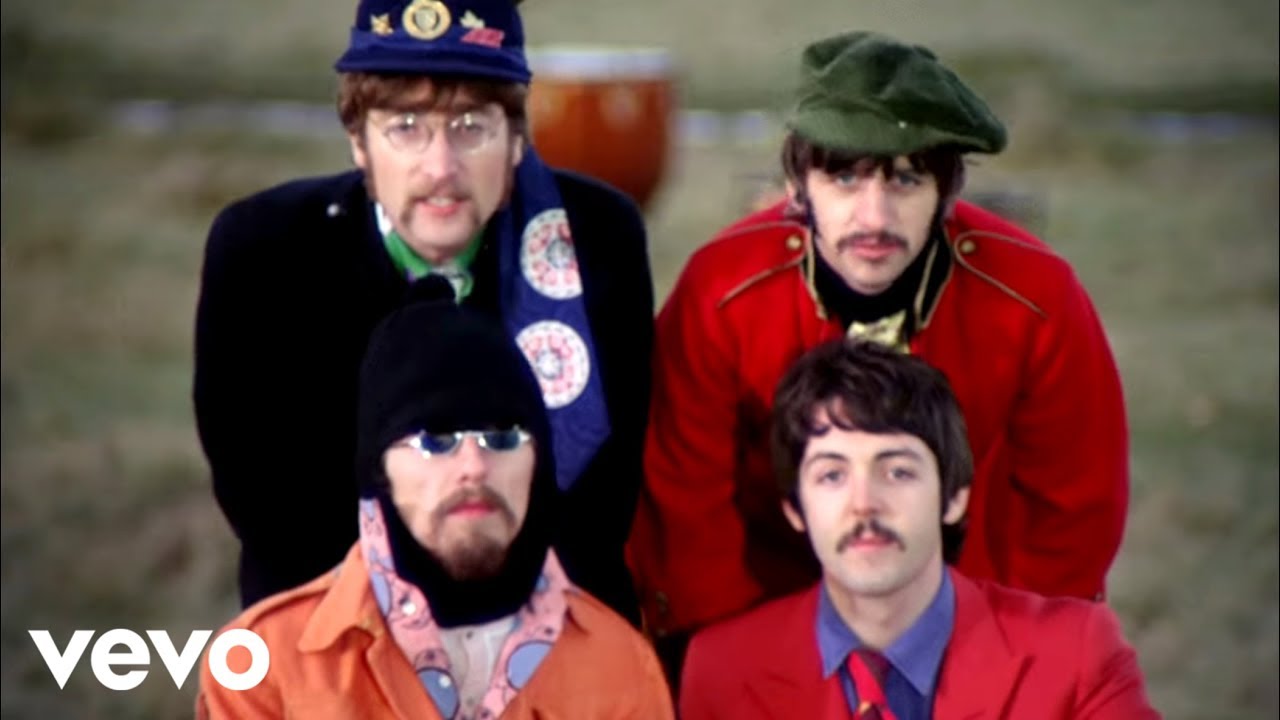
John Lennon was sitting in a Spanish garden when he started writing it. He was filming a movie called How I Won the War, wearing those iconic round glasses for the first time, and feeling incredibly lonely. He was miles away from the screaming fans and the polished "mop-top" image that had begun to feel like a cage. He was thinking about home. Not the home he lived in then, but the home of his childhood—a Salvation Army children's home in Liverpool. That's where the Strawberry Fields Forever song began its life, as a messy, acoustic demo about childhood nostalgia and the blurring lines of reality.
It isn't just a pop track. Honestly, it’s a rupture in the timeline of music. When people talk about the "Summer of Love" or the psychedelic era, they usually start here. It was the moment the Beatles stopped being a band and started being a laboratory.
The Salvation Army Garden That Changed Everything
Most people think Strawberry Field is a metaphorical place, but it was a very real, very physical brick building in Woolton. Lennon used to climb over the wall to play in the wooded garden with his friends. It was his sanctuary. His Aunt Mimi, who raised him, used to yell, "John, they’ll hang you!" to which he’d famously reply, "They can’t do nothing." That line morphed into "Nothing to get hung about," one of the most famous lyrics in rock history.
Lennon wasn't just writing about a park. He was writing about his own sense of isolation. "No one I think is in my tree, I mean it must be high or low." He felt like a genius or a madman, with no middle ground. He was struggling to communicate his internal world, and the Strawberry Fields Forever song became the bridge.
The recording process was a nightmare. A beautiful, creative nightmare. They spent 45 hours in the studio on this one track. To put that in perspective, they recorded their entire first album, Please Please Me, in about ten hours. This was different. George Martin, their producer, and Geoff Emerick, their engineer, were being asked to do things that shouldn't have been possible with 1966 technology.
Two Versions, One Masterpiece
The song you hear on the record is actually a Frankenstein’s monster of two different takes. This is the part that still blows the minds of modern producers. Lennon liked the beginning of Take 7—a light, acoustic-heavy version. But he loved the ending of Take 26—a heavy, brass-and-cello-laden beast. The problem? They were in different keys. And they were recorded at different tempos.
Lennon, with his usual "just fix it" attitude, told George Martin to join them together.
It was technically impossible. But Emerick realized that if he sped up the slower version and slowed down the faster version, the pitches would almost—almost—match. If you listen closely at the 60-second mark, right on the word "going," you can hear the edit. The mood shifts. The texture thickens. It’s a happy accident that created a disorienting, dreamlike transition that fits the lyrics perfectly.
The Mellotron and the Sound of the Uncanny
The opening of the Strawberry Fields Forever song is maybe the most recognizable intro in history. That fluty, wobbly sound isn't a flute. It’s a Mellotron.
Basically, the Mellotron was the world's first sampler. Inside the machine were literal strips of magnetic tape for every note on the keyboard. When Paul McCartney pressed a key, a piece of tape played a recording of a real flute. It sounded slightly "off," slightly ghostly. It was the perfect instrument for a song about memories that are fading and shifting.
Then you have the drums. Ringo Starr doesn't get enough credit for this. His drumming on this track is backwards-feeling, even when it’s playing forwards. He used heavy mallets on the toms, creating a thudding, primordial heartbeat. It’s not a beat you can dance to; it’s a beat you drown in.
- The song was released as a double A-side with "Penny Lane."
- It was the first time a Beatles single failed to hit number one in the UK since 1963, losing out to Engelbert Humperdinck.
- The promotional film for the song is considered one of the earliest true "music videos," using slow motion and reverse film techniques.
Why the Lyrics Still Mess With Your Head
"Living is easy with eyes closed, misunderstanding all you see."
That’s a heavy line for 1967. Lennon was exploring the idea that our perception of reality is flawed. He was reading The Psychedelic Experience by Timothy Leary and experimenting with LSD, which influenced the non-linear structure of the lyrics. The song doesn't tell a story. It describes a state of mind.
It’s about the difficulty of being yourself. Lennon stutters through the verses: "Always, no sometimes, think it’s me." He’s second-guessing his own existence in real-time. It’s incredibly vulnerable for a man who was arguably the most famous person on earth at the time. He was stripping away the "Beatle John" mask and showing the scared kid from Woolton.
The Legacy of the Strawberry Fields Forever Song
The impact of this track on the music industry was basically an earthquake. Without it, you don't get Pink Floyd’s The Piper at the Gates of Dawn. You don't get Radiohead’s OK Computer. You don't get the entire genre of "Dream Pop."
It taught musicians that the studio itself was an instrument. You didn't have to capture a band playing in a room; you could capture a dream. You could manipulate tape, play instruments backward, and mash different versions together to create something that never existed in physical space.
Even the "Cranberry sauce" controversy at the very end—where fans thought John was saying "I buried Paul"—added to the song’s mystique. It wasn't a clue in a death hoax; it was just John being weird in the studio. But that’s the power of the Strawberry Fields Forever song. It invites obsession. It demands that you listen to it a hundred times to catch every layer of cello, every swarmandal (the Indian zither George Harrison played), and every whispered word.
Actionable Insights for Music Lovers and Creators
If you want to truly appreciate the depth of this track, there are a few things you should do:
- Listen to the "Anthology" versions: Find the early acoustic demos. Hearing Lennon's raw voice before the studio wizardry reveals the heartbeat of the song. It shows how a simple folk tune can be transformed into a symphony.
- Use the "Split" technique: If you're a producer, try combining two takes of a song with slightly different moods. The tension between two different tempos or keys can create a "liminal" feeling that you can't get from a perfect recording.
- Visit the Memorial: If you’re ever in New York, go to the Strawberry Fields memorial in Central Park. It’s a "quiet zone" for a reason. Stand on the "Imagine" mosaic and realize that this song started a movement of inward-looking songwriting that hasn't stopped.
- Study the Mellotron: Check out digital VST versions of the Mellotron M400. Using those "flute" sounds in a modern context still brings that 1967 eerie vibe to any track.
The song remains a masterpiece because it refuses to be pinned down. It’s a childhood memory, a drug trip, a technical marvel, and a cry for help all at once. Nothing is real, and nothing to get hung about. It just is.