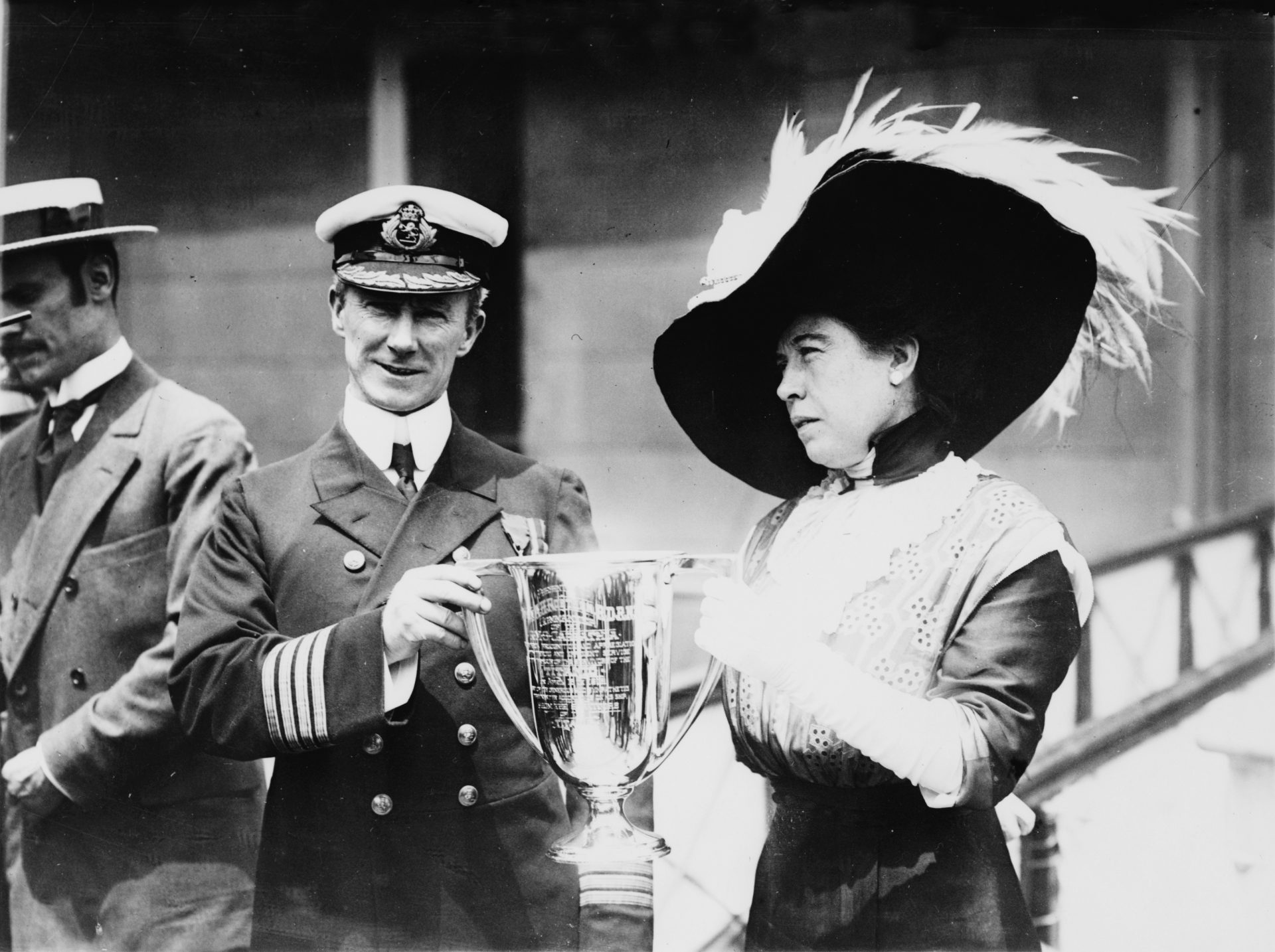
Margaret Brown never actually called herself "Molly." Not once.
It's one of those weird things where Hollywood just decides a name sounds better and sticks it to a real person forever. To her friends, her family, and the people she helped pull out of the freezing Atlantic, she was Margaret or Maggie. But the legend of the Unsinkable Molly Brown is so massive that the real woman—the philanthropist, the polyglot, the political activist—often gets buried under the caricature of a brassy, loud-mouthed social climber.
Honestly, the real story is much more interesting than the Debbie Reynolds movie.
Margaret wasn't just some lucky lady who survived a shipwreck. She was a powerhouse who spent her life fighting for miners’ rights, women’s suffrage, and literacy. When the Titanic hit that iceberg in April 1912, she didn't just survive; she took charge. While others were paralyzed by fear or Victorian decorum, she was reportedly threatening to throw a crewman overboard if he didn't start rowing back to look for survivors. That's the energy we're dealing with here.
The Gold Mine That Changed Everything
She wasn't born into the elite. Far from it. Born in 1867 in Hannibal, Missouri, to Irish immigrants, Margaret Tobin grew up in a two-room cottage. Her father worked at a gasworks. By age 13, she was stripping tobacco leaves in a factory. It was a hard, gritty existence that shaped her later refusal to take "no" for an answer from the Denver upper crust.
In 1886, she moved to Leadville, Colorado. She worked in a dry goods store. She met J.J. Brown. He wasn't rich then. In fact, she famously said she wanted to marry a rich man to help her father, but she ended up marrying J.J. because she loved him. Then, luck struck. Or rather, J.J.’s engineering genius struck. He figured out how to reach gold deep in the Little Jonny Mine by using hay and timbers to stop the shifting sand.
Suddenly, they were worth millions.
They moved to Denver, buying a massive Victorian mansion (which you can still visit today). But the "Sacred Thirty-Six"—the elite social circle of Denver—didn't want her. They thought she was "new money." Crude. Too loud. But Margaret didn't care about their tea parties. She learned to speak French, German, and Italian. She studied at Carnegie Institute. She started the Denver Woman’s Press Club. She basically forced the city to respect her through sheer force of intellect and charity work.
What Really Happened to the Unsinkable Molly Brown on the Titanic
When you talk about the Unsinkable Molly Brown, the conversation always circles back to Lifeboat 6.
She was a first-class passenger, traveling back from Egypt because she got word her grandson was ill. When the ship hit the iceberg, she was calm. She helped others into boats. She was basically shoved into Lifeboat No. 6 by a crewman. The boat was under the command of Quartermaster Robert Hichens—the guy who was actually at the wheel when the ship hit the berg.
Hichens was a mess. He was terrified. He refused to go back for survivors, convinced they would be swamped or pulled down by the "suction."
Margaret wasn't having it.
She reportedly took an oar. She told the other women to start rowing to stay warm. When Hichens kept grumbling about them all dying, she told him to shut up or she’d drop him in the water. She was the one who kept spirits up through the long, freezing night. By the time the Carpathia rescued them, she was already organizing a committee of survivors to make sure the poor steerage passengers had clothes and support once they landed in New York.
She didn't just survive. She led.
By the time the ship docked, she had raised nearly $10,000 for the destitute survivors. She stayed on the Carpathia until every last person was accounted for and had a place to go. When a reporter asked how she survived, she joked, "Typical Brown luck. We're unsinkable." And just like that, a legend was born.
More Than Just a Survivor
People forget that Margaret Brown was a serious political figure. She ran for the U.S. Senate in 1914—years before women even had the right to vote nationally. She was a suffragist who worked with Alice Paul. During World War I, she went to France to work with the American Committee for Devastated France, earning the French Legion of Honor.
She wasn't just some socialite with a funny nickname. She was a woman who used her "unsinkable" status to open doors that were previously slammed in her face.
She fought for the rights of the miners in Ludlow after the infamous massacre. She knew where she came from. She never forgot the smell of the tobacco factory or the dust of the Leadville mines. That's why the Denver elite's rejection stung, but it never stopped her. She just built her own world.
The Misconceptions That Stick
- The "Molly" Name: Again, she never used it. It was a 1960s musical invention.
- The "Social Climber" Trope: While she wanted to be part of Denver society, it was mostly so she could use those connections for her charities, like the Denver Orphans' Home and the Juvenile Court.
- The Wealth Myth: By the time she died in 1932, her fortune had dwindled significantly due to the Great Depression and the lack of a formal will from J.J., but she was still living at the Barbizon Hotel in New York, pursuing her passion for acting.
Why Her Story Still Matters in 2026
History tends to flatten women into archetypes. You’re either a saint or a loudmouth. Margaret Brown was both, and neither. She was complicated. She was a woman of "new money" who used her wealth to challenge the old world. She showed that resilience isn't just about surviving a disaster; it's about what you do the day after you get off the rescue ship.
If you want to truly understand the spirit of the era, don't look at the stoic portraits of the Vanderbilts. Look at Margaret. She represents the shift from the Victorian "helpless lady" to the modern, active citizen.
Actionable Insights for History Buffs and Travelers
If you're fascinated by the life of Margaret Brown, don't just watch the movies. Take these steps to get the real story:
- Visit the Molly Brown House Museum: Located in Denver, Colorado. It’s one of the few places where you can see her actual belongings and understand the scale of her life in the West.
- Read "Molly Brown: Unraveling the Myth": Written by Kristen Iversen. It’s widely considered the definitive biography that separates the Hollywood "Molly" from the real Margaret.
- Explore the Titanic Historical Society: They hold records of the survivor committees she chaired, which show her organizational genius in the weeks following the sinking.
- Research the Ludlow Massacre: Look into her role in the aftermath of this labor dispute to see her "unsinkable" spirit applied to social justice, not just shipwrecks.
The reality of Margaret Brown is far more impressive than the myth. She was a woman who rowed against the current, both in the Atlantic and in a society that tried to keep her in her place.