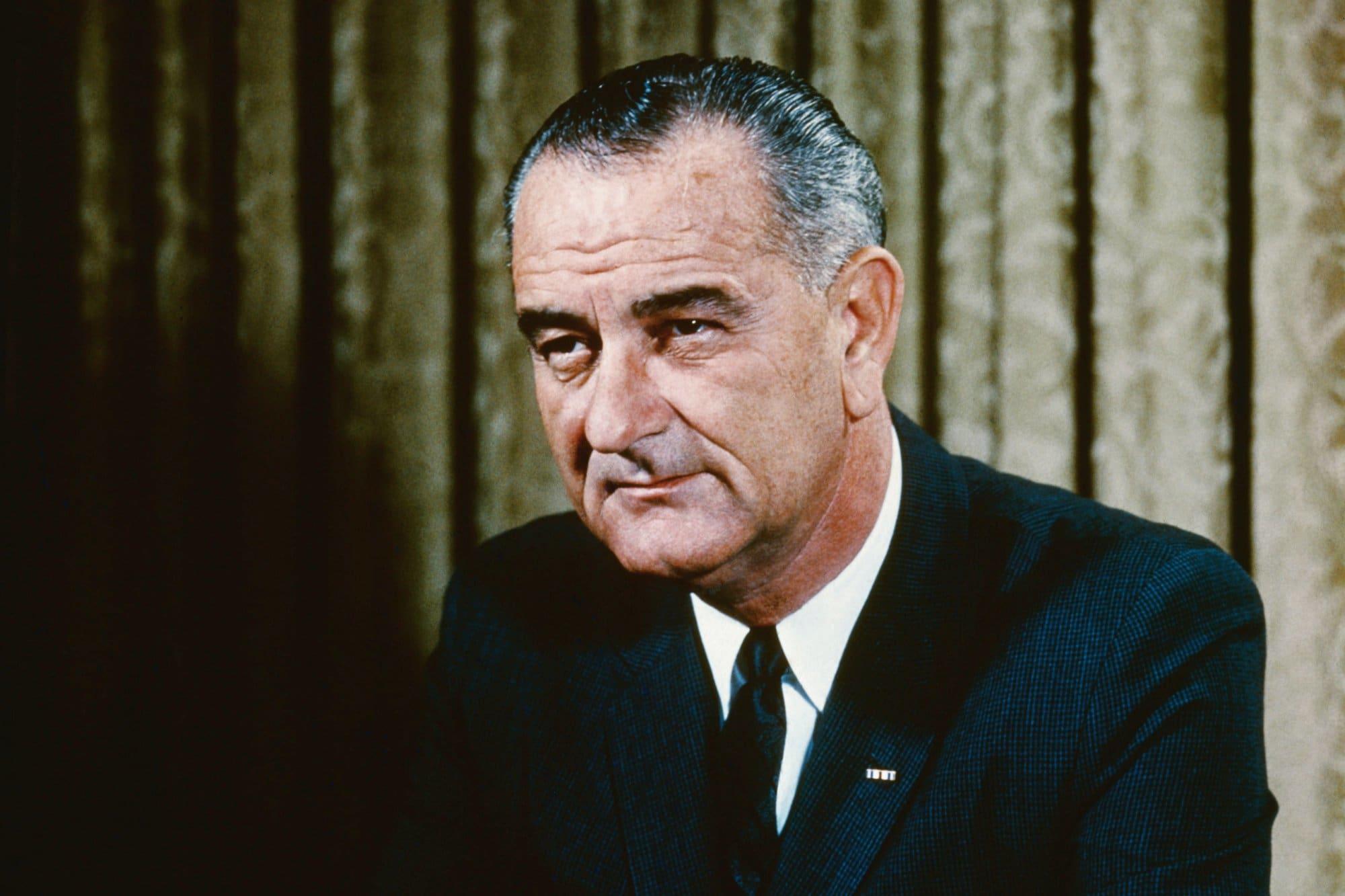
Lyndon Baines Johnson was a giant. Physically, he stood 6'4", but his presence in a room was massive, almost suffocating. If you were in his way, he’d lean over you, nose-to-nose, until you basically gave in just to breathe again. People called it "The Treatment." He was arguably the most effective—and most polarizing—legislator the United States ever produced. But when we look back at the years of Lyndon Johnson, we aren't just looking at a presidency; we're looking at a Shakespearean tragedy played out in the West Wing.
He wanted to be the greatest domestic president in history. He almost was. Then Vietnam happened.
The Senate Mastermind
Before he was ever in the White House, LBJ owned the Senate. From 1953 to 1961, he was the youngest Majority Leader in history. He didn't just lead; he manipulated. He knew every senator's mistress, every senator's gambling debt, and exactly what it would take to get a vote. He was a political bloodhound.
Robert Caro, who spent decades writing the definitive biography of Johnson, describes a man who was obsessed with power but also deeply empathetic toward the poor. It’s a weird contradiction. He grew up in the Hill Country of Texas, dirt poor, watching his mother struggle. That stayed with him. He didn't just want power for the sake of it; he wanted to use it to change how people lived. But he was also a ruthless opportunist. During his rise, he'd pivot on civil rights whenever it suited his southern constituency, only to become the greatest champion for Black Americans since Lincoln once he held the ultimate lever of power.
1963: The Accidental President
November 22, 1963, changed everything. Johnson was stuck in a vice presidency he hated. JFK’s inner circle, the "Best and the Brightest," looked down on him. They called him "Uncle Cornpone." Then, a motorcade in Dallas turned a political fossil into the leader of the free world.
The transition was eerie. Johnson had to project stability while the nation mourned. He used the memory of Kennedy as a battering ram to pass legislation that JFK likely never could have moved through Congress. He told his advisors that the Civil Rights Act was the priority. They told him it was a lost cause. He told them, "Well, what the hell is the presidency for?"
The Great Society vs. The Big Muddy
The core of the years of Lyndon Johnson is the Great Society. This wasn't just a few laws; it was a total overhaul of the American social contract. Medicare. Medicaid. The Voting Rights Act of 1965. Head Start. The Wilderness Act. He was passing bills like he was running out of time—which, honestly, he was.
He had this vision of an "America where no child goes unfed and no youngster goes unschooled." And for a moment, it looked like it was working. Poverty rates actually plummeted during his tenure. But while he was declaring war on poverty at home, he was getting sucked into a real war abroad.
Vietnam was his undoing.
He didn't want the war. He called it "that bitch of a war." But he was terrified of being the first American president to lose. He believed in the "Domino Theory"—the idea that if South Vietnam fell to Communism, the rest of Southeast Asia would follow. So, he escalated. From a few thousand advisors to over half a million troops. He lied to the public about the Gulf of Tonkin incident. He lied about the body counts. And the more he lied, the more the "Credibility Gap" grew.
The 1968 Breaking Point
By 1968, the country was tearing itself apart. You had the Tet Offensive showing the war was nowhere near over. You had protestors outside the White House chanting, "Hey, hey, LBJ, how many kids did you kill today?"
It broke him.
On March 31, 1968, he sat in the Oval Office and told a shocked nation, "I shall not seek, and I will not accept, the nomination of my party for another term as your President." He was done. He went back to his ranch in Texas, grew his hair long like a hippie—seriously, there are photos—and died just a few years later.
Why We Still Can't Agree on Him
If you talk to a historian today, they’ll tell you Johnson is a paradox. On one hand, you have the Civil Rights Act of 1964, which ended legal segregation. You have the Voting Rights Act, which actually gave Black people the right to vote in the South. You have the Great Society, which is the only reason millions of seniors aren't living in abject poverty today.
On the other hand, you have 58,000 dead Americans and millions of dead Vietnamese. You have a legacy of government distrust that we still haven't fixed.
He was a man of massive ego and massive insecurity. He was a bully who cared about the underdog. It’s complicated. It’s messy.
Actionable Insights for History Buffs and Students
To truly understand the years of Lyndon Johnson, you can't just read a textbook. You have to look at the primary sources and the long-term data.
- Listen to the LBJ Tapes: The LBJ Library has released thousands of hours of his recorded phone calls. Hearing him cajole, threaten, and joke with world leaders gives you a better sense of his "Treatment" than any book ever could.
- Analyze the Poverty Data: Look at the U.S. Census Bureau’s historical poverty tables from 1960 to 1970. You'll see one of the sharpest declines in American history, largely attributed to Great Society programs.
- Visit the LBJ Ranch: Located in Stonewall, Texas, the "Texas White House" shows the divide between his rural roots and his global power.
- Read the Pentagon Papers: If you want to understand the Vietnam side of his legacy, these leaked documents show exactly how the administration misled the public.
- Compare Legislative Records: Look at the number of bills passed under Johnson versus current administrations. It’s a masterclass in how to move the gears of government, regardless of whether you agree with the policies.
The tragedy of Johnson is that he spent his life building a legacy of progress, only to watch it get consumed by a jungle war he never really understood. He was a man who wanted to be loved by everyone, but ended his career as one of the most hated figures in the country. To study his years is to study the very limits of American power.