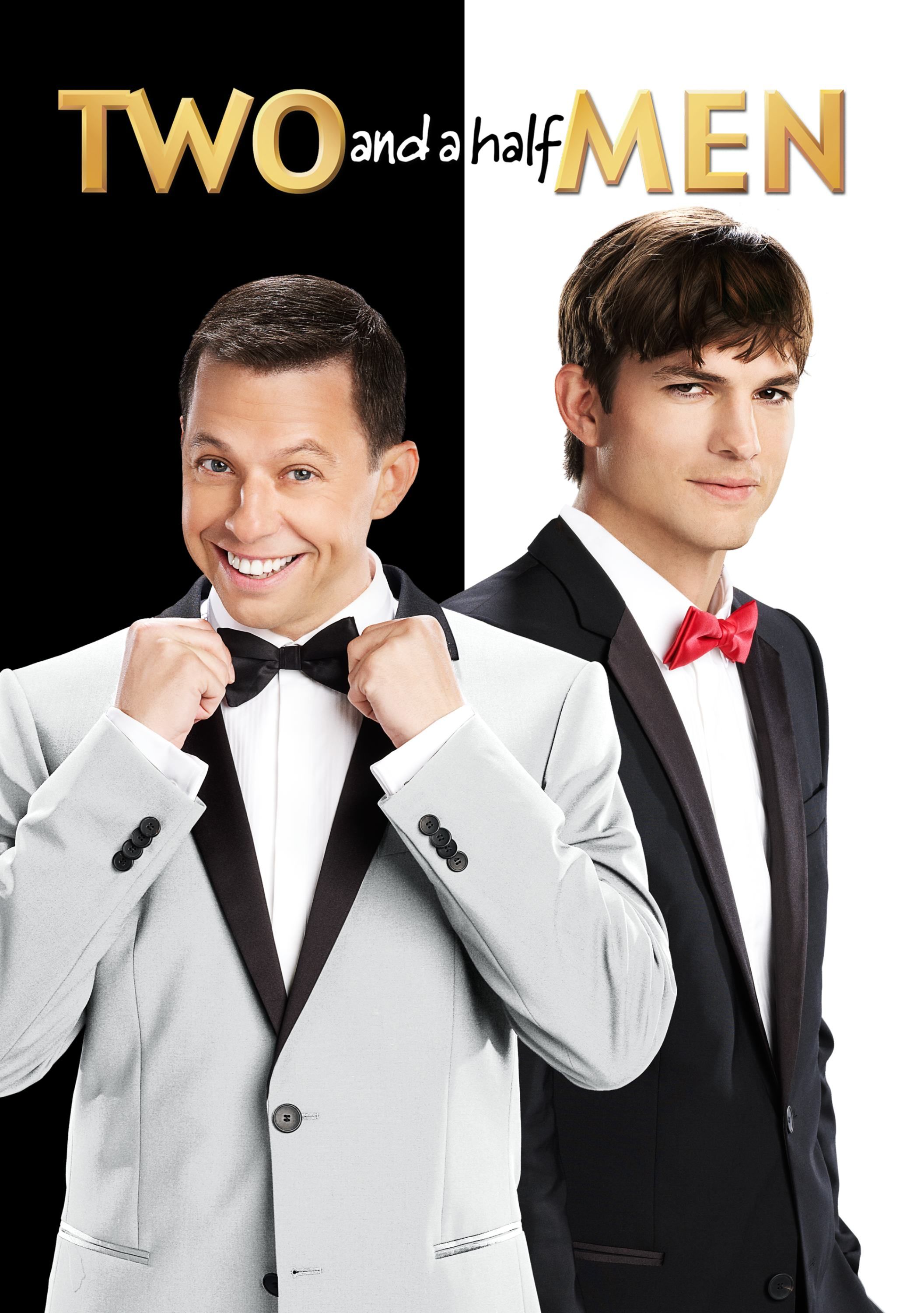
Charlie Sheen was gone. Just like that. After a public meltdown that felt like a fever dream involving "tiger blood" and "winning," the biggest sitcom on the planet faced a literal life-or-death moment. Two and a Half Men Season 9 shouldn't have worked. Most shows don't survive losing their central gravity, especially when that gravity is a guy named Charlie Harper.
Honestly, the stakes were absurd. CBS was looking at losing a billion-dollar franchise. Chuck Lorre had to decide whether to kill the show or reinvent it. He chose reinvention. Enter Ashton Kutcher. He wasn't playing Charlie. He wasn't even playing a relative. He was Walden Schmidt, a heartbroken billionaire who looked like he’d just stepped out of a Silicon Valley startup but acted like a lost puppy.
The Impossible Task of Replacing Charlie Harper
You can't talk about Two and a Half Men Season 9 without talking about the funeral. It was a bold move. Opening the season with Charlie Harper’s funeral was basically Chuck Lorre’s way of saying, "There is no coming back from this." The house was packed with Charlie's ex-girlfriends, all of them furious or relieved. It was dark. It was meta. It was exactly what the show needed to clear the air.
But here’s the thing: Walden Schmidt was the polar opposite of Charlie. Where Charlie was cynical, Walden was naive. Where Charlie was a functional alcoholic, Walden drank juice. Where Charlie was a predator, Walden was the prey. This shift changed the entire DNA of the show. Suddenly, Alan Harper wasn't just the "leech" brother; he was the mentor. Sorta. He had to teach a billionaire how to be a "man," which is hilarious because Alan is the last person who should be teaching anyone about masculinity.
The ratings for the premiere were massive. We’re talking 28 million viewers. That’s Super Bowl territory for a sitcom. People tuned in for the train wreck, but they stayed because the dynamic between Jon Cryer and Ashton Kutcher actually had some legs.
Why Walden Schmidt Changed Everything
Let's be real. Walden was a weird character at first. He tried to drown himself in the ocean because his wife, Bridget (played by Judy Greer), dumped him. That’s how he meets Alan. It’s a classic "meet-cute" but for two dudes in a beach house.
The chemistry was different. With Charlie, the humor came from Alan’s desperation vs. Charlie’s coolness. In Two and a Half Men Season 9, the humor shifted to Alan’s greed vs. Walden’s bottomless pockets. Walden buys the house. He keeps Alan around because he's lonely. It turned the show into a buddy comedy rather than a family dysfunction story.
- The Hair and Beard: Walden started the season looking like a caveman. It was a visual metaphor for his depression. When he finally cut his hair, it was like the show finally officially started.
- The Money: Unlike Charlie, who was "Malibu rich," Walden was "buy-a-private-jet-on-a-whim rich." This opened up new plotlines that weren't possible before.
- The Innocence: Kutcher brought a sincerity that Sheen never had. It made the show feel softer, which some fans hated, but it probably saved the series from becoming too bitter.
Critics were divided. Some felt the "raunchy" soul of the show died with Charlie. Others thought the injection of new blood was the only thing that kept it from becoming a parody of itself. Honestly, looking back, the show had already started to repeat itself by Season 8. The reboot gave it a second life that lasted four more years.
The "Half" Man Problem
What about Angus T. Jones? Jake Harper was barely a "half" man by this point. He was a teenager. And frankly, the writers didn't know what to do with him. In Two and a Half Men Season 9, Jake mostly just sits on the couch, eats, and makes "stoner" jokes without actually being a stoner because it was network TV.
This is where the show struggled. The title Two and a Half Men didn't really fit anymore. Jake was becoming a peripheral character. His chemistry with Walden was non-existent compared to the bonding he had with Uncle Charlie. By the end of the season, they sent him off to the Army. It felt like a white flag from the writers. They were admitting that the "family" aspect of the show was over. It was now just Two Men and a House in Malibu.
Standout Episodes and Missed Opportunities
If you go back and rewatch Two and a Half Men Season 9, some episodes actually hold up. "Nice to Meet You, Walden Schmidt" is a masterclass in how to reboot a series. It’s fast-paced, self-aware, and funny.
Then there’s the Bridget problem. Walden’s obsession with his ex-wife dragged on way too long. It made him look pathetic rather than endearing. The show thrived when it leaned into Walden’s tech-bro background or his weird "Odd Couple" friendship with Alan. When it tried to do serious romance, it stalled.
The Guest Stars
The show always had great guests, and Season 9 doubled down.
- Sophie Winkleman as Zoe: She was a great foil for Walden. British, smart, and totally unimpressed by his money.
- Mimi Rogers as Walden’s mom: Absolute casting gold. She played a primatologist who treated Walden like a lab subject.
- Kathy Bates: She won an Emmy for playing Charlie Harper’s ghost. It was weird, surreal, and arguably the highlight of the entire season.
Dealing with the Charlie Sheen Shadow
You could feel Charlie’s ghost in every scene. The show couldn't stop talking about him. Whether it was Alan mentioning "my brother" or the set remaining largely the same, the transition was bumpy. It took about ten episodes for the audience to stop looking at the door expecting Charlie Sheen to walk through it.
The writers were clearly angry. The jokes about Charlie’s death were mean-spirited. They didn't just kill him; they dropped a piano on him. Then they revealed his ashes were "mostly cigar ash and cheap gin." It was a public divorce played out in a 22-minute sitcom format.
But here is a hot take: Two and a Half Men Season 9 was actually better written than Season 8. Season 8 felt tired. Season 9 felt like everyone was trying to prove they could survive without their star. Jon Cryer, in particular, stepped up. He finally won the Lead Actor Emmy during this era, proving he was the true anchor of the show all along.
The Legacy of the Transition
Is it the best season? No. That’s probably Season 3 or 4. But it is the most important one. It proved that the "Multi-Cam Sitcom" wasn't dead. It proved that a brand name is often bigger than the lead actor.
If you’re diving back into the show, you have to accept it for what it is: a different show. It’s "Two and a Half Men 2.0." It’s shinier, more modern, and a bit more sensitive. If you wanted the grittiness of Charlie Harper, you weren't going to find it in Walden Schmidt’s billion-dollar cloud software world.
Actionable Insights for Fans and Viewers
If you’re planning a rewatch or checking out the Kutcher era for the first time, keep these things in mind to get the most out of the experience:
- Watch the transition episodes back-to-back: The first three episodes of Season 9 are essentially a movie. They cover Charlie’s death, Walden’s arrival, and the new status quo.
- Focus on Jon Cryer: Pay attention to how Alan’s character evolves. He becomes more manipulative and weirder, which is actually more fun to watch than his earlier "sad sack" persona.
- Look for the Meta-Humor: Chuck Lorre loves to put messages in the "vanity cards" at the end of the credits. During Season 9, these were often directed at the drama happening behind the scenes.
- Check out the Guest Arcs: The Zoe storyline (played by Sophie Winkleman) is arguably the best romantic arc in the second half of the series. It gives Walden some much-needed maturity.
- Skip the Filler: Like any 24-episode season, there is fluff. If an episode focuses too much on Jake’s school life in this season, it’s usually safe to skim. The gold is in the Alan/Walden dynamic at the beach house.
The show eventually ended in Season 12 with a finale that everyone hated, but Season 9 was a genuine triumph of production. It took a sinking ship and turned it into a sleek, if slightly different, yacht. It’s a fascinating case study in television history and worth a second look for anyone who dismissed it back in 2011.