On a quiet Wednesday evening in April 2013, the small town of West, Texas, changed forever. Most people were sitting down for dinner or finishing up chores when the sky turned an angry, glowing orange. It wasn’t a sunset. It was a massive fire at the West Fertilizer Company. Within twenty minutes, the situation escalated from a local emergency to a national tragedy that shook the ground with the force of an earthquake.
The West Texas fertilizer plant explosion wasn't just some freak industrial accident. It was a failure of oversight, a storage nightmare, and a demonstration of how dangerous ammonium nitrate can be when it’s not respected. Honestly, if you look at the aerial photos of the site afterward, it looks like a literal war zone. The crater was 93 feet wide. Entire apartment complexes were leveled. A nursing home collapsed. It’s hard to wrap your head around that kind of destruction in a town of 2,800 people.
The Night Everything Broke
At roughly 7:50 PM on April 17, 2013, a fire broke out in the seed and fertilizer warehouse. Local volunteer firefighters, the kind of guys who are also your neighbors and mechanics, rushed to the scene. They did what they were trained to do: they fought the fire. But they didn't know they were standing on top of a ticking bomb.
Roughly 30 tons of ammonium nitrate—a chemical used for fertilizer but also a potent explosive—were stored in wooden bins. Wooden bins. Think about that. You have a highly combustible chemical stored in a combustible container. When the heat got high enough and the pressure built up within the structure, the material detonated.
The blast was felt 50 miles away. It registered as a 2.1-magnitude tremor on United States Geological Survey sensors.
Fifteen people died. Twelve of them were first responders. They were the ones running toward the heat while everyone else was trying to figure out why their windows had just blown in.
Why Did It Explode? The Science of Ammonium Nitrate
Ammonium nitrate ($NH_4NO_3$) is generally pretty stable. Farmers use it everywhere because it’s a great source of nitrogen for crops. But it has a dark side. When it gets contaminated by fuel or exposed to intense heat in a confined space, it can undergo a rapid chemical reaction.
Basically, the heat causes the solid pellets to decompose into gases. Those gases take up way more space than the solid. If that gas can't escape fast enough, the pressure spikes. Once it hits a critical point—boom.
In the case of the West Texas fertilizer plant explosion, the Chemical Safety Board (CSB) found that the storage conditions were a recipe for disaster. The ammonium nitrate was stored in a building that had no sprinkler system. It was stored near other flammable materials like seeds and zinc. There was no fire wall. It was just a big wooden box full of potential energy waiting for a spark.
The ATF Investigation and the Arson Ruling
For a long time, people wondered how the fire started. In 2016, the Bureau of Alcohol, Tobacco, Firearms and Explosives (ATF) dropped a bombshell. They ruled the fire was "incendiary," meaning it was intentionally set.
This changed the narrative. It wasn't just a failure of safety protocols; it was a crime.
However, many locals and some independent investigators remain skeptical. Why? Because the evidence was largely circumstantial. The ATF looked at every electrical cause, every accidental cause, and ruled them out. By process of elimination, they landed on arson. But no one was ever charged. No motive was ever found. To this day, the "who" and "why" remain some of the most frustrating parts of the West Texas fertilizer plant explosion story.
The Regulatory Black Hole
You'd think that a facility holding tons of explosive material would be crawling with inspectors. You'd be wrong.
Before the blast, the West Fertilizer Company hadn't been inspected by OSHA since 1985. That is nearly thirty years of operating under the radar. The EPA had looked at them, but they were mostly focused on anhydrous ammonia—a toxic gas—not the ammonium nitrate piles.
There’s this weird gap in American safety laws. We have the "Emergency Planning and Community Right-to-Know Act," but often, local fire departments don't actually have the resources to process the data they receive. The firefighters in West knew the plant had chemicals, but they didn't realize the sheer volume of ammonium nitrate or the immediate risk of a massive detonation. They were treating it like a standard structure fire.
Impact on the Community
West is a town with deep Czech roots. It's famous for its kolaches and its tight-knit culture. After the explosion, the town was unrecognizable.
- The Schools: The middle school was so badly damaged it had to be demolished.
- The Homes: Over 150 buildings were destroyed.
- The Nursing Home: Residents had to be evacuated in the dark through smoke and shattered glass.
Insurance claims topped $100 million. But you can't put a price on the loss of almost the entire volunteer fire department. Those were the guys who coached Little League and showed up to every Friday night football game. The "West Rest Haven" nursing home, which sat just 200 yards from the plant, became a symbol of the chaos. Staff members worked heroically to drag elderly residents out of the rubble while the sky rained debris.
What Has Changed Since 2013?
Honestly? Not as much as you'd hope.
After the West Texas fertilizer plant explosion, there was a lot of talk in Washington and Austin about new safety rules. President Obama issued an executive order to improve chemical facility safety. There were pushes to require companies to move toward "safer alternatives" or at least store chemicals in non-combustible containers.
But industry pushback is real. Lobbying groups argued that new regulations would be too expensive for small-town agricultural businesses. In 2019, many of the proposed federal "Risk Management Program" amendments were rolled back.
In Texas, the state did pass some laws. For instance, the State Fire Marshal now has more authority to inspect facilities that store ammonium nitrate. They can also fine facilities that don't report their inventories correctly. But many safety advocates argue that without a mandate for sprinklers or better zoning laws (to keep schools and homes away from blast zones), we're just waiting for the next one.
The Zoning Problem
One of the biggest takeaways from West is about where we build. The town grew around the plant. When the plant was built in 1962, it was on the outskirts. Over the decades, the town expanded. New houses went up. A school was built nearby.
This is a "low-probability, high-consequence" event. It’s the kind of thing city planners ignore because "it's never happened before." But West proved that "never" eventually becomes "today."
Lessons for Future Safety
If you live near an industrial site or work in the sector, the West Texas fertilizer plant explosion offers some hard-learned lessons.
First off, transparency is everything. Local fire departments need to have high-level training specifically for ammonium nitrate. They shouldn't be "learning on the job" while the building is on fire. If there is a fire in an area where this chemical is stored, the standard operating procedure should often be immediate evacuation, not aggressive firefighting.
Secondly, storage matters. Getting rid of wooden bins is a no-brainer. Using concrete or non-flammable materials can prevent a fire from ever reaching the chemical pile in the first place.
Finally, we have to look at the "Right-to-Know" laws. Are the reports sitting in a drawer, or are they being used to create real-world evacuation plans? In West, the proximity of the nursing home and the school to the plant was a disaster waiting to happen.
Actionable Steps for Community Safety
It's easy to read this and feel powerless, but there are actual things you can do to ensure your town doesn't become the next headline.
1. Check the Tier II Reports
Facilities that store hazardous chemicals are required by law to file "Tier II" reports. These are public records. Contact your local emergency planning committee (LEPC) and ask what’s being stored in your backyard. You have a legal right to know.
2. Support Volunteer Fire Departments
Most small towns rely on volunteers. These departments often lack the specialized gear for chemical fires. Advocate for local funding or grants specifically for "Hazardous Materials" (HazMat) training.
3. Demand Zoning Transparency
If a new residential development is being built near an industrial zone, show up to the city council meetings. Ask about the "blast radius." Ask what the emergency plan is for the local school.
4. Encourage Sprinkler Mandates
If you own or manage a business that handles fertilizers, invest in automated suppression systems. It’s expensive, sure, but it’s cheaper than a total loss of life and property.
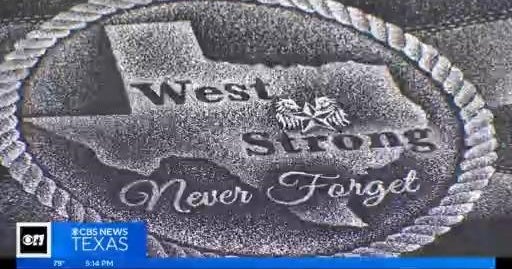
The West Texas fertilizer plant explosion remains a haunting reminder of what happens when we get complacent. The town has rebuilt. They have a beautiful memorial now, with 15 plaques honoring those who fell. But the best way to honor them isn't with stone and bronze; it's by making sure we actually learn the lessons they paid for with their lives.
Safety isn't just about following the law. Sometimes the law is thirty years out of date. Safety is about looking at a pile of ammonium nitrate and seeing it for what it really is: a sleeping giant that needs to be watched very, very closely.