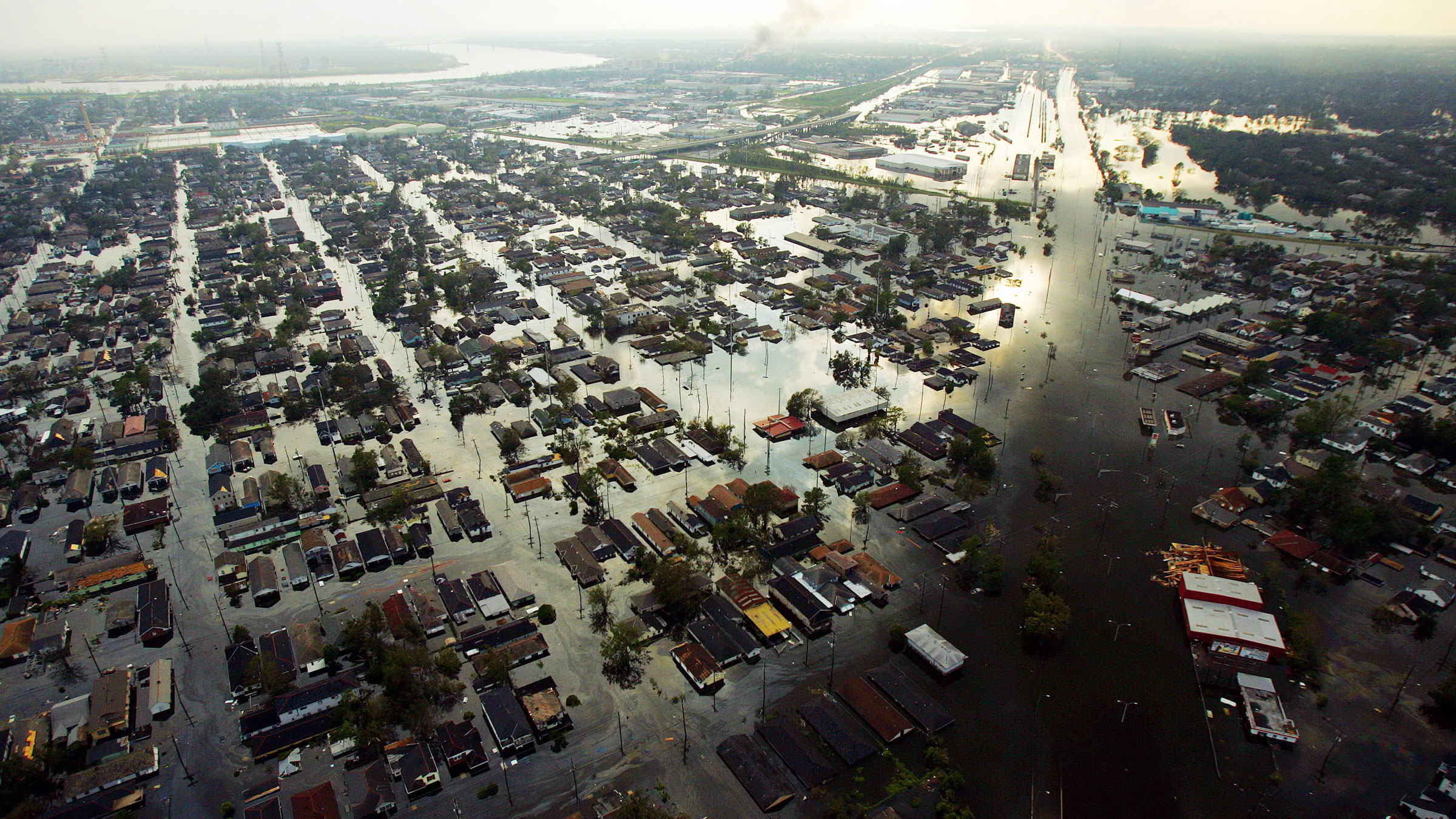
When people ask, "what city did hurricane Katrina hit," the answer most folks jump to is New Orleans. Honestly, that makes sense. The images of the Superdome and the flooded Ninth Ward are burned into the collective memory of anyone who lived through 2005. But the reality is a bit more complicated and honestly, a lot more widespread. Katrina wasn't just a New Orleans event; it was a coastal execution that wiped entire towns off the map across three states.
If you’re looking for the technical "first" hit, you have to look further east. Before it ever touched the Gulf Coast, Katrina actually bumped into Florida as a Category 1 storm. It hit between Miami and Fort Lauderdale on August 25. It was messy, sure, but it wasn't the history-book catastrophe yet. That happened after it spent some time in the warm bathtub of the Gulf of Mexico, fueling up for its main act.
The Big Easy and the Levee Myth
New Orleans is the city most associated with the storm, but here is a nuance people often miss: the city didn't actually get "hit" by the eye of the storm in the way a bullseye gets hit. Katrina made landfall near Buras, Louisiana, in Plaquemines Parish, then moved north. New Orleans actually sat on the "weaker" side of the storm.
So why was it destroyed? It wasn't just the wind. It was the water.
The storm surge pushed into the canals, and the levees—the very things meant to keep the city dry—simply gave up. By August 31, about 80% of New Orleans was underwater. Some spots were buried under 20 feet of Lake Pontchartrain. It’s wild to think that a city could "dodge the bullet" of the eyewall only to be swallowed by its own defense systems.
The Mississippi Coast: The Ground Zero Nobody Talks About
While the news cameras were fixed on the flooding in Louisiana, the Mississippi Gulf Coast was basically being erased. If you want to know what city did hurricane Katrina hit with its absolute maximum force, you’re looking at Waveland, Bay St. Louis, Gulfport, and Biloxi.
- Waveland, Mississippi: This town was virtually wiped out. Officials said later that about 95% of the structures in town were damaged or just gone.
- Biloxi: The storm surge here was legendary in the worst way possible. We’re talking a wall of water 28 feet high. It picked up massive casino barges and tossed them blocks inland like they were plastic toys.
- Gulfport: The downtown area ended up under 10 feet of water. The damage wasn't from slow-rising floods like in New Orleans; it was from a sledgehammer of saltwater.
Beyond the Famous Names
It wasn't just the big tourist spots. Katrina was huge—its wind field was massive.
Mobile, Alabama, took a massive hit from the surge too. Even though the eye was way off to the west, Mobile Bay rose up and flooded the downtown area, causing a record-setting surge of over 11 feet. Then you have the smaller parishes in Louisiana like St. Bernard Parish. People often forget this, but nearly 100% of the homes in St. Bernard were damaged. It was a total loss for thousands of families who lived just outside the New Orleans city limits.
Why Does it Still Matter?
You’ve probably seen the stats: 1,833 lives lost, over $160 billion in damage. But those numbers don't tell the story of the cities that never quite came back. New Orleans' population dropped by nearly half in the year following the storm. Even 20 years later, the city hasn't reached its pre-Katrina population levels.
It changed how we think about "hitting" a city. We used to think about wind speeds. After Katrina, we realized that the "hit" is about the surge, the infrastructure, and the geography. A city below sea level, like New Orleans, doesn't need a direct hit to be destroyed; it just needs the water to find a way in.
Moving Forward: Actionable Insights for Future Seasons
If you live in a coastal area or are planning a move to one, Katrina taught us some brutal but necessary lessons.
- Check the Elevation, Not Just the Flood Zone: New Orleans proved that "protected" areas are only as safe as the walls around them. Use tools like the FEMA Flood Map Service Center to see the actual ground elevation of a property.
- Water is More Dangerous than Wind: Most Katrina deaths were water-related. If you are in a surge zone and an evacuation is called, leave. Wind-rated shutters won't stop a 20-foot wall of the ocean.
- Redundancy is Everything: In the days after the hit, communication in Biloxi and Gulfport was non-existent. Always have a physical map and a hand-crank radio. Your smartphone is a brick once the towers go down.
The answer to what city did hurricane Katrina hit isn't a single dot on a map. It’s a 400-mile stretch of the American coastline that was forever changed on a Monday morning in August.
To truly understand the impact, you can look into the High Water Mark signs often posted in these cities. They serve as a permanent, chilling reminder of exactly how high the water rose in places like the Long Beach harbor or the streets of the French Quarter. Exploring these physical markers is a powerful way to grasp the scale of the disaster beyond just reading words on a screen.
Next Steps for Safety:
Ensure you have a "Go Bag" that includes at least three days of medications and physical copies of your insurance documents. Most people in Katrina lost their paperwork to the water, which made getting help from FEMA or private insurers twice as hard. Keep these in a waterproof, floating dry bag near your primary exit.