If you’ve ever sat down to watch a major soccer tournament like the UEFA European Championship or tuned into the glittery madness of the Eurovision Song Contest, you’ve probably done a double-take. There it is: Israel.
Wait. Isn't that in the Middle East? Why are they playing against France or singing alongside Sweden?
It’s one of those questions that feels like it should have a one-word answer. But honestly, the answer depends entirely on whether you are holding a physical map, a soccer ball, or a microphone.
The Physical Geography: Israel Is in Asia
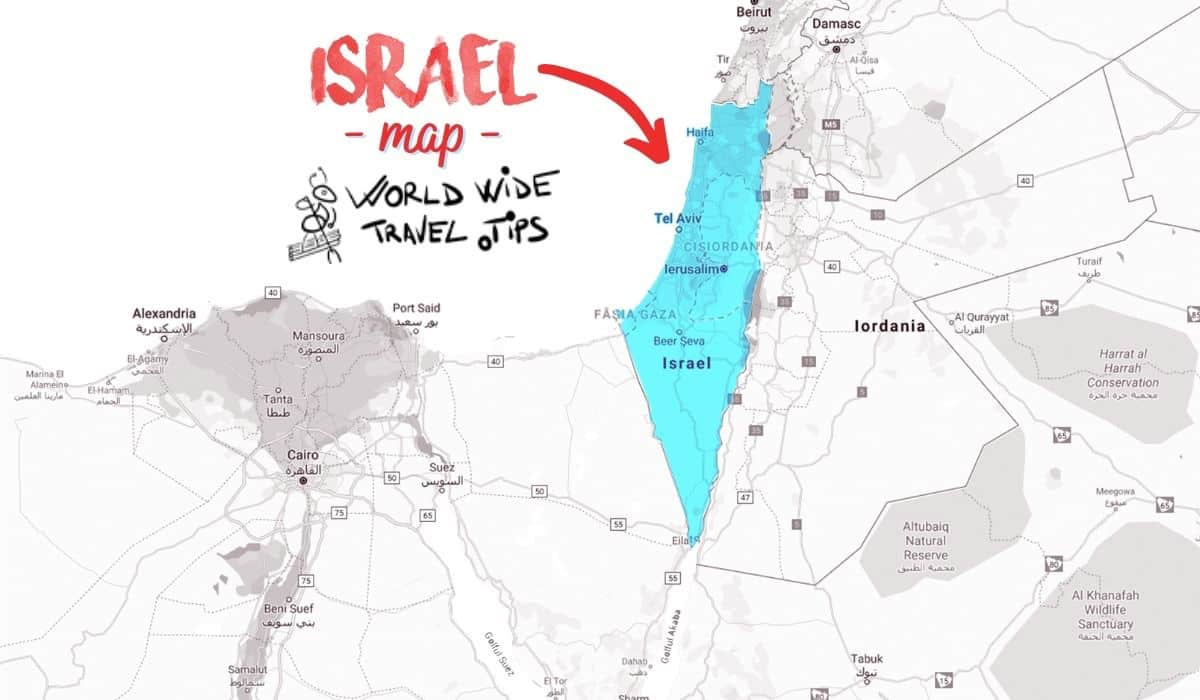
Let's stick to the raw facts first. Geographically, what continent is israel in? It is in Asia.
Specifically, it’s tucked into the southwestern corner of the Asian landmass. This area is often called the Levant. It sits right on the eastern edge of the Mediterranean Sea. If you look at a globe, Israel acts as a sort of land bridge. It’s the thin strip of dirt that connects Asia to Africa (via Egypt’s Sinai Peninsula) and sits just a short skip across the water from Europe.
Geologically, Israel sits on a busy piece of real estate. It’s located along the Dead Sea Transform, which is a fault line separating the African Plate and the Arabian Plate. This is why the country has such wild variations in terrain, from the snowy peaks of Mount Hermon in the north to the lowest point on the surface of the Earth—the Dead Sea—in the center.
The Neighborhood
To the north, you’ve got Lebanon. To the northeast, Syria. To the east, Jordan and the West Bank. To the southwest, Egypt and the Gaza Strip. All of these neighbors are officially part of the Asian continent.
So, case closed? Not exactly.
The "Political" Continent: Why Israel Acts Like It’s in Europe
If you look at the Olympics, the World Cup, or even scientific research papers, the lines start to blur. Politically and culturally, Israel is often grouped with Europe.
This isn't because the land moved. It’s because of history and, frankly, some very awkward sports meetings.
Back in the 1950s and 60s, Israel was actually a founding member of the Asian Football Confederation (AFC). They were good, too—they even won the Asian Cup in 1964. But there was a massive problem. Many of the other Asian nations, particularly in the Arab world, refused to play them. They’d forfeit matches rather than step on the pitch with an Israeli team.
By 1974, it became a mess. Kuwait led a motion to kick Israel out of the Asian confederation. For about 20 years, Israel was a "geographic orphan." They were in Asia, but they had no home in Asian sports. They eventually found a seat at the table with UEFA (the European governing body) in the early 90s.
Culture and the "EBU"
The same thing happened with Eurovision. Israel isn't in Europe, but they are members of the European Broadcasting Union (EBU). The EBU isn't strictly about geography; it’s about a "Broadcasting Area" that includes North Africa and the Middle East. Because Israel’s national broadcaster is a member, they get to compete.
This creates a weird "virtual" geography. On paper, they are Asian. In practice, they are often European.
A Crossroads of Three Continents
There is a reason people get confused. Israel is basically the "Lobby" of the world.
Historically, this tiny piece of land was the only way to get from the massive empires of Egypt (Africa) to the empires of Mesopotamia or Persia (Asia). Later, the Greeks and Romans (Europe) saw it as a vital gateway.
Because of this, the culture is a wild mix. You’ve got:
- Middle Eastern roots: The food, the climate, the language (Hebrew and Arabic), and the Mizrahi Jewish traditions.
- European influences: Many of the country's founders came from Europe, bringing Western legal systems, tech-focused economies, and Ashkenazi traditions.
- African ties: Significant populations of Ethiopian Jews and historical migrations have kept the connection to the African continent alive.
The Travel Perspective: What This Means for You
If you're planning a trip, don't let the "European" sports affiliation fool you. You are going to the Middle East.
The weather is Asian/Mediterranean—hot, dry summers and short, wet winters. The flight from London is about five hours, which is a bit long for a "European" getaway but quite short for an "Asian" one.
Pro-tip for travelers: Even though Israel is geographically in Asia, many of its business practices, tech standards (like electrical plugs—Type C and H), and even its weekend (Friday/Saturday) reflect a unique blend that doesn't perfectly match its neighbors or its European partners.
Quick Facts to Settle the Debate
- Total Area: Roughly 8,000 square miles (smaller than New Jersey).
- Continent: Asia.
- Sub-Region: Middle East / Levant.
- Time Zone: Israel Standard Time (UTC+2), which aligns more with Eastern Europe than Central Asia.
Honestly, the "what continent is israel in" question is a great example of how humans like to draw lines that nature doesn't care about. Geographers will tell you one thing, and a soccer fan in Tel Aviv will tell you another.
Both are right in their own way.
What You Should Do Next
If you’re trying to settle a bet or help a kid with their homework, stick to the geography: Israel is in Asia. However, if you're interested in why the world map looks so different in sports or politics, your next move should be to look into the history of the Asian Football Confederation (AFC) and the 1974 vote. It explains almost everything about why Israel "migrated" to Europe without moving an inch of dirt. Also, check out the European Broadcasting Area map—you’ll be surprised to see that countries like Morocco and Jordan are technically eligible for Eurovision too, even if they choose not to enter.