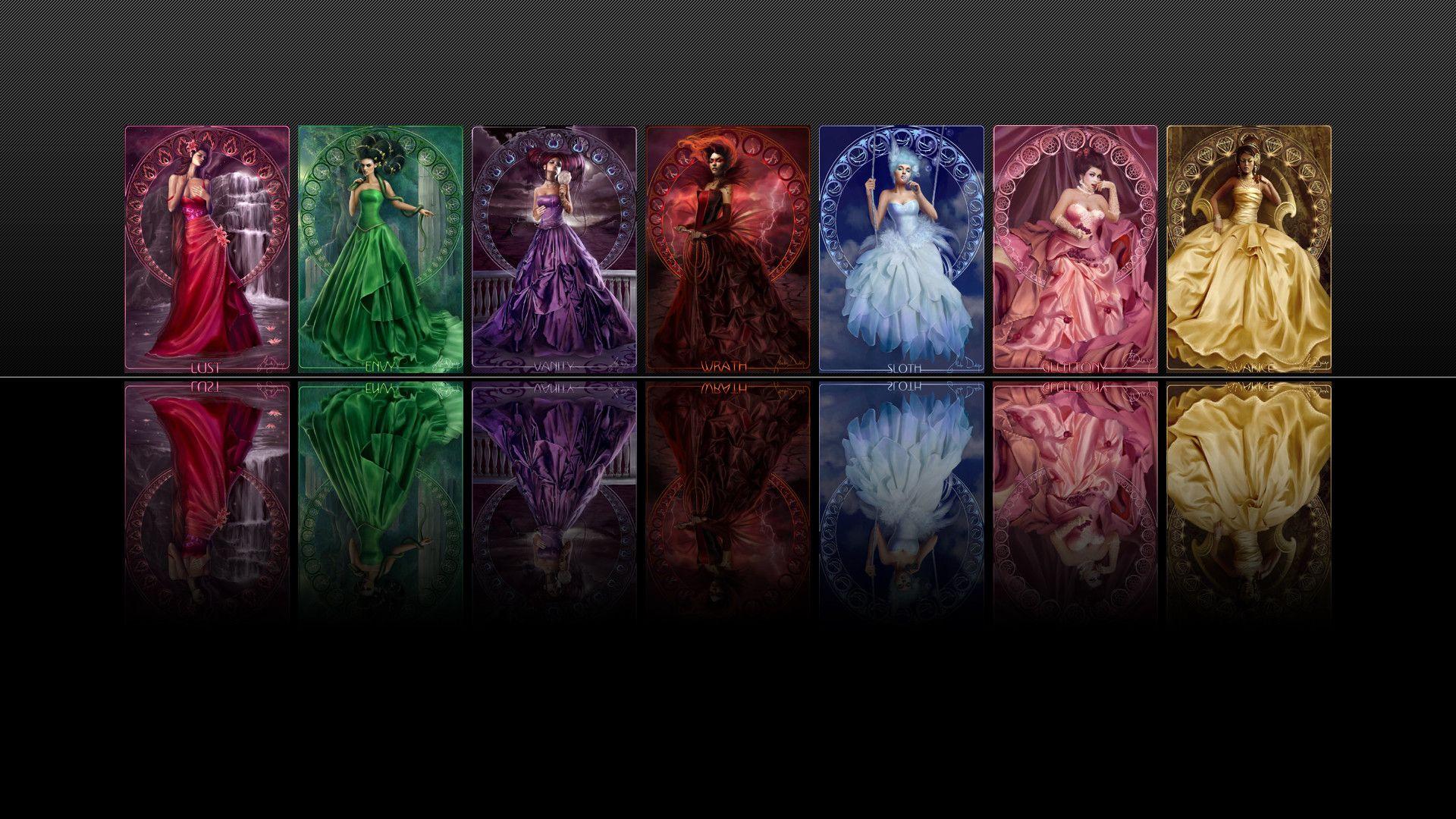
You’ve probably seen the movie Se7en or maybe you just remember a Sunday school teacher wagging a finger about pride. But what is the 7 deadly sins, really? They aren’t actually in the Bible. At least, not as a specific list of seven. If you crack open a King James Version and look for a numbered list called "The Seven Deadly Sins," you won't find it.
It’s weird, right?
This list is more of a "greatest hits" of human messiness compiled by early monks who were bored, lonely, and trying to figure out why they kept getting distracted during prayer. It started with a guy named Evagrius Ponticus in the 4th century. He was a monk who identified eight "evil thoughts." Later, Pope Gregory I—who people call Gregory the Great—trimmed it down to the seven we know today in the year 590. He basically took "boasting" and folded it into "pride" and "melancholy" into "sloth."
Since then, these seven have become the cultural shorthand for being a "bad person." But they aren’t just about being "bad." They are about what happens when a normal human desire gets bent out of shape. We all want food, rest, and respect. The sins happen when those needs turn into obsessions that hurt other people or ourselves.
Pride: The "Queen" of all the mess
Most historians and theologians, including Thomas Aquinas in his massive Summa Theologica, put Pride at the very top. It’s the "root" sin.
Pride isn't just feeling good about a job well done. It’s that deep-seated belief that you are fundamentally better or more important than everyone else. In the classical sense, it’s hubris. It’s the arrogance that makes you think you don't need anyone's help—not your friends', not your family's, and certainly not God’s.
Dante Alighieri, in his Divine Comedy, described the punishment for pride as carrying massive stone weights on your back. It forces you to look at the ground because, in life, you always kept your head too high. Honestly, we see this today in the "main character syndrome" on social media. It’s that person who thinks the world exists purely as a backdrop for their aesthetic.
Envy vs. Jealousy (They aren't the same thing)
People mix these up constantly.
Jealousy is when you’re afraid someone is going to take what you have. Envy is when you’re miserable because someone else has something you don't. It’s a subtle, poisonous feeling.
The philosopher Immanuel Kant called it a "grudgingness." It’s the resentment that festers when your coworker gets the promotion you wanted. You don't just want the promotion; you want them to not have it. St. Augustine described envy as the sin that "hates another's good fortune." It’s unique among the sins because it’s the only one that doesn't actually provide any pleasure. Gluttony gives you a full stomach. Lust gives you a thrill. Envy just makes you feel like garbage.
What is the 7 deadly sins’ most misunderstood vice? Sloth.
When people ask what is the 7 deadly sins, they usually think Sloth means being lazy on a Saturday.
It’s way deeper than that.
The original term was acedia. It’s more like a spiritual apathy or "the noonday devil." It’s that feeling where you just don’t care about anything anymore. You aren't just tired; you're indifferent. You stop doing the things that matter because they feel pointless.
In a modern context, sloth looks like doom-scrolling for six hours. You’re not "resting." You’re actually exhausted by your own inactivity. It’s a refusal to engage with the world or your own responsibilities. Thomas Aquinas defined it as "sorrow about spiritual good." Basically, you see something good and meaningful, and you just shrug and turn away.
The heavy hitters: Wrath, Greed, and Gluttony
Wrath isn’t just getting mad. Everyone gets mad. Wrath is "uncontrolled" anger. It’s the kind of rage that wants to destroy things. It’s seeking revenge instead of justice.
Then you’ve got Greed (Avarice). This isn't just wanting money. It’s the "disordered desire" for material possessions. It’s the guy who has $50 million and spends his whole day figuring out how to get to $60 million while his employees can't pay rent. It’s the hoarding of resources that you don't even need.
Gluttony, similarly, isn't just eating a big steak. It’s an obsession with consumption. The 13th-century monk list actually broke gluttony down into five ways:
- Eating too soon
- Eating too expensively
- Eating too much
- Eating too eagerly
- Eating too daintily (being way too picky/demanding about food)
Lust: The one everyone talks about
Let’s be real. This is usually what people think of first.
But in the historical framework of the sins, Lust is often considered the "least" of the seven. Why? Because it’s a perversion of a good, natural instinct (procreation and intimacy). Dante put the Lustful in the first circle of the actual "sins of the flesh" because, while it’s destructive, it involves a desire for another person, whereas something like Pride is purely about yourself.
Lust becomes a "deadly" sin when it treats other people like objects or tools for your own gratification. It strips away the humanity of the other person.
Why does this list still matter in 2026?
You don't have to be religious to see how these play out.
Look at the way our digital world is built. It’s almost like it was designed to trigger these seven things.
- Instagram feeds Envy and Pride.
- Twitter/X is a 24/7 Wrath generator.
- Amazon thrives on Greed and Gluttony.
- TikTok can lead straight into the apathy of Sloth.
The 7 deadly sins act as a mirror. They show us where we’ve lost our balance. They are "deadly" because, left unchecked, they kill your relationships, your reputation, and your sense of peace.
Actionable steps for self-regulation
If you feel like one of these is gaining too much ground in your life, the "remedy" is usually the opposite virtue. This isn't just old-school theology; it’s practical psychology.
- For Pride: Practice "hidden" acts of service. Do something helpful for someone who can never find out it was you. It breaks the need for external validation.
- For Envy: Use "active appreciation." Force yourself to compliment the person you’re envious of. It sounds cheesy, but it shifts the brain out of resentment.
- For Sloth: Set a "non-negotiable" movement goal. Five minutes of something difficult. The antidote to apathy is action, no matter how small.
- For Wrath: Implement a 24-hour rule for digital responses. If something makes you want to smash your keyboard, don't touch the "post" button for a full day.
- For Greed: Practice radical giving. Give away something you actually still want. It proves to your brain that the object doesn't own you.
Understanding what is the 7 deadly sins helps you spot the patterns before they become habits. It’s about taking control of your impulses instead of letting them drive the bus.