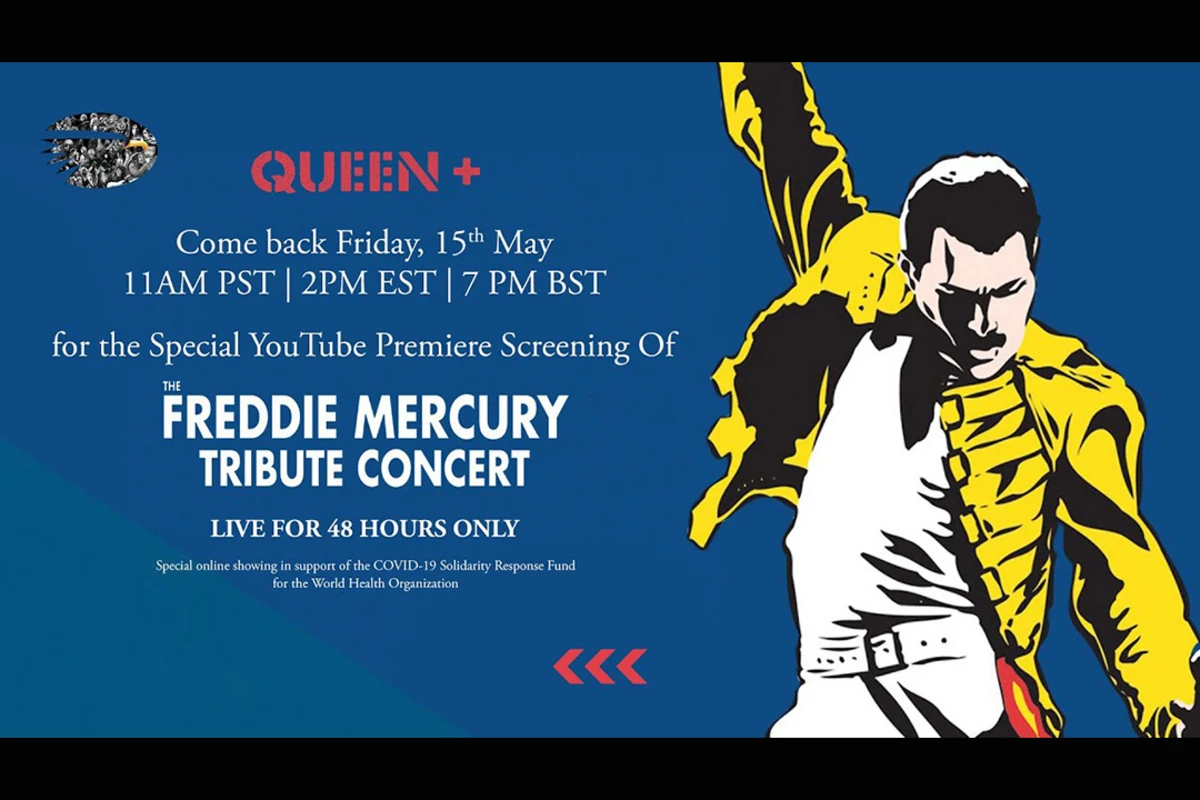
Wembley Stadium, April 20, 1992. It was Easter Monday, but nobody there was thinking about chocolate. 72,000 people crammed into the stands, and honestly, the atmosphere was weird. It wasn't just a gig. It was a massive, public exhale for a world that had just lost its most flamboyant showman five months earlier. When people talk about the Freddie Mercury Tribute Concert, they usually focus on the star-studded lineup—Guns N’ Roses, Metallica, David Bowie, George Michael—but if you were watching it live, it felt way more fragile than that.
It was loud. It was messy. It was arguably the most important moment in 90s rock history because it forced a generation of "macho" rock fans to actually look the AIDS crisis in the face.
The Chaos Behind the Scenes
Planning a show this big in under half a year is basically a logistical nightmare. Brian May, Roger Taylor, and John Deacon didn't have much time to grieve before they were suddenly booking the biggest names in the world. They weren't just looking for talented singers; they needed people who could handle the sheer vocal gymnastics of Freddie’s range. You can’t just "wing it" on a Queen song.
Think about the variety. You had James Hetfield from Metallica—who was basically at the peak of his "Black Album" fame—sharing a stage with Elizabeth Taylor. It shouldn't have worked. Some of the rehearsals were reportedly a bit of a scramble. George Michael, for instance, spent days obsessing over "Somebody to Love." He knew this was his moment to prove he wasn't just a pop idol but a vocalist who could stand next to the legends. And he did. Most critics agree his performance was the definitive highlight of the night.
Why the Lineup Was Controversial
There was actually some tension regarding who got invited. Some fans were annoyed that certain "glam metal" bands were there, while others felt the lack of a full Queen set early on was a mistake. But the band was firm. They wanted a celebration of life, not a funeral.
The first half of the Freddie Mercury Tribute Concert was dedicated to the guest bands playing their own sets. Metallica opened with "Enter Sandman," which felt like a total departure from the Queen aesthetic, yet it worked because it set the energy level at a ten. Extreme did a medley of Queen hits that was surprisingly tight, proving they were more than just the guys who sang "More Than Words."
George Michael and the "Somebody to Love" Moment
If you watch the footage today, you can see the nerves on George Michael’s face right before he starts. He wasn’t just singing for the crowd; he was singing for Freddie, whom he idolized. He had the Gospel choir behind him, the sun was starting to set, and he hit those notes with a clarity that still gives people chills.
Honestly, it’s probably the best live cover of a Queen song ever recorded. Period.
It wasn't just about the music, though. George used that platform to highlight the Mercury Phoenix Trust. This wasn't some corporate charity play. At the time, the stigma surrounding HIV/AIDS was suffocating. People were terrified. By having George Michael, David Bowie, and Annie Lennox stand on that stage, Queen forced the conversation into the living rooms of millions of people who might have otherwise looked away.
The Weird, The Wild, and David Bowie’s Prayer
Then there was David Bowie. He did "Under Pressure" with Annie Lennox, which was incredible, though Annie's raccoon-style eye makeup was a choice people still talk about. But the moment that really split the room happened right at the end of his set.
Bowie stopped. He knelt down. He started reciting the Lord’s Prayer.
The stadium went silent. It was a risk. In a rock concert filled with pyrotechnics and leather, a moment of traditional religious solemnity could have easily tanked the vibe. Some people thought it was pretentious; others found it deeply moving. Looking back, it was classic Bowie—unpredictable and theatrical. It was his way of acknowledging the weight of the death they were all there to commemorate.
Guns N’ Roses and the "Bad Boy" Pivot
A lot of people forget that Axl Rose was a huge Queen fan. Like, massive. Even though GNR had a reputation for being late and difficult, Axl showed up. His duet with Elton John on "Bohemian Rhapsody" is one of those fever-dream moments in music history. You had the king of 70s piano pop and the 90s' most dangerous frontman hugging it out on stage.
The Technical Reality of the 1992 Broadcast
Technically, the Freddie Mercury Tribute Concert was a massive feat for 1992. It was broadcast to 76 countries. Estimates suggest up to a billion people tuned in, though that number is often debated by media historians (some say it was closer to 500 million). Regardless, for a pre-internet age, the reach was staggering.
The audio mix was surprisingly good for a live stadium event. If you listen to the remastered versions today, you can hear the grit in Brian May’s Red Special guitar. You can also hear the crowd—that specific, roaring Wembley "wall of sound" that Freddie used to command like a conductor.
What Most People Get Wrong About the Night
A common misconception is that this was the "end" of Queen. While John Deacon would eventually retreat from the spotlight (this was one of his last major appearances), the concert actually served as a bridge. It proved that Queen’s music was bigger than any one person, even if that person was Freddie Mercury.
- Fact: The concert wasn't just a tribute; it was the official launch of the Mercury Phoenix Trust.
- Fact: Many of the performers didn't get to soundcheck because the schedule was so tight.
- Fact: Elizabeth Taylor’s speech about safe sex was actually met with some boos in certain broadcast regions, which shows you how tense the subject matter was at the time.
The Enduring Legacy of the Concert
The Freddie Mercury Tribute Concert didn't just raise money; it shifted the culture. It signaled the end of the 80s excess and the beginning of a more socially conscious era of rock. It also cemented Freddie’s status as a "musician's musician." When you see Robert Plant or Roger Daltrey struggling to hit the notes Freddie hit with ease, you realize just how singular his talent was.
John Deacon’s performance that night is also worth noting. He looks visibly uncomfortable at times. He was famously close to Freddie and found the idea of continuing without him almost impossible. Watching him play "The Show Must Go On" is a bit heartbreaking if you know the context. He was literally playing the song that described his own struggle to keep going.
Actionable Insights for Fans and Historians
If you’re looking to dive deeper into this specific piece of music history, don't just watch the YouTube clips. The context matters.
- Watch the Rehearsal Footage: There is a documentary called The Freddie Mercury Tribute: The Untold Story that shows the behind-the-scenes rehearsals. Seeing George Michael practice "Somebody to Love" while David Bowie leans against a wall smoking a cigarette is a surreal glimpse into rock royalty.
- Listen to the Unedited Set: Some of the guest sets (like Metallica's) are often cut out of the shorter TV edits. Find the full, three-hour-plus recording to get a sense of the pacing.
- Research the Mercury Phoenix Trust: This charity is still active today. Understanding where the money went helps you appreciate that the concert wasn't just a big party—it was a massive fundraising engine for HIV/AIDS global initiatives.
- Compare the Vocalists: Listen to how different singers approached Freddie’s parts. Robert Plant famously struggled with "Innuendo" (which is why it’s often left off official releases), while Annie Lennox leaned into the theatricality of "Under Pressure." It’s a masterclass in vocal interpretation.
The concert remains a time capsule. It captures a moment where the world was losing its mind over a virus it didn't understand, and the only way we knew how to process it was through the loudest, most brilliant music imaginable.