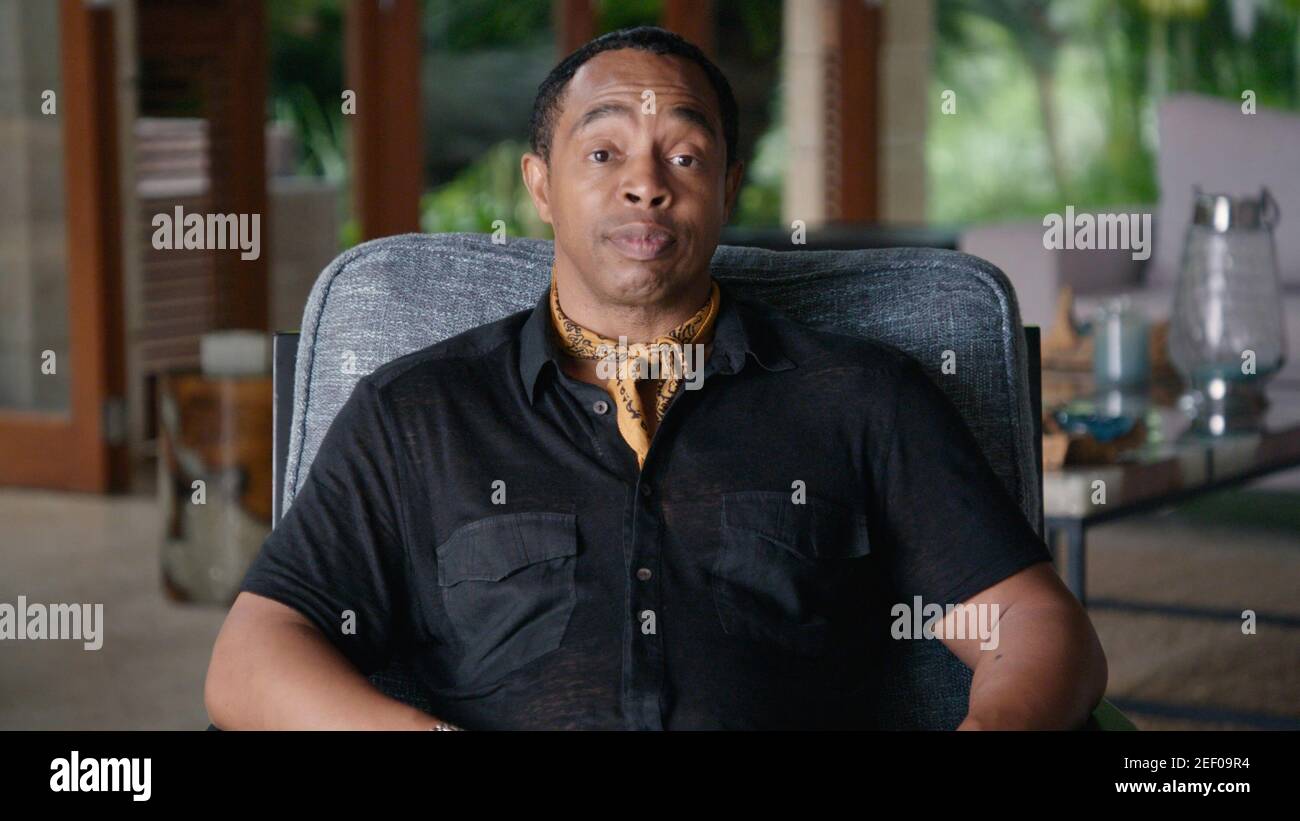
Jacques Agnant isn't a name you’ll find on many Platinum plaques, but in the 1990s, his shadow was long enough to cover the entire rap industry. People knew him better as Haitian Jack. He wasn't a rapper. He wasn't exactly a "mogul" in the traditional sense either, though he held titles like A&R and promoter.
Honestly, he was something much more complicated. He was the personification of the "streets" that hip-hop constantly rapped about. When the music industry and the criminal underworld collided in New York City, Jack was usually standing right at the center of the wreckage.
From Port-au-Prince to Flatbush
Jack’s story doesn't start with a record deal. It starts with a move from Haiti to Brooklyn in 1971. His mother had worked as a chef for the infamous Haitian President François “Papa Doc” Duvalier, which gave the family a level of political connection most immigrants didn't have. But Brooklyn in the 70s and 80s didn't care about your resume in Haiti.
He grew up in East Flatbush, a neighborhood that was basically a pressure cooker during the crack epidemic. You’ve got to understand—Jack wasn't just another guy on the corner. He was smart. He spoke multiple languages. He had a certain "it" factor that allowed him to move between the grime of the streets and the glitz of the nightclub scene. By the time he was a young adult, he was a fixture in Manhattan’s most exclusive clubs, rubbing elbows with everyone from Mike Tyson to Madonna.
The Tupac Connection: A Friendship Gone South
If you know anything about Haitian Jack, you probably know him because of Tupac Shakur. Their relationship is the stuff of Shakespearean tragedy, honestly. They met in 1993 at a club. At the time, Pac was becoming a massive star, but he was also obsessed with "being real." He wanted to be around the heavy hitters.
Jack was the ultimate heavy hitter.
For a while, they were inseparable. Jack was the one who allegedly inspired the character of "Birdie" in the movie Above the Rim. If you watch that film, you're essentially watching Pac play a version of the man he was hanging out with every night. But things got messy fast. In November 1993, both Jack and Tupac were arrested and charged with sexual abuse following an incident at the Parker Meridien Hotel.
This is where the conspiracy theories start to breathe.
While Tupac fought the case and eventually went to prison, Jack’s case was severed from his. He ended up pleading guilty to much lesser misdemeanor charges and avoided a heavy sentence. For a guy like Tupac, who was already feeling paranoid and hunted, this looked like one thing: Jack was a "snitch."
The Quad Studios Shooting and "Against All Odds"
Everything exploded on November 30, 1994. Tupac was headed to Quad Recording Studios in Times Square to record a verse for a rapper named Little Shawn. He was ambushed in the lobby, shot five times, and robbed.
Pac didn't just think it was a random robbery. He believed it was a setup. And he pointed the finger directly at Jack and another figure, Jimmy Henchman.
If you listen to the track "Against All Odds" on the Makaveli album, Pac doesn't hold back. He calls him out by name:
"I'm lookin' at Nigel, bih-made nia that's a soul survivor / But here's a message to the newborn / You was a snitch, I know you was."
(Note: In a famous Vibe interview, Pac used the pseudonym "Nigel" to refer to Jack because the magazine was terrified of being sued—or worse.)
Jack has spent decades denying this. In more recent interviews, like on the FX documentary Hip Hop Uncovered, he basically says that if he wanted to hurt Tupac, he wouldn't have needed a messy lobby shooting to do it. He claims he actually tried to warn Pac about the company he was keeping. It’s a classic "he said, he said" situation, but in the world of 90s rap, it was a death sentence for a reputation.
The Invisible Fixer
Beyond the Tupac drama, Jacques Agnant was a ghost in the machine of several major labels. He worked as an A&R for Undeas Recordings (founded by Lance "Un" Rivera) and was a consultant for Atlantic Records.
He had a weirdly specific talent: he could get things done.
- Need a million-dollar deal for an unknown singer? Jack could get the meeting.
- Need "security" after Sean "Puffy" Combs attacks you with a champagne bottle? Steve Stoute hired Jack for exactly that.
- Need to navigate the politics of a nightclub where the wrong look could start a riot? Jack was the guy.
He was the "fixer" before that was a cool TV trope. He was the bridge between the suits in the midtown offices and the guys in the projects.
Exile and the Quiet Years
The American chapter of Jack’s life ended in 2007. After a 2004 shooting incident in a Los Angeles nightclub, he served time and was eventually deported back to Haiti. From there, he eventually relocated to the Dominican Republic.
For a long time, he just... disappeared.
It wasn't until the 2020s that he started talking again. People were surprised to see him in the Hip Hop Uncovered series. He didn't look like a "boogeyman." He looked like a savvy, older businessman. He’s currently involved in international business ventures and seems content to let the myths about him circulate while he lives his life far away from the New York cold.
What Most People Get Wrong
The biggest misconception is that Jack was just a "thug" who happened to be around rappers. That misses the point of how the industry worked back then. The 90s rap scene was a billion-dollar industry that was still being run by street rules. Jack wasn't an outsider; he was a necessary component of the ecosystem.
He was a promoter who knew how to market a lifestyle because he was actually living it. He wasn't "faking the funk."
The Real Legacy of Jacques Agnant
So, what’s the takeaway here? Is he the villain of the Tupac story, or just a guy who got caught in the crossfire of a legend's paranoia?
The truth is probably somewhere in the middle. Jack was a man of his time—a period when the line between entertainment and reality was paper-thin. He represents a version of hip-hop that has mostly been "sanitized" for corporate consumption today.
Next Steps for the Curious:
If you want to understand the "real" history of the 90s New York scene, you shouldn't just look at the charts.
- Watch "Hip Hop Uncovered" on FX/Hulu. Jack is a main contributor, and seeing him speak for himself changes the perspective you get from just listening to old diss tracks.
- Read "Notorious C.O.P." by Derrick Parker. He was the lead investigator for the NYPD's "Hip-Hop Squad," and his accounts of Jack's influence in the city are eye-opening.
- Re-examine the "Against All Odds" lyrics. Now that you know the history of the Parker Meridien case, the "Nigel" references take on a whole new level of gravity.
The story of Haitian Jack is a reminder that behind every "gangsta rap" anthem, there were real people with real consequences. He didn't need to be the loudest person in the room to be the most powerful. Sometimes, the man in the shadows is the one actually pulling the strings.