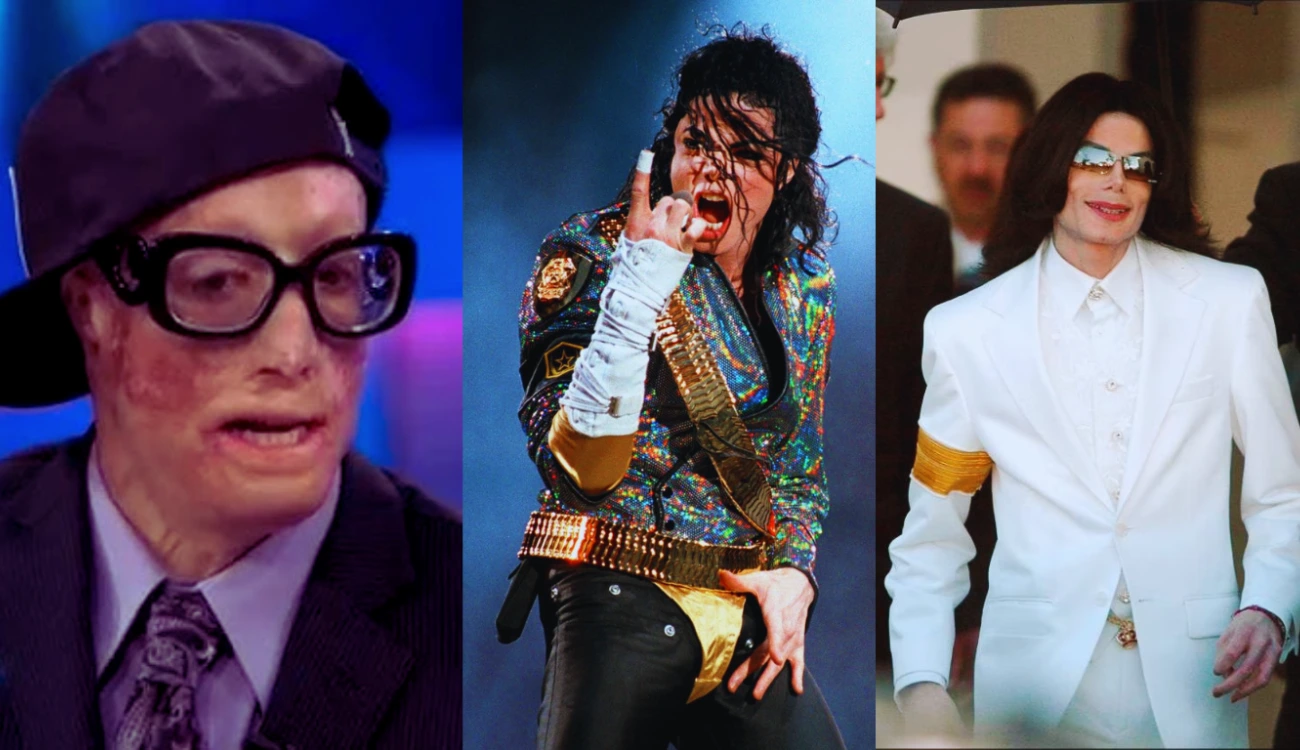
It is one of those images burned into the collective memory of the 20th century. You know the one. In the late 1970s, Michael Jackson was the glowing, Afro-textured face of the Off the Wall era. Fast forward to the early 90s, specifically that 1993 Oprah Winfrey interview, and the world saw a man with skin as pale as porcelain. People talked. They joked. They theorized that Michael Jackson going white was a deliberate choice, a rejection of his heritage, or some high-tech cosmetic heist.
The truth? It’s a lot more clinical and, frankly, a lot more painful than the tabloids cared to admit.
Michael didn't just wake up one day and decide he wanted to look different. He was dealing with a chronic skin condition called vitiligo. For years, the general public treated this like a convenient excuse or a weird urban legend. But the reality of his changing appearance involves a mix of genetics, aggressive medical treatments, and a desperate attempt to maintain a uniform look under the world’s most intense spotlight.
The Diagnosis Nobody Wanted to Believe
Let's get the facts straight. Vitiligo is an autoimmune disorder. Basically, the body’s immune system starts attacking its own melanocytes—the cells responsible for skin pigment. When those cells die, you get white patches. It’s unpredictable. It’s messy. And for a man whose entire brand was built on his face and his "look," it was a nightmare.
His dermatologist, Dr. Arnold Klein, confirmed the diagnosis in medical records that eventually became public after Jackson's death in 2009. But back in the 80s? Michael kept it quiet. He used heavy, pancake-style makeup to cover the blotches. If you look at photos from the Thriller era, specifically candid shots, you can sometimes see the unevenness around his hands and neck.
Why didn't he just come out with it sooner? Think about the 1980s. People weren't "brave" about medical conditions in the same way they are now. There was no Instagram for Michael to post a "body positivity" selfie. He was the biggest star on the planet. He felt he had to be perfect.
The Turning Point of the Mid-80s
By the time the Bad album rolled around in 1987, the patches were winning. It wasn't just a few spots on his arms anymore. It was spreading to his face and chest. This is where the narrative of Michael Jackson going white shifted from "he’s using light makeup" to "he looks like a different person."
He started using Benoquin (monobenzone) cream. This is a crucial detail that people often miss. Benoquin isn't a "bleaching" cream in the way people use skin lighteners to glow up. It’s a permanent depigmenting agent used specifically for severe vitiligo patients. When the white patches cover more than 50% of the body, doctors often suggest depigmenting the remaining "dark" spots to create a single, even tone.
It was a functional choice. He could either spend three hours in a makeup chair trying to paint brown spots back onto a mostly white face, or he could even out the skin to a pale base. He chose the latter.
The Pepsi Fire and the Lupus Connection
People forget that Michael was also diagnosed with systemic lupus erythematosus. While vitiligo affected his skin color, lupus affected his overall health and contributed to his sensitivity to sunlight.
Remember the 1984 Pepsi commercial accident? The pyrotechnics went off early and literally set his hair on fire. He suffered second and third-degree burns on his scalp. Some medical experts, like Dr. Steven Hoefflin, suggested that the physical trauma of the burns might have exacerbated his autoimmune issues. Stress and physical trauma are well-known triggers for vitiligo flare-ups.
Suddenly, Michael was wearing hats, carrying umbrellas, and donning masks. The media called him "Wacko Jacko." They said he was trying to hide from his blackness. In reality, he was a man with zero pigment left in his skin, suffering from a condition that made the sun his literal enemy. Without melanin, a few minutes in the California sun could result in severe burns. He wasn't being eccentric; he was being careful.
The Psychological Toll of a Changing Identity
Imagine being the most famous person on earth. Now imagine your face literally changing in the mirror every week.
Michael’s sister, La Toya Jackson, once mentioned in an interview how much it bothered him. He would look at his hands and see the "cow spots" and feel like he was losing himself. There's a deep psychological weight to vitiligo that often goes undiscussed. It’s called "identity loss." For a Black man in America, your skin isn't just skin; it's your connection to your community.
When the public accused him of "wanting to be white," it hit a nerve. During the Oprah interview, he was visibly frustrated. He said, "It is something I cannot change... when people make up stories that I don't want to be who I am, it hurts me."
The Autopsy Evidence
If there was any lingering doubt, the 2009 autopsy report filed by the Los Angeles County Coroner settled it. The report explicitly noted "patches of light and dark colored areas" and confirmed a diagnosis of vitiligo. The medical examiner found that Michael’s skin had a near-total absence of melanocytes in the lighter areas.
It wasn't a conspiracy. It wasn't a choice. It was a pathology.
The Makeup, the Parasols, and the Masks
We have to talk about the aesthetics. Because Michael was an artist, he tried to turn his medical necessity into a fashion statement. The single white glove? There is significant speculation from those in his inner circle, including his longtime makeup artist Karen Faye, that the glove started as a way to hide the early vitiligo on his hand.
Eventually, the makeup became a mask of its own. Because he had depigmented his skin, he had no natural "warmth" to his complexion. He looked ghostly. To compensate, he used heavy rouges and liners. This created the "uncanny valley" effect that made people so uncomfortable. He wasn't trying to look like a white person; he was trying to look like a person, but he was doing it with theatrical products designed for stage lights, not daylight.
Why We Got It Wrong
The media narrative of Michael Jackson going white was a perfect storm of 80s/90s tabloid culture and a lack of medical literacy. We wanted a scandal. A superstar bleaching his skin because of a self-hatred complex was a "better" story than a guy with a rare autoimmune disease.
We also have to acknowledge Michael’s own role in the mystery. He was notoriously private. He loved the mystique. By not being transparent early on, he allowed the void to be filled with rumors. But can you blame him? In an era where he was already being picked apart for his plastic surgery—which he did choose—admitting to a "deforming" skin disease felt like too much vulnerability.
Moving Past the Myths
Today, vitiligo is much better understood. Models like Winnie Harlow have brought the condition into the mainstream, showing the world that patchy skin is a medical reality, not a freak show. If Michael were alive today, he might have been able to walk outside without the mask and the umbrella.
But back then? He was alone in it.
The legacy of Michael Jackson's skin color is a reminder of how quickly we judge what we don't understand. He didn't turn his back on his race. His body simply stopped producing the pigment that defined his appearance.
Understanding the Reality
- Vitiligo is real: It affects about 1% of the global population. It doesn't discriminate by race, but it is much more visible on darker skin.
- Depigmentation is a treatment: It is a recognized medical procedure for "universal vitiligo" to create a uniform skin tone.
- Autoimmune conditions are linked: People with vitiligo are significantly more likely to have other conditions like lupus or thyroid issues, both of which Michael struggled with.
If you're looking to understand the "why" behind the change, look at the medical charts, not the tabloid covers. The story of Michael Jackson going white wasn't a transformation of the soul, but a tragedy of the cells.
Actionable Takeaways for the Curious
If you or someone you know is dealing with skin changes or vitiligo, there are modern paths to take that weren't available in the 80s:
- Consult a Board-Certified Dermatologist: Early intervention with topical steroids or light therapy (PUVA/NB-UVB) can sometimes slow the progression.
- Support Groups: Organizations like the Global Vitiligo Foundation provide resources to handle the psychological impact of skin depigmentation.
- Sun Protection: If depigmentation occurs, high-SPF sunscreen is non-negotiable. The risk of skin cancer increases dramatically when the body loses its natural melanin defense.
- Educate Others: The best way to honor the truth of Michael's struggle is to stop the "bleaching" narrative. It wasn't cosmetic; it was chronic.
The story of Michael Jackson's skin is ultimately a story about the limits of fame and the fragility of the human body. He had all the money in the world, but he couldn't stop his own immune system from changing who he saw in the mirror.