You’re doing it right now. You don't think about it. You just breathe. But if you actually stopped to count—if you sat there with a stopwatch and tracked every rise and fall of your chest—would the number you see be "right"? Most people have no clue what a normal breathing rate actually looks like, yet it’s one of the four primary vital signs that doctors check to make sure you aren't, well, dying. It’s right up there with blood pressure, heart rate, and temperature.
The medical term is respiration rate. It’s the number of breaths you take per minute. Simple, right? But the range of "normal" is surprisingly wide, and it shifts constantly depending on whether you’re stressed, sleeping, or just finished a cup of coffee. Honestly, if you’re sitting on your couch reading this, your body is performing a complex chemical balancing act without you even lifting a finger.
What's a Normal Breathing Rate for Most People?
For a healthy adult at rest, the magic number usually falls between 12 and 16 breaths per minute. Some medical textbooks stretch that range from 12 to 20. If you’re hitting 12, you’re likely pretty relaxed. If you’re at 20, you might be a bit anxious, or maybe you just walked up a flight of stairs. It’s all about context.
Measurement matters. To get a real reading, you can't just "breathe naturally" while staring at a clock. The moment you think about your breath, you change it. You’ll start taking deeper, slower gulps of air because your brain is suddenly "manual-shifting" a process that’s usually on autopilot. This is why nurses often pretend to check your pulse while they’re actually counting your breaths. They’re being sneaky to get an honest number.
Age changes everything. A newborn baby isn't doing 12 breaths a minute; they’re panting like little sprinters at 30 to 60 breaths per minute. It’s wild to watch. By the time they’re toddlers, it drops to 24–40. A ten-year-old usually settles into a 18–30 range. We only hit that "adult" baseline once the lungs and ribcage are fully developed.
Why the Numbers Shift
Your brain's medulla oblongata is the boss here. It’s constantly monitoring the pH levels in your blood. Most people think we breathe because we need oxygen. That’s only half-true. We actually breathe because we need to get rid of carbon dioxide (CO2). If CO2 builds up, your blood becomes too acidic. Your brain freaks out and tells your lungs to speed up to "blow off" the excess acid.
It's a chemical feedback loop.
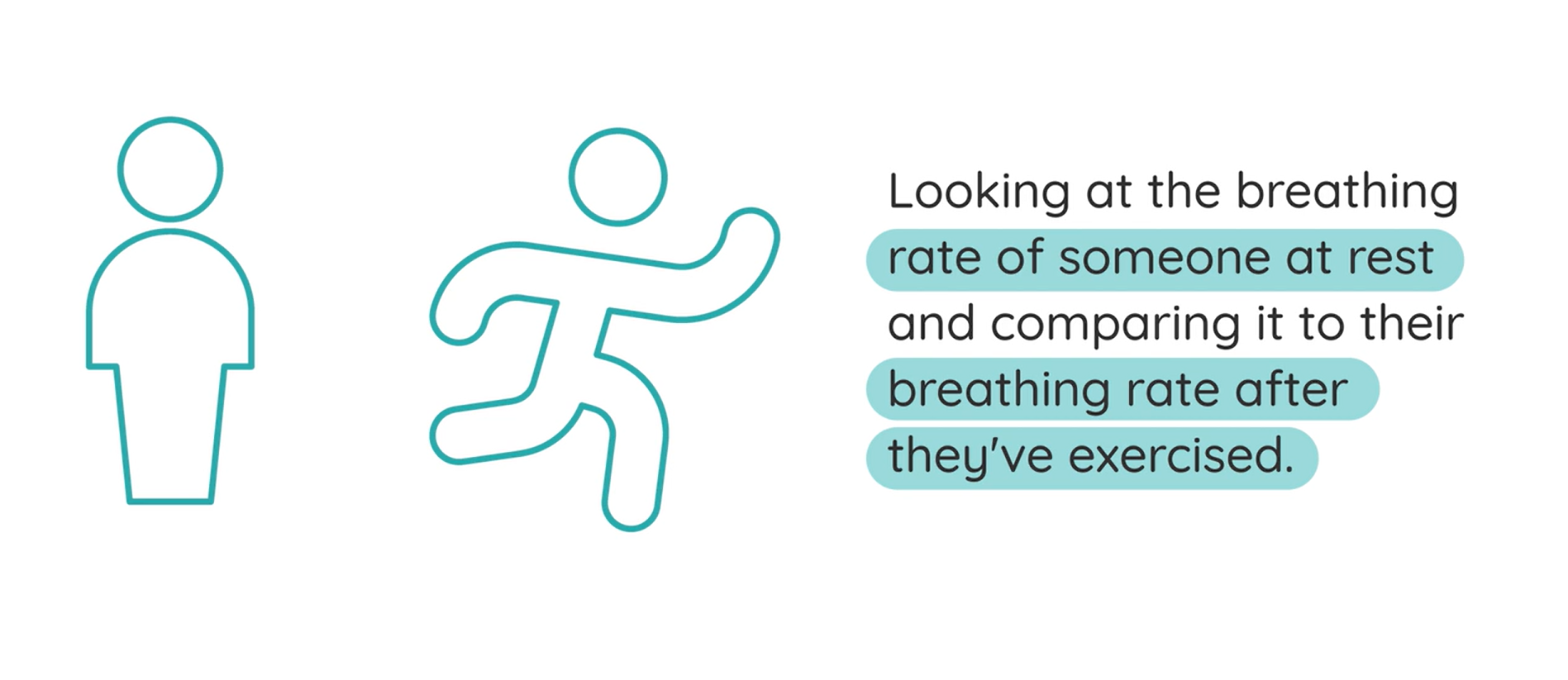
Ever wonder why you breathe hard during a workout? It’s not just that your muscles are hungry for O2; it’s that they’re producing a massive amount of CO2 waste that needs to be evicted immediately.
When Things Get Weird: Tachypnea and Bradypnea
If your resting rate climbs above 20 breaths per minute, doctors call it tachypnea. It sounds scary. Sometimes it is. If you’re hyperventilating because of a panic attack, your rate might skyrocket, but your lungs are technically fine. However, if you're sitting still and hitting 25 breaths per minute, your body might be struggling with something like pneumonia, asthma, or even early-stage heart failure.
Then there’s the opposite: bradypnea. This is when you’re breathing fewer than 12 times a minute. Now, if you’re an elite athlete or a long-time yogi, a resting rate of 8 or 10 might be your "normal." Your heart and lungs are just incredibly efficient. But for the average person, a very low rate can signal trouble—think opioid overdose, severe hypothyroidism, or a head injury.
- Fast breathing (Tachypnea): Often shallow. Can lead to "respiratory alkalosis" where you lose too much CO2.
- Slow breathing (Bradypnea): Often deep or labored. Can indicate the brain isn't sending the right signals.
- Apnea: This is the one you really don't want. It’s when breathing stops altogether, common during sleep but dangerous nonetheless.
The Hidden Factors That Mess With Your Count
You can't just look at the number in a vacuum. A resting rate of 18 might be "normal" for a 70-year-old with mild COPD, but it might be high for a 20-year-old marathon runner.
Anxiety is the great disruptor. Even a little bit of stress triggers the "fight or flight" response. Your adrenals dump cortisol, your heart rate climbs, and your breathing shallows out. You might be hitting 22 breaths per minute just because you’re worried about a work deadline. That doesn't mean your lungs are sick; it means your nervous system is on high alert.
Fever is another one. For every degree your body temperature rises, your breathing rate typically increases. It’s how the body tries to cool itself down. If you have a 102-degree fever, don't expect to be at 12 breaths per minute. You’re going to be breathing faster. It's just the tax your body pays for fighting an infection.
High Altitude and Thin Air
If you fly from New York to Denver, your "normal" goes out the window. There's less oxygen pressure at higher altitudes. Your body compensates by—you guessed it—breathing faster. It takes a few days, or even weeks, for your kidneys to produce more erythropoietin (EPO) to create more red blood cells so your breathing can finally slow back down.
How to Actually Measure It at Home
Don't do it yourself. Seriously. Ask a friend or partner to do it when you don't expect it. Or, do it right after you wake up, before you've even moved.
- Set a timer for 60 seconds. Don't do the "count for 15 seconds and multiply by four" trick unless you’re in a rush. Breathing patterns are irregular; you need the full minute for accuracy.
- Watch the chest rise. One rise and one fall equals one single breath.
- Stay silent. No talking. No scrolling TikTok.
- Check for "work of breathing." Are the neck muscles straining? Is there "flaring" of the nostrils? A normal rate should look effortless. If it looks like a struggle, the number matters less than the effort.
The Misconception of "Deep Breathing"
We’re often told to "take a deep breath" to calm down. Here’s the nuance: most people do this wrong. They suck air into their upper chest, which actually mimics the stress response.
True "normal" breathing at rest should be diaphragmatic. Your belly should move more than your chest. When people have an abnormally high rate, they almost always become "chest breathers." This uses more energy and is less efficient at gas exchange. So, while what’s a normal breathing rate is mathematically 12–16, the quality of those breaths is just as vital as the quantity.
If you’re consistently over 20 at rest, or if you feel short of breath while doing basic tasks like making toast, that's your cue. It’s not about being a hypochondriac; it’s about noticing when the "baseline" has shifted.
Red Flags to Watch For
Numbers aside, some symptoms mean you need a doctor immediately, regardless of what the stopwatch says.
- Cyanosis: A bluish tint to the lips or fingernails. This means your blood isn't getting enough oxygen.
- Retractions: If the skin is pulling in around the collarbone or ribs with every breath.
- Stridor: A high-pitched wheezing sound when breathing in.
- Grunting: Especially in children, a little grunt at the end of an exhale is a sign the body is trying to keep the airways open.
Improving Your Respiratory Health
You can't change your height or your age, but you can influence your resting respiratory rate over time. Aerobic exercise—the kind that makes you huff and puff—actually strengthens the diaphragm and the intercostal muscles between your ribs. Over time, your body becomes more efficient at moving air, which naturally lowers your resting rate.
Yoga and specific "breathwork" aren't just for relaxation; they train the brain to tolerate slightly higher levels of CO2, which prevents the "panic" breathing that spikes your rate. It’s basically conditioning for your medulla oblongata.
Final Practical Check
If you’re worried, keep a small log for three days. Measure your rate once in the morning and once before bed. If you are consistently outside the 12–20 range while sitting quietly, it’s worth bringing up at your next check-up.
Next Steps for Better Breathing Awareness:
- Verify your baseline: Have someone count your breaths while you are distracted to get an unfiltered number.
- Monitor for patterns: Track if your breathing rate spikes specifically after meals or during certain times of day, which could point to issues like acid reflux or "postprandial" stress.
- Practice nasal breathing: Switch from mouth breathing to nasal breathing. The nose filters, warms, and humidifies air, which can help lower a chronically high respiratory rate by increasing airway resistance and slowing the cycle naturally.
- Check your pulse oximetry: If your rate is high, use a simple finger pulse oximeter to see if your oxygen saturation (SpO2) is staying above 95%. If the rate is high and the O2 is low, seek medical advice.