It happened on a Friday. Most people think of nations being born through slow, dusty centuries of evolution, but for Israel, the clock hit zero at 4:00 PM on May 14, 1948. David Ben-Gurion stood up in a crowded room at the Tel Aviv Museum—now Independence Hall—and read the Declaration of Independence under a portrait of Theodor Herzl. It took about sixteen minutes. By the time the sun went down and the Sabbath began, a country that hadn’t existed for nearly two millennia was back on the map.
But asking when was the country of israel created isn't just about a single afternoon in Tel Aviv. History is messy. You’ve got to look at the British Mandate, the horrific shadow of the Holocaust, and a UN vote that basically set the stage for a massive geopolitical explosion. It wasn’t a quiet birth. Within hours, five neighboring Arab armies moved in, and the 1948 Arab-Israeli War—or the War of Independence, depending on who you ask—was in full swing.
The 1947 UN Partition Plan: The Blueprint
Before the 1948 declaration, there was Resolution 181. Honestly, this is where the modern legal foundation starts. The British were tired. They had been running Mandatory Palestine since the end of WWI and, after WWII, they basically threw their hands up and told the United Nations to deal with it.
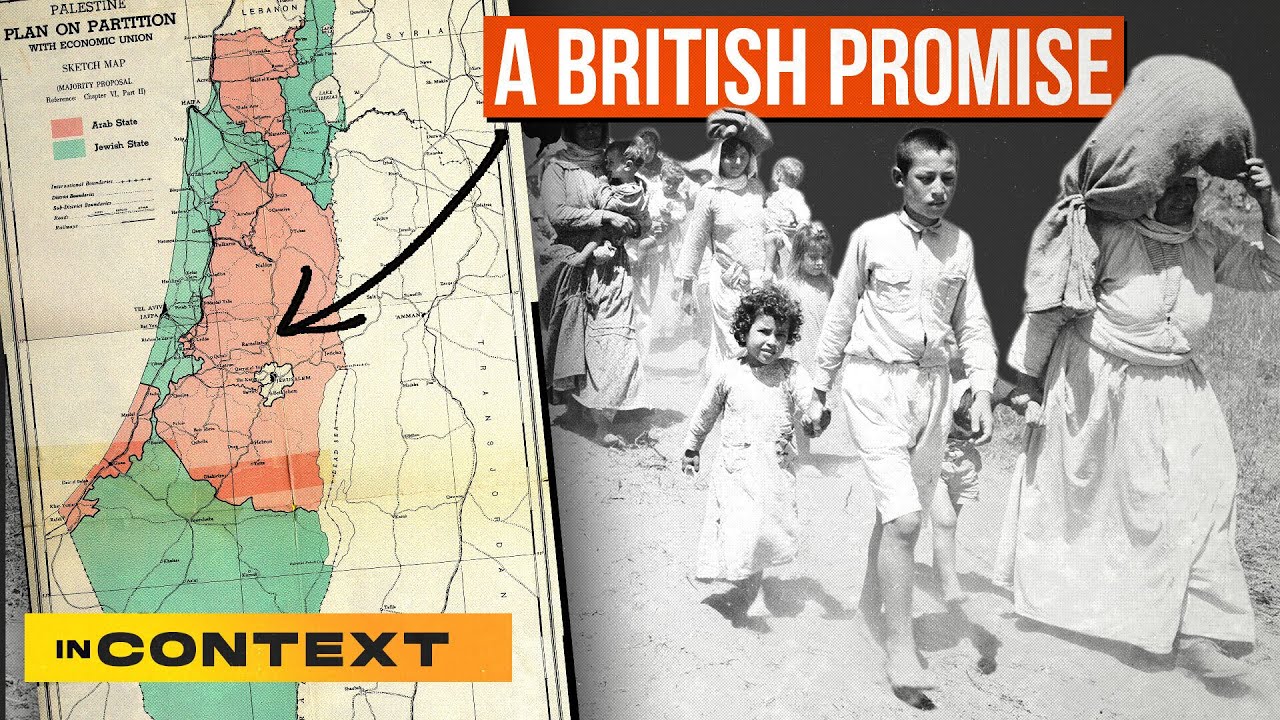
On November 29, 1947, the UN General Assembly voted to split the land into two states: one Jewish, one Arab. Jerusalem was supposed to be an international city, a corpus separatum. The Jewish leadership said yes. The Arab leadership said no. They argued that the plan violated the rights of the majority Arab population and ignored the principle of self-determination. Violence started almost immediately after the vote. It wasn't a formal war yet, but it was a brutal civil conflict.
Why the British left when they did
The British "exit strategy" was more of an "exit scramble." They set a firm deadline for May 15, 1948. They were broke after the war and facing pressure from both Jewish underground groups like the Irgun and Arab nationalists. Basically, they just wanted out. This created a vacuum. Ben-Gurion knew that if he didn't declare statehood the moment the British lowered their flag, the legal window might close forever. So, he moved the ceremony up to the afternoon of the 14th to avoid working on the Sabbath.
The May 14 Declaration and Immediate Recognition
When Ben-Gurion finished reading that scroll, the world shifted. Eleven minutes later—literally just 11 minutes—U.S. President Harry S. Truman issued a statement recognizing the provisional Jewish government as the de facto authority of the new state. Truman did this against the advice of his own State Department. Secretary of State George Marshall was actually furious about it, fearing it would alienate oil-rich Arab allies and lead to a bloodbath.
The Soviet Union followed suit a few days later, becoming the first country to grant de jure (legal) recognition. It’s a weird bit of history that both the US and the USSR agreed on this, considering the Cold War was just starting to freeze over.
It Wasn't Just One Date: The Deeper Roots
If you’re looking for the answer to when was the country of israel created, you’ll find people who point all the way back to the Balfour Declaration of 1917. That was a letter from British Foreign Secretary Arthur Balfour to Lord Rothschild. It stated that the British government "view with favour the establishment in Palestine of a national home for the Jewish people."
- 1897: The First Zionist Congress in Basel, Switzerland.
- 1917: The Balfour Declaration.
- 1922: The League of Nations formalizes the British Mandate.
- 1947: The UN Partition Plan vote.
- 1948: The actual declaration.
The 19th-century Zionist movement, led by figures like Leon Pinsker and later Theodor Herzl, was a response to rampant European antisemitism. They argued that Jews would never be safe until they had a sovereign state. The Dreyfus Affair in France and the pogroms in the Russian Empire were the catalysts. By the time the 1940s rolled around, the desperation of Holocaust survivors in "Displaced Persons" camps made the creation of a state a matter of physical survival for many.
What Happened the Day After?
Statehood didn't bring peace. The day after the declaration, on May 15, the armies of Egypt, Jordan, Syria, Iraq, and Lebanon invaded. This is the 1948 War. For Israelis, it was the "War of Independence." For Palestinians, it is known as the Nakba, or "Catastrophe," as hundreds of thousands of people fled or were expelled from their homes during the fighting.
The war lasted until 1949, ending in a series of armistice agreements. These "Green Line" borders became the de facto boundaries of Israel until the Six-Day War in 1967. This period is crucial because it’s when the infrastructure of a modern state—the Knesset (parliament), the Supreme Court, and the national bank—actually started functioning. Creating a country is one thing; making it work while fighting a multi-front war is another thing entirely.
Common Misconceptions About Israel's Creation
A lot of people think Israel was "given" to the Jewish people as a gift because of the Holocaust. That’s a massive oversimplification. While the Holocaust certainly increased international sympathy and urgency, the Jewish community in Palestine (the Yishuv) had already built a "state-in-waiting" by the 1930s. They had their own schools, hospitals, labor unions, and even a paramilitary force, the Haganah.
Another mistake? Thinking the borders were set in stone in 1948. The borders defined in the 1947 UN plan were never actually implemented on the ground because the subsequent war changed the geography. The 1949 Armistice lines gave Israel significantly more territory than the UN plan had originally suggested.
The Legal and Diplomatic Reality Today
Israel became a member of the United Nations on May 11, 1949. Since then, its creation has remained one of the most debated events in modern history. Some scholars, like those in the "New Historians" movement in Israel (Avi Shlaim or Benny Morris), have challenged the traditional narratives of the 1948 war, bringing more nuance to how the state was established and the impact it had on the local Arab population.
Whether you view 1948 as a miraculous rebirth or a historical injustice, the fact remains that the state was built on a foundation of international law (the UN vote), military reality (the 1948 war), and deep historical ties.
Moving Forward: How to Learn More
If you want to understand the creation of Israel beyond a Wikipedia summary, you need to look at primary sources.
- Read the Declaration of Independence: It’s surprisingly short. It outlines the historical connection to the land but also promises "complete equality of social and political rights to all its inhabitants irrespective of religion, race or sex." Comparing this text to the current reality is a common exercise for political science students.
- Study the 1947 Partition Map: Look at the "checkerboard" design the UN proposed. You'll quickly see why it was almost impossible to defend or govern, which explains why the war changed the borders so drastically.
- Explore the 1949 Armistice Agreements: These documents defined the borders that lasted for nearly 20 years and are still the reference point for most modern peace negotiations.
- Listen to Oral Histories: Search archives like the Yad Vashem or the Palestinian Oral History Archive. Hearing the lived experience of people who were actually there in May 1948 provides a perspective that dates and maps simply can't capture.
Understanding 1948 is the only way to make sense of the modern Middle East. It wasn't just a day on a calendar; it was the start of a new era that continues to shape global politics every single day.