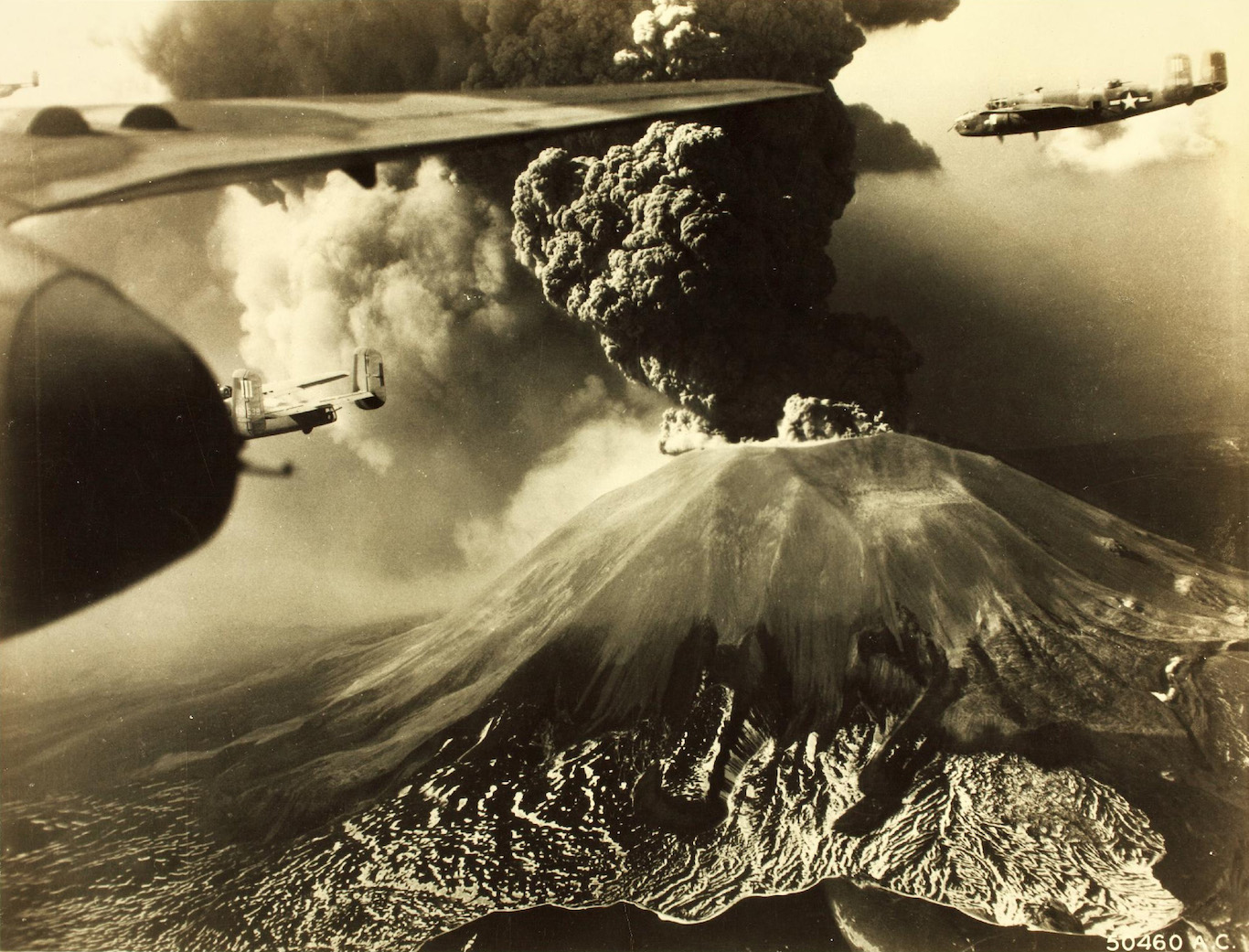
You probably think of Pompeii when you hear the name Vesuvius. Most of us do. We picture the frozen figures, the falling ash, and the year 79 AD. It feels like ancient history, something locked away in a museum. But here is the thing: Mount Vesuvius isn’t just an ancient relic. It’s an active volcano that was screaming and spitting fire while your grandparents were likely alive.
So, when was the last eruption of Mount Vesuvius? It happened in March 1944.
This wasn’t some small puff of smoke, either. It was a violent, multi-day event that took place right in the middle of World War II. Imagine being a soldier fighting for the Allies, trying to push through Italy, and suddenly the ground starts shaking not because of bombs, but because the earth itself is opening up. Honestly, it sounds like the plot of a bad Hollywood movie, but for the people of San Sebastiano and the soldiers stationed nearby, it was a terrifying reality.
The 1944 Eruption: A War Within a War
The eruption started on March 18, 1944. By this point, the Allies had already liberated Naples from Nazi occupation. The city was full of American and British troops. Because of this, the 1944 event became the first eruption of Vesuvius to be caught on high-quality film and documented by modern newsreels.
It started with a slow crawl. Lava began oozing out of the rim, heading toward the villages of San Sebastiano and Massa di Somma. You’ve probably seen the footage—slow, black walls of rock crushing houses like they were made of cardboard. It’s weirdly hypnotic to watch, but for the locals, it was a slow-motion nightmare. They had to pile their belongings onto carts and flee while Allied soldiers helped with the evacuation.
By March 21, things got significantly worse. The volcano shifted from "slow and oozy" to "explosive and angry." Huge fountains of lava shot into the air, and a massive ash column reached heights of about 5 kilometers (roughly 16,000 feet).
The Air Force Disaster You Never Heard About
One of the craziest parts of the 1944 eruption happened at Pompeii Airfield. No, not the ancient ruins—a temporary military base used by the U.S. Army Air Force’s 340th Bombardment Group.
They were stationed just a few miles from the base of the volcano. When the ash started falling, it wasn't just light dust. It was hot, heavy, and abrasive. It melted the Plexiglas windshields of the B-25 Mitchell bombers. It burned through the fabric of the control surfaces. The weight of the ash was so intense that it actually tipped the planes onto their tails.
- The Loss: Between 78 and 88 aircraft were destroyed.
- The Cost: Roughly $25 million in 1944 dollars.
- The Irony: The 340th Bombardment Group lost more planes to the volcano in a few days than they had to German "Flak" over several months of combat.
Surprisingly, no soldiers died at the airfield. They wore steel helmets to protect themselves from falling "basketball-sized" rocks and eventually evacuated. But the nearby towns weren't as lucky. About 26 people died, mostly because the weight of the volcanic ash caused the roofs of their houses to collapse.
Why Has Vesuvius Been Quiet Since 1944?
Since that eruption ended in early April 1944, Vesuvius has been eerily silent. This is what geologists call a quiescent period. Basically, the volcano is taking a long nap.
Before 1944, Vesuvius was actually quite busy. Between 1631 and 1944, it erupted dozens of times. Usually, there was some sort of activity every few years or decades. The fact that it’s been over 80 years since the last event is actually a bit concerning for scientists.
You see, Vesuvius is a "plugged" volcano right now. The conduit—the throat of the volcano—is closed. When it stays closed for a long time, pressure builds up. It’s like a shaken soda bottle with the cap screwed on tight. The longer it stays closed, the more violent the eventual "pop" is likely to be.
Is It About to Erupt Again?
If you visit Naples today, you’ll see the Vesuvius Observatory (the oldest volcanological station in the world). They are watching this thing 24/7. They track:
- Seismic activity: Thousands of tiny tremors that you can’t feel, but sensors can.
- Ground deformation: Checking if the mountain is "swelling" as magma moves up.
- Gas emissions: Measuring the CO2 and sulfur coming out of the fumaroles.
As of right now, in 2026, there is no sign of an imminent eruption. The "Yellow" or "Red" alerts you might hear about in the news usually refer to the nearby Campi Flegrei (Phlegraean Fields), which has been much more restless lately than Vesuvius itself. But make no mistake: Vesuvius is the one that keeps the Italian Civil Protection department up at night.
The "Red Zone" Reality
The last eruption of Mount Vesuvius in 1944 was a "medium" event. But the one scientists worry about is a Plinian eruption, like the one in 79 AD.
Today, about 3 million people live in the immediate shadow of the volcano. Of those, about 600,000 live in the Red Zone—the area that would be completely destroyed by pyroclastic flows (those 1,000-degree clouds of gas and ash that move at 100 mph).
Italy has a massive evacuation plan, but let's be real: trying to move 600,000 people through the narrow, traffic-clogged streets of Naples in 72 hours sounds like a logistical impossibility. Experts like Francesca Bianco from the Vesuvius Observatory have pointed out that while we have better technology than ever to predict the "when," the "how" of getting everyone out is the real challenge.
What You Should Know If You Visit
If you’re planning a trip to Italy, you absolutely should hike to the crater. It’s one of the most surreal experiences you can have. You can see the steam rising from the vents, reminding you that there is a massive magma chamber about 8 to 10 kilometers beneath your boots.
- Check the status: Always look at the INGV (National Institute of Geophysics and Volcanology) website before heading up.
- Look at the 1944 lava: When you’re driving up the slopes, look for the jagged, black rock formations. Those aren't from ancient times; they are the literal "frozen" remains of the 1944 flow.
- Respect the mountain: It’s a beautiful park, but it’s also a giant.
The 1944 eruption taught us that Vesuvius doesn't care if there's a world war going on or if we’re busy with our lives. It operates on its own timeline. We’ve had 80 years of peace, but history tells us that’s more of an intermission than an ending.
To stay informed about the current volcanic risk in the Campania region, you can track the monthly bulletins from the Vesuvius Observatory. If you're interested in the history of the 1944 event, the National Air and Space Museum has incredible archives of the 340th Bomb Group's struggle against the ash.
Next Steps for You:
If you want to see the 1944 eruption in action, search for "Vesuvius 1944 newsreel" on YouTube—it’s haunting to see the B-25 bombers covered in ash. If you're planning a trip to the region, make sure to book your Vesuvius National Park tickets in advance, as they now limit daily visitors to protect the trails.