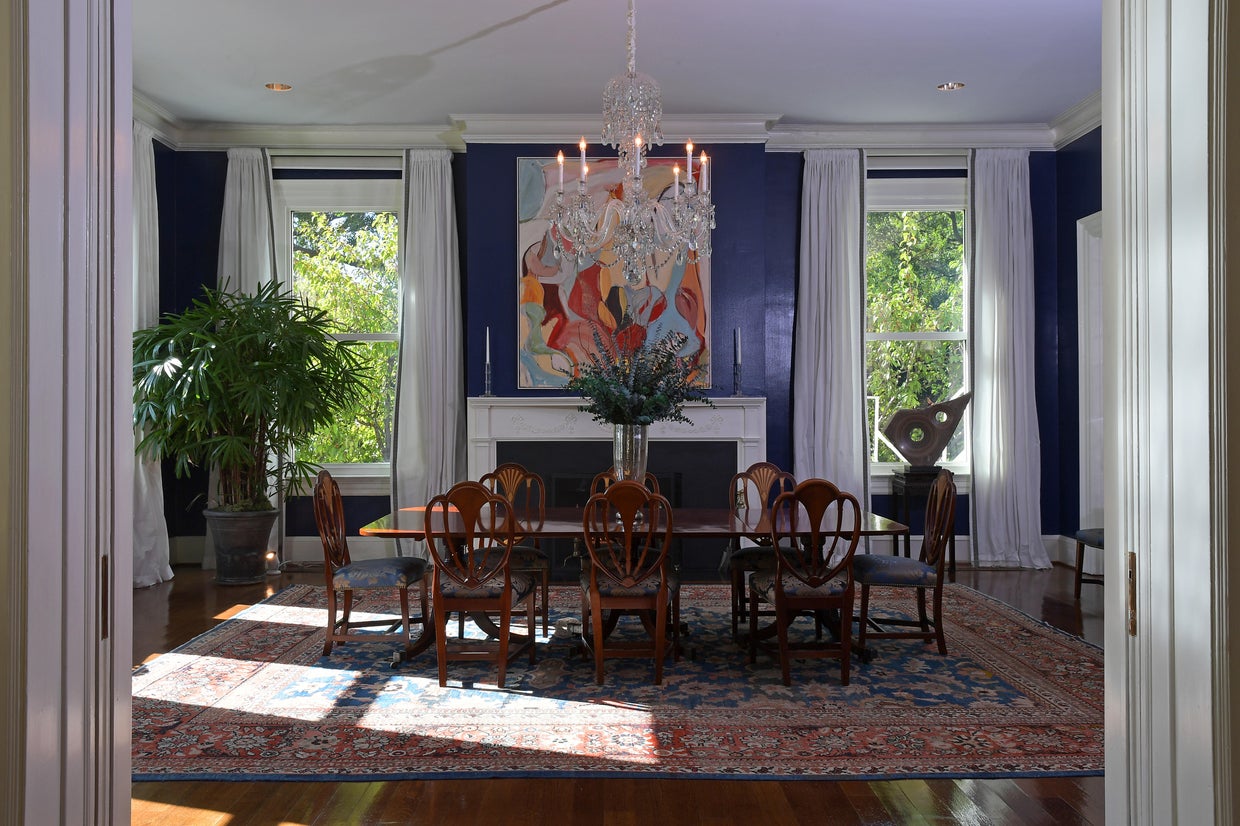
You’d think the person a heartbeat away from the presidency would have a bedroom somewhere in the White House. It makes sense, right? Keep the two most powerful people in the world under one heavily fortified roof. But actually, if you’re looking for the Vice President at 1600 Pennsylvania Avenue after 9:00 PM, you’re looking in the wrong place.
Where does the vice president reside, exactly?
Basically, they live about two and a half miles away from the Oval Office. The official residence is a 19th-century mansion tucked away on the grounds of the United States Naval Observatory. The address is Number One Observatory Circle. It’s quiet. It’s secluded. And honestly, most tourists walk right past the gates without ever realizing they’re standing next to the home of the second-most powerful person in the country.
A House with a "Temporary" Problem
Congress is kind of funny about how they label things. Back in 1974, they officially designated Number One Observatory Circle as the "official temporary residence of the Vice President."
It’s been over 50 years. They still haven't removed the word "temporary."
Before this, Vice Presidents were basically on their own. They lived in their private homes, apartments, or even hotels. Imagine being the Secret Service trying to secure a random suburban condo or a suite at the Waldorf Astoria every time the administration changed. It was a nightmare.
The government was spending a fortune on "temporary" security upgrades—fencing, specialized phone lines, guard shacks—at private residences that the VP would eventually just sell. In one famous instance, Spiro Agnew sold his house for a massive profit after the government had spent tons of money fixing it up. That sort of thing didn't sit well with taxpayers.
From Admirals to Politicians
The house itself wasn’t built for a politician. It was built in 1893 for the superintendent of the Naval Observatory. Eventually, the Chief of Naval Operations (CNO) saw how nice the place was and decided he wanted it for himself. For decades, it was known as the "Admiral’s House."
When Congress finally decided to give the Vice President a permanent (or "temporary-permanent") home, the Navy wasn't exactly thrilled about giving up their prime real estate. Admiral Elmo Zumwalt was the last CNO to live there. He didn't leave without a bit of a fuss, but the Secret Service eventually won out because the location was perfect for security.
Inside Number One Observatory Circle
This isn't a modern glass-and-steel fortress. It’s a Queen Anne-style Victorian mansion. It’s got that classic "old money" look—white-painted brick, a massive wraparound porch, and those iconic round turret rooms you see in 19th-century architecture.
Here’s a quick breakdown of what’s actually inside:
- The Size: It’s about 9,150 square feet. For comparison, the White House is about 55,000 square feet. It’s big, but it’s "rich neighbor" big, not "ruler of an empire" big.
- The Rooms: There are about 33 rooms total. This includes the living quarters, a reception hall for gala-style events, and a library.
- The Perks: There’s a swimming pool. Dan Quayle actually had it installed (and it's been a hit with every VP family since). There’s also a putting green and a track for those morning jogs.
- The Kitchen: It’s a professional-grade setup. When you’re hosting foreign dignitaries and heads of state, you can't just be whipping up Mac and Cheese on a four-burner stove.
The first Vice President who was supposed to live there was Gerald Ford. But history had other plans. Nixon resigned, Ford became President, and he moved straight to the White House. His VP, Nelson Rockefeller, used the house for parties but stayed at his own lavish D.C. estate.
It wasn't until Walter Mondale moved in during the Carter administration that the house truly became a home. Since then, every Vice President—from Bush and Quayle to Biden, Harris, and now JD Vance—has called it home.
Why the Naval Observatory?
You might wonder why they chose a working scientific observatory for a residence. It feels a bit random.
The Naval Observatory is still a functioning site. Scientists there are literally responsible for keeping the Master Clock for the United States. They track the stars, the moon, and the planets to ensure our GPS systems and military timing are frame-perfect.
Living there means the Vice President is essentially living on a military base. It’s gated, it’s patrolled by the Master-at-Arms, and it’s much easier to defend than a townhouse in Georgetown. Plus, it’s high up on a hill. In military terms, holding the high ground is always a plus.
Can you visit?
Short answer: No.
Long answer: Still no, unless you’re a high-ranking diplomat or a personal friend of the family. Unlike the White House, which offers public tours (if you plan months in advance), the Vice President’s residence is strictly off-limits to the general public. You can see the gates from Massachusetts Avenue, but that’s about as close as you’re getting.
Making it a Home
Every family that moves in leaves a little something behind. Jill Biden created the Family Heritage Garden, where stone pavers are engraved with the names of all the Vice Presidents, their families, and even their pets who lived there.
The Gores were known for their love of the house's history. The Cheneys brought in museum-quality American art. Kamala Harris famously had to wait a few months to move in while the Navy did massive renovations to the chimneys and heating systems. Old houses, even famous ones, have old house problems.
Why this matters for SEO and You
If you're researching where does the vice president reside, it's usually because you're interested in the "hidden" side of D.C. power. The White House gets all the glory, but Number One Observatory Circle is where the actual life of the second family happens. It’s a mix of a high-security bunker, a diplomatic event space, and a Victorian family home.
Actionable Next Steps:
- Check the Map: Open Google Maps and look for "US Naval Observatory." You'll see the circular drive that gives the house its name.
- Compare the Styles: Look up "Queen Anne architecture" to see why this house looks so different from the Neoclassical (white pillars and symmetry) style of the White House.
- Plan a Drive-By: If you’re ever in D.C., take a ride down Massachusetts Avenue NW (Embassy Row). You can’t go in, but seeing the massive gates and the "Number One" sign gives you a sense of the scale and secrecy of the place.
The Vice President's house is a reminder that in Washington, the most interesting things are often the ones tucked away behind a line of trees.