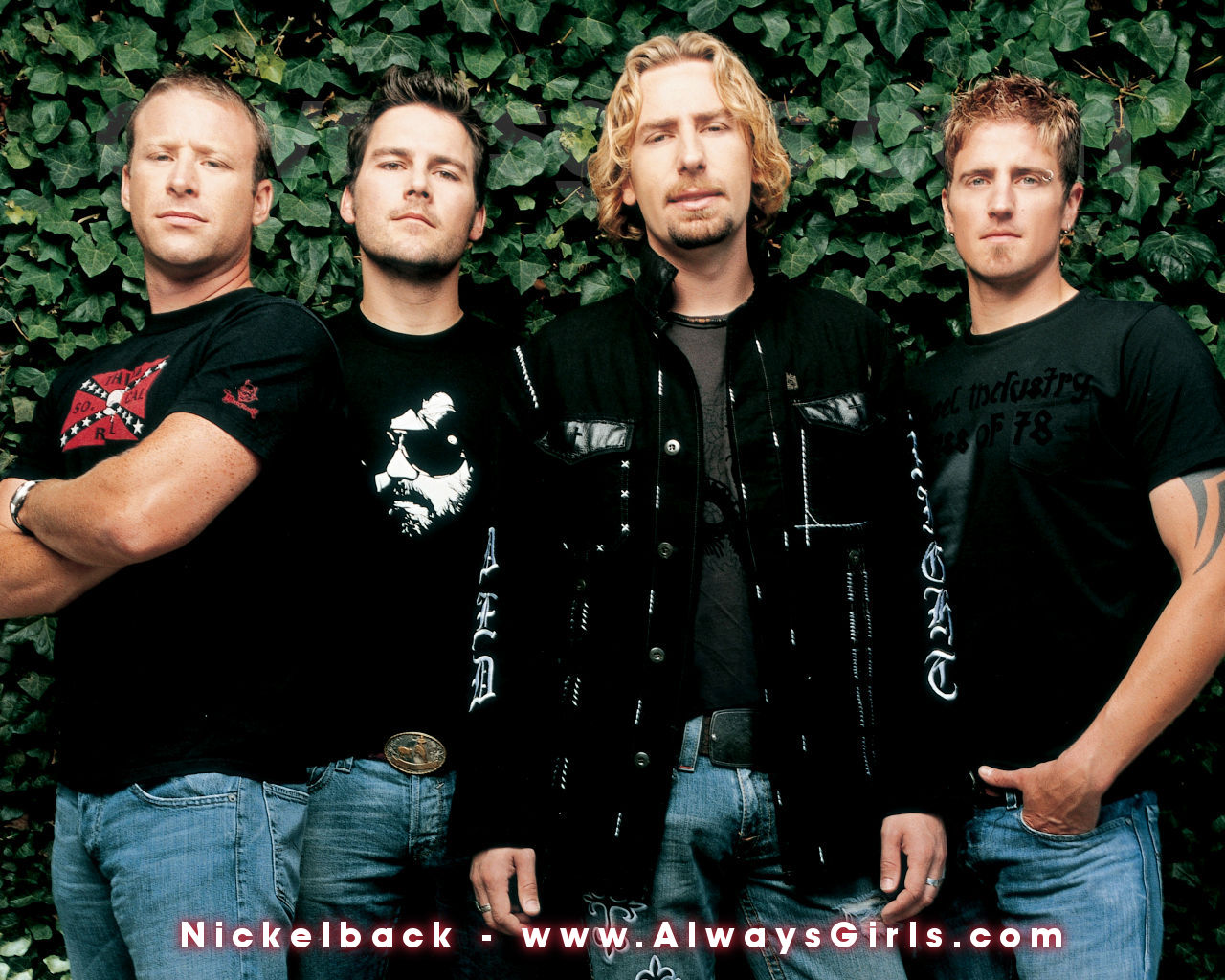
You’ve heard the jokes. Honestly, if you’ve been on the internet at any point in the last twenty years, you’ve probably seen the "Look at this photograph" meme or some variation of the "everyone hates Nickelback" trope. But here’s the thing—you don’t sell over 50 million albums and pack out stadiums for decades if nobody likes you. The guys behind the music aren't just faces on a target; they are a tight-knit group of Canadian musicians who basically figured out the formula for post-grunge success and rode it until the wheels fell off, then kept riding some more.
The members of Nickelback band have actually stayed remarkably consistent over the years, which is pretty rare in the rock world where egos usually explode by the third album. At the heart of it all is Chad Kroeger. He’s the frontman, the voice, and the guy with the hair that changed an entire era of rock aesthetics. But he isn't doing it alone. Alongside him are his brother Mike Kroeger, their childhood friend Ryan Peake, and Daniel Adair, who has been holding down the drum throne since 2005.
It’s a blue-collar setup. They aren't from some polished Los Angeles scene. They’re from Hanna, Alberta. If you’ve never been there, imagine a tiny town where the biggest thing to do is leave. That upbringing shaped the grit in their sound and the business-first mentality that made them one of the most commercially successful acts of the 2000s.
The core lineup: Meet the men behind the curtain
Chad Kroeger: The architect
Chad is the engine. Born Chad Robert Turton, he later took his half-brother Mike’s last name. He’s the lead singer and primary songwriter, and he’s also a savvy businessman who founded 604 Records. People love to pick on his gravelly delivery, but that vocal style became the blueprint for dozens of bands that followed in the mid-aughts. He’s a polarizing figure, sure. But his ability to write a hook that gets stuck in your head for three days straight is undeniable.
Ryan Peake: The secret weapon
If Chad is the face, Ryan Peake is the backbone. He’s the rhythm guitarist and backing vocalist, but "backing vocalist" doesn't really do it justice. If you listen to their live sets, Peake handles the high harmonies that give those massive choruses their "wall of sound" feel. He’s been there since day one. He and Chad grew up together, and that chemistry shows in how they lock in on stage. Peake also occasionally handles lead vocals on covers, showing a versatility most casual listeners don't realize he has.
Mike Kroeger: The steady pulse
Mike is the bass player and Chad’s brother. He’s often the quietest member of the group during interviews, but he’s the one who gave the band its name. He used to work at a Starbucks, and he’d frequently tell customers, "Here’s your nickel back." Simple. Effective. Just like his bass lines. He’s moved toward a heavier, more metal-influenced sound in his personal tastes lately, often mentioning in interviews how much he loves bands like Meshuggah, which is a wild contrast to a song like "Far Away."
Daniel Adair: The percussion powerhouse
Daniel joined in 2005, replacing Ryan Vikedal. Before Nickelback, he was the drummer for 3 Doors Down. He’s a "drummer’s drummer"—technically proficient, incredibly disciplined, and capable of much more complex work than the standard 4/4 rock beats the band's hits require. His arrival coincided with the release of All the Right Reasons, which remains their biggest commercial juggernaut.
The drummer carousel before 2005
Before they found Daniel Adair, the drum stool was a bit of a revolving door. This is where the history gets a little murky for people who only know the hits. Originally, Brandon Kroeger (Chad and Mike’s cousin) played on the debut album, Curb. He left because the touring life just wasn't for him. He wanted a normal life, which is fair enough when you're grinding in a van across the Canadian prairies.
Then came Mitch Guindon, who stayed just long enough to see the transition into their second album, The State. He was followed by Ryan Vikedal. Vikedal was the guy on the kit when Nickelback blew up globally with "How You Remind Me." He had a more traditional, loose rock feel. However, the band eventually felt they needed a different kind of precision, leading to a somewhat messy split in early 2005.
Daniel Adair was the missing piece. Since he joined, the lineup hasn't changed once. Twenty years of the same four guys is an eternity in the music industry. It’s a testament to their friendship—or at least their ability to treat the band like a professional enterprise.
Why the members of Nickelback band are still relevant
You might think they'd have disappeared into the "Where are they now?" files by 2026. They haven't. They’ve actually leaned into the internet’s obsession with them. Instead of getting angry about the memes, they started leaning in. They’ve collaborated with newer artists and maintained a massive touring presence because, at the end of the day, their fans are incredibly loyal.
They represent a specific era of "Post-Grunge." While critics panned them for being too "corporate," the band argued they were just giving people what they wanted: catchy songs about drinking, heartbreak, and small-town life. They didn't pretend to be high art. They were rock and roll for the masses.
- The Business Mindset: Chad Kroeger’s involvement in production and talent scouting has kept him influential behind the scenes.
- Live Performance: They are known for high-budget pyrotechnics and a "no-nonsense" rock show.
- The Redemption Arc: Lately, the "Nickelback hate" has turned into a sort of nostalgic "Nickelback appreciation," with many people admitting that the songs are actually well-crafted pop-rock.
Acknowledging the "Hate"
It’s impossible to talk about the members of Nickelback band without addressing why they became the internet's favorite punching bag. A lot of it came down to overexposure. In 2002, you couldn't turn on a radio without hearing Chad Kroeger’s voice. This led to a massive backlash. Some music critics, like those at Rolling Stone or Pitchfork, argued their music was formulaic.
But if you ask the band? They’re crying all the way to the bank. They’ve always been very transparent about their goal: to write songs that people can sing along to. They aren't trying to reinvent the wheel; they just want to make the wheel look shiny and spin really fast.
The nuance here is that while the public saw a "corporate machine," the band saw themselves as four guys from Alberta who got lucky and worked their tails off to stay there. Mike Kroeger has often pointed out that the "hate" actually kept their name in the headlines long after other bands from that era had been forgotten. It was a weird form of marketing that they didn't ask for but certainly used to their advantage.
What you should do next if you're curious
If you want to understand the band beyond the radio singles, stop listening to "Rockstar" for a second. Go back and listen to their heavier, earlier stuff. The album Curb has a much darker, more raw grunge influence that sounds nothing like the polished hits of the late 2000s.
Look into the documentary Hate to Love: Nickelback. It was released to give a more personal look at how the members handled the global ridicule while simultaneously being one of the biggest bands on the planet. It’s a fascinating study in mental resilience and the reality of the music business.
Finally, check out their recent live footage from 2024 and 2025. You'll see Daniel Adair’s drumming is still top-tier and Ryan Peake’s vocal harmonies are as tight as ever. Whether you love them or hate them, the craftsmanship is objectively high.
To really get the full picture of the members of Nickelback band, track their songwriting evolution from the 1996 Hesher EP to their most recent releases. You'll see a band that learned how to polish their sound until it shone, for better or worse, and a group of guys who stayed friends through one of the weirdest careers in rock history.