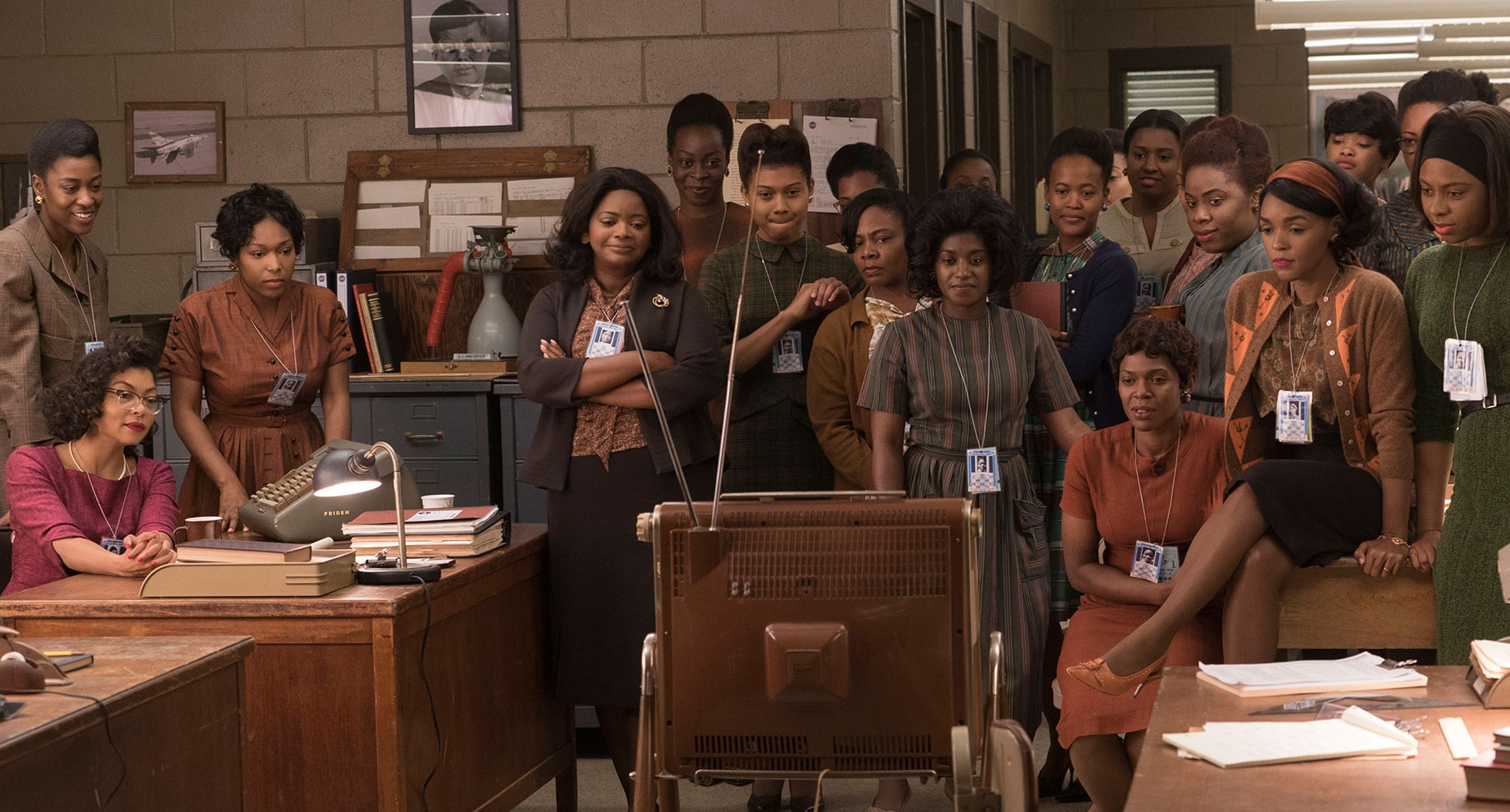
You’ve probably seen the iconic scene where Katherine Johnson sprints across the NASA campus just to use a bathroom. It’s a gut-punch of a moment. But while most people can name the incredible stars—Taraji P. Henson, Octavia Spencer, and Janelle Monáe—hardly anyone can immediately tell you who directed the movie Hidden Figures. That distinction belongs to Theodore Melfi. He’s the guy who decided to turn a 55-page book proposal by Margot Lee Shetterly into one of the most impactful biographical dramas of the last decade. Honestly, it's a bit of a miracle the movie even got made the way it did.
Melfi wasn't the obvious choice for a massive historical epic about Black female mathematicians in the 1960s. Before this, he was mostly known for St. Vincent, a quirky, small-scale comedy-drama starring Bill Murray. Going from a grumpy guy in Brooklyn to the segregated halls of the Space Task Group in Hampton, Virginia, is a massive leap. But Melfi felt such a visceral connection to the material that he actually turned down the chance to direct a Spider-Man movie to stay with this project. Think about that for a second. He walked away from the Marvel machine because he believed these women’s stories were more important than a superhero reboot.
The Vision of Theodore Melfi
When we talk about the creative force of the film, it’s not just about who sat in the director's chair. Melfi wore two hats; he co-wrote the screenplay alongside Allison Schroeder. This is where the magic really happened. Schroeder had a personal connection to the material because she had interned at NASA and her grandparents had worked there. Between her technical knowledge and Melfi’s knack for character-driven storytelling, they managed to take "dry" math and turn it into high-stakes cinema.
They took some liberties. That's just Hollywood. For instance, the character of Al Harrison, played by Kevin Costner, is a composite. In real life, Katherine Johnson’s boss wasn't exactly one guy who smashed a "Colored Ladies Room" sign with a sledgehammer. That specific moment was a cinematic invention designed to condense the systemic racism of the era into a single, cathartic image. Melfi has been open about this, stating that while the specific hammer-swinging might be "movie magic," the emotional truth of the barriers these women faced was 100% real.
Why the Directing Style Mattered
Melfi’s direction is surprisingly subtle for a "prestige" Oscar-nominated film. He didn't lean into overly flashy camera work. Instead, he let the actors breathe. He used a lot of wide shots to show the isolation of the women in rooms full of white men in white shirts and skinny ties. It’s a visual representation of being "the only" in a room.
He also fought for a specific tone. It could have been a very dark, depressing movie. Segregation is heavy stuff. But Melfi insisted on a sense of joy and humor. He wanted to show that these women weren't just victims of their time; they were brilliant, funny, and deeply human. They laughed in their cars. They danced in their kitchens. By focusing on their humanity rather than just their struggle, Melfi made the audience care more about the math than they ever thought possible.
Beyond the Director: The Collaborative Power
It would be a mistake to say Melfi did it alone. A director is more like a conductor. You’ve got Pharrell Williams handling the music and serving as a producer. Pharrell grew up in that same area of Virginia, so he brought a level of local authenticity to the soundscape of the film. Then you have the cinematography by Mandy Walker. She used a specific color palette—warm, saturated tones for the homes of the women, and cold, sterile blues and whites for the NASA offices.
- Pharrell Williams: Contributed the upbeat, soulful soundtrack that kept the movie’s energy high.
- Mandy Walker: Used her lens to contrast the vibrant Black community with the rigid, monochrome world of the 1960s federal government.
- Margot Lee Shetterly: The author of the original book who acted as a consultant to ensure the historical foundations remained solid.
The casting was also a masterstroke. Melfi reportedly spent a lot of time ensuring the chemistry between the three leads felt authentic. You can't fake that kind of sisterhood. If those three didn't feel like a family, the whole movie would have collapsed under the weight of its own "importance."
The Challenges of Directing History
Directing a period piece is a nightmare of logistics. You have to find cars from the early 60s that actually run. You have to find locations that don't have modern cell towers or LED streetlights. Melfi and his team shot most of the film in Georgia, using the campus of Morehouse College and other historical sites to stand in for Langley.
There's also the pressure of representing living legends. Katherine Johnson was still alive when the movie was being made. She was in her late 90s, sharp as a tack. Melfi visited her, and by all accounts, he was terrified of getting it wrong. He wanted her blessing. When the film finally came out, Johnson famously said she liked it, though she humbly noted that she was "just doing her job."
The Impact of Melfi’s Direction
Why does it matter who directed the movie Hidden Figures? Because a different director might have made a "white savior" movie. They might have focused entirely on Kevin Costner’s character or the male astronauts. Melfi, to his credit, kept the focus squarely on Katherine, Dorothy, and Mary. Even the big "hero" moments for the men are framed through how they affect the women. When John Glenn asks for "the girl" to check the numbers, the camera stays on Katherine’s reaction. That’s a directorial choice.
The film went on to gross over $235 million worldwide. It was a massive hit, proving that stories about Black women in STEM were not "niche" but universally resonant. It changed how we talk about NASA's history. Before 2016, "Hidden Figures" wasn't a household phrase. Now, it's a standard part of the American lexicon.
Real-World Lessons from the Film
If you're looking at this from a business or leadership perspective, Melfi’s direction offers some pretty solid insights. He shows us that:
- Talent is everywhere, but opportunity isn't. The movie is a masterclass in why diversity isn't just a "nice to have"—it's a mission-critical necessity.
- Quiet persistence wins. Dorothy Vaughan (played by Octavia Spencer) teaching herself Fortran because she saw the IBM computer coming is the ultimate "upskilling" lesson.
- Culture is set from the top. The Al Harrison character shows how a leader can dismantle toxic norms just by demanding results over tradition.
Theodore Melfi managed to balance the "medicine" of a history lesson with the "sugar" of a great Hollywood popcorn flick. It’s a hard line to walk. If it’s too educational, it’s boring. If it’s too flashy, it feels disrespectful to the real people. Melfi hit the sweet spot.
What to Watch or Read Next
If you’ve watched the movie and want to go deeper into the actual history—the stuff Melfi couldn't fit into a two-hour runtime—there are a few things you should do immediately.
First, read Margot Lee Shetterly’s book. It’s much more dense and covers many more women than just the three leads. The movie is a snapshot; the book is a panorama. It explains the complex physics and the decades of work that led up to the 1962 orbital flight.
Second, look up the documentary The Help, or better yet, the various NASA archives that have been digitized since the movie's release. NASA actually has a "Hidden Figures" section on their website now, featuring biographies of many "human computers" who weren't in the film.
Lastly, check out Melfi’s other work if you like his tone. While Hidden Figures is his most famous, his ability to handle "human" stories is consistent across his filmography. He has a way of making the extraordinary feel grounded and the ordinary feel special.
Next Steps for Enthusiasts:
- Visit the Virginia Air and Space Science Center: They have exhibits specifically dedicated to the West Area Computers.
- Research the "West Area Computers": This was the actual name of the segregated wing where these women worked.
- Explore the Katherine Johnson Fair Play Act: See how the movie’s success translated into real-world legislation honoring these women.
The story of the movie's creation is almost as unlikely as the story of the women themselves. It took a director willing to say no to a massive franchise, a writer with NASA in her blood, and a cast that treated the script like a sacred text. Theodore Melfi might not be a household name like Spielberg, but with Hidden Figures, he secured his place in film history by letting the right voices speak.