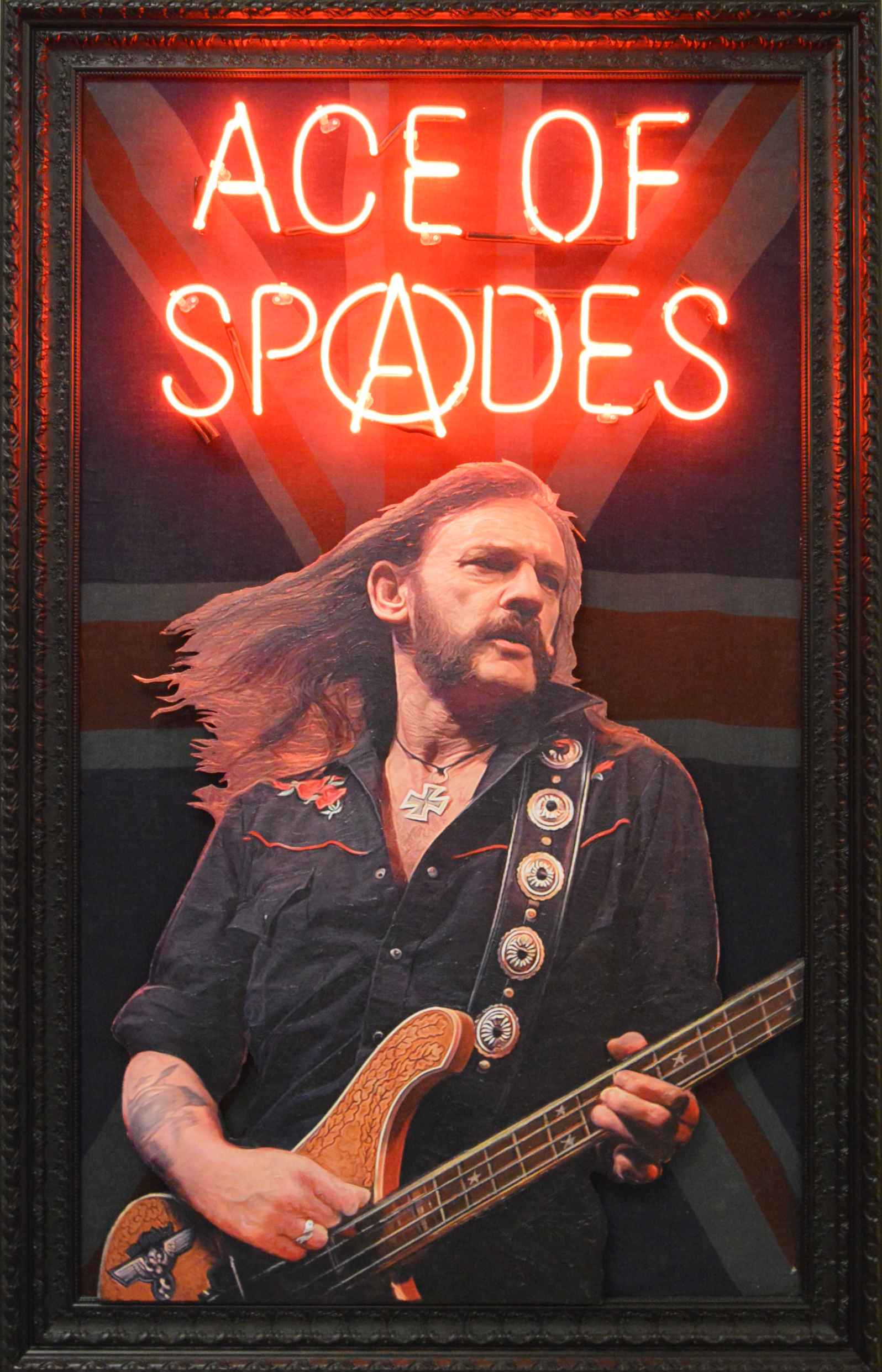
You’ve heard that opening bass riff. It sounds like a chainsaw ripping through a galvanized steel bucket. It’s aggressive, it’s fast, and it’s arguably the most recognizable intro in the history of heavy metal. But when people ask who sings Ace of Spades, the answer isn’t just a name on a record sleeve. It’s a personification of a lifestyle that basically doesn't exist anymore.
The voice belongs to Ian "Lemmy" Kilmister. He was the founder, bassist, and gravel-throated frontman of Motörhead.
Lemmy didn't just sing the song; he breathed it. While many casual listeners might mistake the raspy, high-velocity delivery for a punk band or a generic metal act, Motörhead occupied a weird, lonely middle ground. Lemmy always insisted they were just a "rock and roll" band. Honestly, if you listen to the structure of the track, it’s just incredibly sped-up blues played through amplifiers that were probably screaming for mercy.
The Man Behind the Mic: Why Lemmy Is the Only Answer
To understand who sings Ace of Spades, you have to understand the physical mechanics of Lemmy’s performance. He didn't use a standard mic stand setup. He famously positioned his microphone way too high, forcing him to look up toward the ceiling while he sang. He once explained that this was a tactic to keep him from seeing how small the audience was in the early days, but it stuck. This posture constricted his throat and helped produce that iconic, sandpaper-gritty vocal tone.
He wasn't a "singer" in the traditional sense. He was a force of nature.
Born in Stoke-on-Trent and raised in North Wales, Lemmy cut his teeth as a roadie for Jimi Hendrix before joining the space-rock band Hawkwind. After getting kicked out of Hawkwind for "doing the wrong kind of drugs" (his words), he formed Motörhead. By the time 1980 rolled around, he was ready to record the Ace of Spades album.
The song itself was recorded at Bronze Studios in London. Produced by Vic Maile, who Lemmy credited with finally capturing the band's live "noise" on tape, the track became an anthem for gamblers, losers, and outlaws.
The Lineup That Changed Everything
While Lemmy’s voice is the focal point, he wasn't alone in that studio. The "classic" lineup of Motörhead featured:
- Lemmy Kilmister: Vocals and the "Rickenbacker" bass that sounded like a lead guitar.
- "Fast" Eddie Clarke: The man responsible for that piercing, bluesy guitar solo.
- Phil "Philthy Animal" Taylor: A drummer who played with a frantic, double-bass style that practically invented thrash metal.
If any one of these guys had been missing, the song wouldn't have the same bite. Philthy Animal’s drumming on this track is particularly legendary because he keeps a relentless pace that never lets up for a second. It's breathless.
Why "Who Sings Ace of Spades" Is Often Misunderstood
Search engines get hit with this question a lot because the song has been covered by literally everyone. If you’ve heard a version that sounds a bit cleaner or maybe a bit more "theatrical," you might not be listening to the original.
For instance, the band Ugly Kid Joe covered it. So did the punk icons The Damned. There’s even a famous acoustic, "jazzier" version that Lemmy himself did for a Kronenbourg 1664 commercial later in his life. It’s hilarious to see the man who sang "the pleasure is to play, it makes no difference what you say" sipping a lager in a slow-motion French advertisement, but that’s the range he had.
People also confuse Motörhead with their contemporaries. Because the song came out in 1980, right as the New Wave of British Heavy Metal (NWOBHM) was exploding, casual fans sometimes attribute it to Iron Maiden or Judas Priest. But neither of those bands had the raw, unpolished, dirt-under-the-fingernails quality of Lemmy’s vocals.
Lemmy’s voice was the result of decades of Marlboro Reds and Jack Daniels. You can't fake that.
The Meaning of the Lyrics: It’s Not Just About Cards
When Lemmy wrote the lyrics, he was sitting in the back of a van. He told biographers that he actually got bored with gambling metaphors pretty quickly. He used "The Dead Man's Hand" (Aces and Eights) because it was a cool Western trope, but he mostly just wanted to capture the adrenaline of the moment.
The lyrics are actually quite cynical if you look at them closely.
"I don't want to live forever," he growls. It wasn't a hollow boast. Lemmy lived exactly how he wanted until he passed away in December 2015. He was the real deal. When you ask who sings Ace of Spades, you're asking about a man who lived in a two-bedroom rent-controlled apartment in West Hollywood filled with Nazi memorabilia (he was a history buff, not a sympathizer, he often clarified) and spent his afternoons playing video poker at the Rainbow Bar & Grill.
Impact on Pop Culture
The song has appeared everywhere. It was in Tony Hawk’s Pro Skater 3, which introduced a whole new generation to the band. It showed up in The Young Ones back in the 80s. It’s been in car commercials, movie trailers, and played at every sporting event imaginable.
But every time it plays, that specific vocal delivery—the one that sounds like it’s being screamed through a throat full of glass—reminds you that there was only one Lemmy.
Technical Mastery: The Sound of the 1980 Sessions
The recording process for the album was intense. Vic Maile was a "quiet" producer, which was the opposite of what the band was used to. He forced them to focus on the precision of the rhythm. Most people think Motörhead is just "loud," but Ace of Spades is actually a very tight recording.
The bass tone is the secret sauce.
Lemmy didn't play bass like a bassist. He played it like a rhythm guitarist, using power chords. He cranked the treble and the middle on his Marshall stacks and turned the bass knob almost all the way down. This gave the song a "clanking" sound that filled the sonic space usually reserved for a second guitar.
When you hear him sing over that racket, he has to cut through a lot of noise. That's why his voice is so high-mid focused. It's a masterclass in frequency management, even if they weren't thinking about it in those terms at the time.
What to Listen for Next
If you've just discovered who sings Ace of Spades and you want to go deeper into that specific sound, you shouldn't just stick to the hits. Lemmy’s discography is massive.
- "Overkill": This is where the double-bass drumming really started. It’s faster and meaner than Ace of Spades.
- "Bomber": Inspired by a Len Deighton novel, this track shows off Lemmy’s love for history and high-speed riffs.
- "Killed by Death": A bit more mid-tempo, but it features some of Lemmy's most "theatrical" (for him) vocal work.
- "Orgasmatron": A heavy, sludge-filled track that proved the band could be terrifying without playing at 200 beats per minute.
Final Insights on the Legend
The question of who sings Ace of Spades is a gateway into the world of Motörhead, a band that stood as a bridge between the hippie era and the thrash metal era. Lemmy was the glue. He was a guy who saw the Beatles at the Cavern Club and then helped inspire Metallica.
He never changed his outfit. He never changed his hair. He never stopped playing that song.
He famously said that if the band moved in next door to you, your lawn would die. That’s the energy of Ace of Spades. It’s a sonic assault that remains as fresh today as it was in 1980.
To truly appreciate the track, stop listening to it on tiny smartphone speakers. Put on a pair of decent headphones or, better yet, crank it through a real set of speakers. Listen to the way Lemmy’s voice cracks on the high notes in the bridge. Notice how he spits out the words "Born to lose, live to win."
Practical Steps to Experience the Legacy:
- Watch the documentary Lemmy (2010) to see the man behind the voice. It's an incredible look at his daily life at the Rainbow Bar & Grill.
- Check out the No Sleep 'til Hammersmith live album. It’s widely considered one of the best live recordings ever made and features a definitive version of Ace of Spades.
- If you're a musician, look up "Lemmy's bass rig" on YouTube. Understanding how he got that distorted "clank" will change how you hear the song forever.
- Visit the Rainbow Bar & Grill on the Sunset Strip if you're ever in LA. There is a life-sized bronze statue of Lemmy in the back, right where he used to sit.