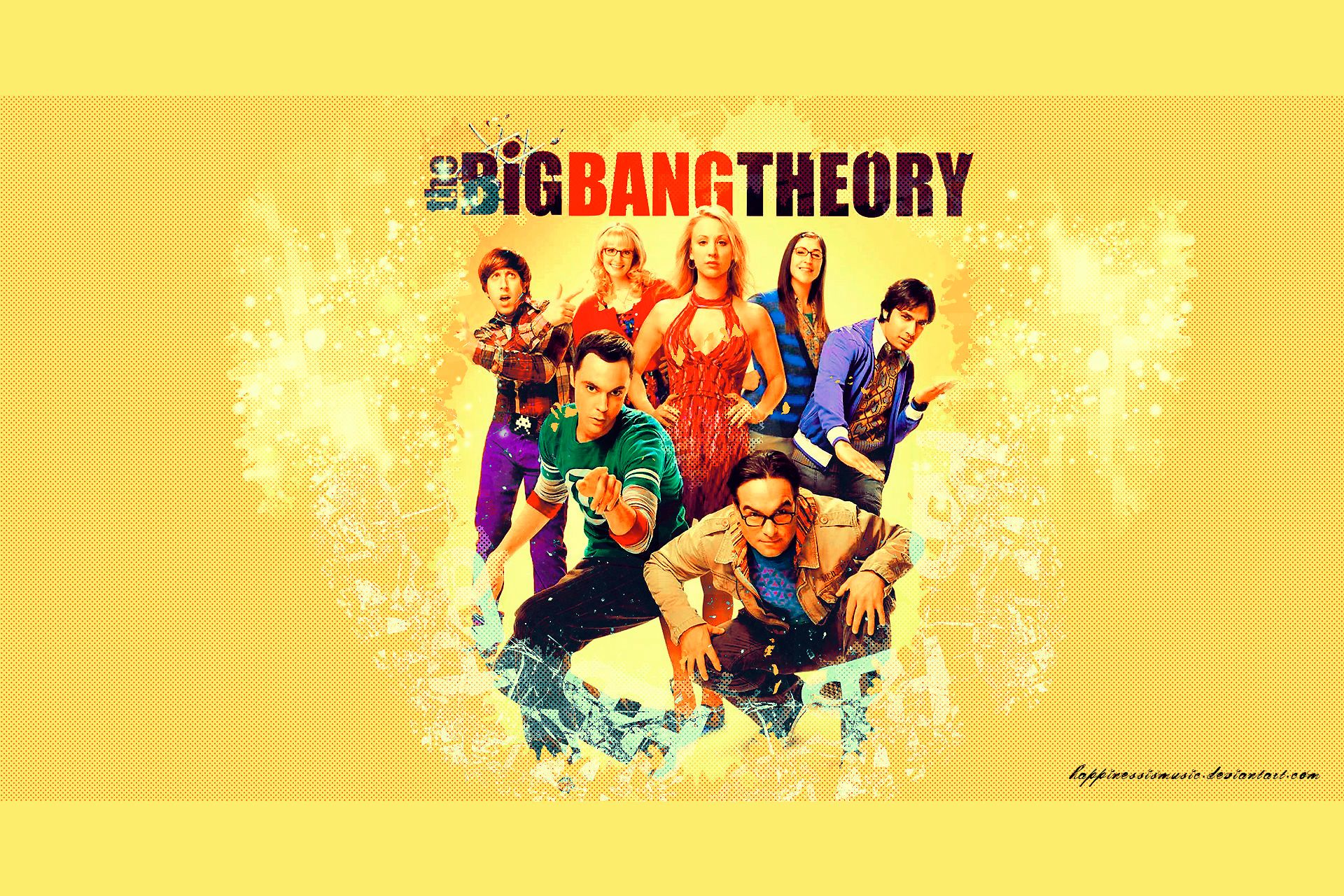
You know the words. Even if you haven't watched a single episode of the show in five years, the moment those frantic drums kick in, your brain instinctively prepares to yell "BANG!" at the TV. It's one of those rare TV themes that actually managed to break into the cultural zeitgeist. But who sings the theme tune to Big Bang Theory? If you guessed a random studio band or a quirky Hollywood composer, you’re actually a bit off the mark.
The track, officially titled "The History of Everything," was written and performed by the Canadian alternative rock band Barenaked Ladies.
Yes, the same guys who gave us "One Week" and "If I Had $1,000,000." It wasn't just a gig they phoned in for a paycheck, either. The story involves a frantic phone call, a scientific biography, and a weirdly specific request from the show’s creators, Chuck Lorre and Bill Prady. It’s a bit of a miracle the song even exists, considering the lead singer almost turned the job down because he thought he was being pranked.
How a Bad Concert Led to the Best Theme Tune on TV
Ed Robertson, the lead singer and guitarist for Barenaked Ladies, didn't exactly go looking for this job. Back in 2006, he had just finished reading Simon Singh's book Big Bang: The Origin of the Universe. He was fascinated by it. A few days later, during a show in Los Angeles, he started improvising a rap about the origins of the universe based on what he’d just read. It was a classic BNL move—freestyling silly, educational rhymes to keep the crowd engaged between the hits.
As fate would have it, Chuck Lorre and Bill Prady were in the audience that night.
They were in the middle of developing a pilot for a show about four brilliant but socially awkward scientists. They’d already tried using a different song for the initial unaired pilot—a track called "She Blinded Me with Science" by Thomas Dolby—but it didn't feel right. It felt too "on the nose." When they heard Robertson riffing about the Big Bang on stage, they knew they had found their guys.
The Phone Call That Almost Didn't Happen
When Robertson got the call from the producers, his first instinct was skepticism. He’d been burned before. In several interviews, Robertson has recounted how he initially told them he’d have to think about it. He’d previously written songs for other projects only to find out the producers had asked twelve other bands to do the same thing, eventually picking someone else. He didn't want to waste his time in a "songwriting bake-off."
Lorre and Prady were adamant. They didn't want anyone else. They wanted that specific energy he’d shown on stage. Once Robertson realized he was the only one being asked, he sat down at his home in Canada and knocked out the demo in about the time it takes to eat a sandwich.
Breaking Down "The History of Everything"
The song is a marvel of lyrical compression. It covers roughly 13.8 billion years of cosmic history in under two minutes (and just 24 seconds for the TV version). It starts with the singularity—the "hot, dense state"—and zips through the expansion of the universe, the formation of stars, the cooling of the Earth, and the eventual rise of humanity.
It’s fast. Really fast.
The tempo is roughly 145 beats per minute. This was intentional. The show was fast-paced, filled with "science-speak" and rapid-fire dialogue, so the music needed to mirror that intellectual velocity. If you listen to the full version of the song, which runs about 1:45, it actually goes into way more detail than the "autotrophs" and "Neanderthals" mentioned in the intro. It touches on the extinction of the dinosaurs, the building of the pyramids, and the eventual Heat Death of the universe.
Why the Lyrics Actually Matter
A lot of TV themes are vague. They talk about "friends" or "the neighborhood" or "making it in the city." But when who sings the theme tune to Big Bang Theory comes up, people usually focus on the band, whereas the scientists focus on the accuracy.
Remarkably, for a pop song, the lyrics are pretty sound.
- "Our whole universe was in a hot, dense state" – Correct.
- "Nearly fourteen billion years ago expansion started" – Correct (specifically 13.8 billion).
- "The autotrophs began to drool" – Okay, maybe a bit of creative license there since autotrophs (like plants) don't have mouths, but it fits the rhyme scheme perfectly.
The Legal Drama You Didn't Know About
While the song helped the Barenaked Ladies stay relevant long after their 90s heyday, it also caused a bit of internal friction. In 2015, former band member Steven Page, who left the group in 2009, filed a lawsuit against Ed Robertson.
The dispute was over the royalties for the theme song. Page claimed that he was promised 20 percent of the proceeds from the song but had allegedly been cut out of the profits. He argued that even though he didn't write the track, the agreement within the band at the time covered all work produced. Robertson denied these claims, and the legal battle was eventually settled out of court. It's a reminder that even the sunniest, most upbeat songs can have a complicated "behind the scenes" life.
The Cultural Impact of 24 Seconds
Most bands would kill for a snippet of music to become this recognizable. For many younger viewers, this song is the Barenaked Ladies. It’s their "Star Wars Theme." It’s the sound of a billion-dollar franchise.
When the show finally ended its 12-season run in 2019, the song felt like a time capsule. It bridge the gap between the nerdy subculture of the mid-2000s and the mainstream "geek chic" era of the 2010s. The band even showed up on set during the final season to record a special acoustic version and hang out with the cast.
Honestly, the song did something few themes do: it explained the premise without being boring. It set the tone. It told you exactly what kind of show you were about to watch—fast, smart, slightly chaotic, and deeply obsessed with the way the world works.
Actionable Takeaways for Big Bang Fans
If you've ever found yourself humming the tune and wanting to go deeper into the lore of the song or the band, here is how to actually engage with that history:
- Listen to the Full Version: Look for "The History of Everything" on streaming services. The TV edit is only the first verse. The full song includes a bridge about the breakdown of the "Galactic Empire" and the future of the Earth.
- Check out the "Snacktime!" Album: If you like the educational, rapid-fire style of the theme, Barenaked Ladies released a children's album called Snacktime! around the same era that uses similar wordplay.
- Watch the Unaired Pilot: If you can find it on YouTube or DVD extras, watch the version with the Thomas Dolby song. It’s a fascinating look at how much the "vibe" of a show depends on those first 30 seconds of music.
- Read the Source Material: If you want to know what inspired Ed Robertson, pick up Big Bang by Simon Singh. It’s arguably the most readable book on cosmology ever written and explains the "hot, dense state" better than any textbook.
The next time someone asks who sings the theme tune to Big Bang Theory, you can tell them it was a Canadian rock band, a science book, and a chance encounter at a Los Angeles concert that made it all happen.