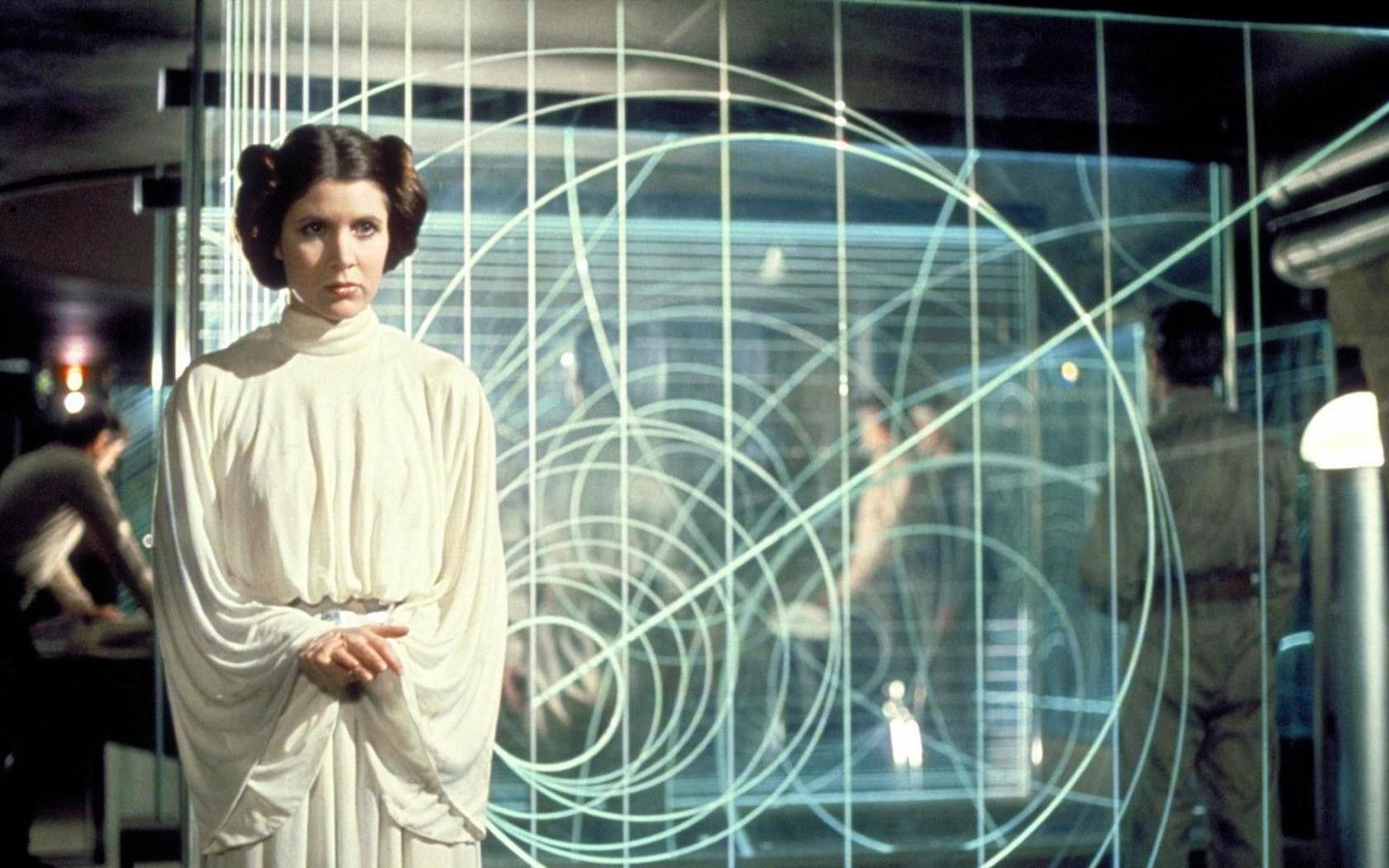
When most people ask who was Princess Leia, they usually picture the white dress, the "cinnamon bun" hair, and a grainy hologram begging for help. It’s the default setting. But if you actually sit down and watch the original 1977 film, she isn't a damsel. She’s a high-ranking military official who gets tortured by a cyborg, watches her entire home planet get turned into space dust, and then immediately has the mental fortitude to insult her rescuers' height.
Leia Organa wasn't just a character; she was a massive shift in how Hollywood treated women in action movies. She’s messy. She’s angry. She’s incredibly smart. Honestly, she’s arguably the only reason the Rebellion didn't fall apart in the first fifteen minutes of the story. While Luke was whining about power converters and Han was worried about his paycheck, Leia was the one holding the structural integrity of the entire plot together with sheer willpower and a blaster.
The unexpected origins of Leia Organa
George Lucas didn't just stumble onto the perfect character. Early drafts of The Star Wars had Leia as everything from a spoiled royal to a sister of a hidden king. But once Carrie Fisher stepped into the role, the character transformed. Fisher, who was only 19 during filming, brought a certain "don't mess with me" energy that defined the role.
She wasn't a princess because she wore a tiara. She was a princess because she was the daughter of Queen Breha Organa and Senator Bail Organa of Alderaan. This wasn't a titular role for show; it was a diplomatic and political burden. She was a member of the Imperial Senate, using her "diplomatic immunity" to smuggle stolen plans for the Death Star. Think about that for a second. While most teenagers are worrying about finals, Leia was basically a double agent in a galactic dictatorship.
She wasn't actually born royalty, though. This is where the lore gets deep and a bit tragic. She was born Leia Amidala Skywalker on a remote asteroid called Polis Massa. Her mother, Padmé Amidala, died in childbirth. Her father, Anakin Skywalker, had just become Darth Vader. To keep her safe, she was split from her twin brother, Luke, and sent to live on Alderaan. She grew up in a world of art, culture, and high-level politics, which explains why she’s so much more articulate and strategically minded than the farm boy she eventually meets.
Why her leadership style changed everything
Usually, in 1970s sci-fi, the "girl" was there to be rescued. Leia flipped that script within seconds of being "saved." When the rescue mission in the Death Star goes south, she’s the one who grabs a blaster and shoots a hole in the wall to provide an escape route through the trash compactor. She’s a tactician.
By the time we get to The Empire Strikes Back, she’s essentially running the base on Hoth. She’s giving orders to pilots, overseeing evacuations, and making sure the Rebellion survives another day. It’s a heavy burden. You can see it in her face—Carrie Fisher played her with this constant undercurrent of exhaustion and duty.
The General era
Fast forward to the sequel trilogy, and she isn't a princess anymore. She’s General Organa. This is a vital distinction. In the Star Wars universe, she eventually lost her political standing when the galaxy found out her biological father was Darth Vader. It was a massive scandal. Instead of disappearing, she formed the Resistance. She knew the First Order was a threat when no one else would listen.
She's one of the few characters in cinema history who aged with grace and power. She didn't become a background character; she became the mentor. When you ask who was Princess Leia, you're asking about a woman who spent literally her entire life—from her teens to her sixties—fighting a war. It’s kind of heartbreaking when you think about it. She never really got to just be.
The Carrie Fisher factor
You cannot separate Leia from Carrie Fisher. They are inextricably linked. Fisher was a writer, a wit, and a woman who struggled with bipolar disorder and addiction in a very public way. She hated the "slave Leia" bikini from Return of the Jedi, famously telling future Star Wars lead Daisy Ridley to "fight for your outfit" and not to be a "slave like I was."
Fisher brought a sharp, acidic humor to the role that wasn't necessarily on the page. She fixed her own dialogue. She understood that Leia shouldn't be soft. If you’re a leader of a rebellion, you have to be tough as nails.
- She was a script doctor in Hollywood for years.
- She wrote Postcards from the Edge.
- She was incredibly open about mental health long before it was "trendy" to be.
Misconceptions about the character
A lot of people think she was just "the love interest" for Han Solo. That's a huge oversimplification. Yes, their chemistry was electric, but Leia’s arc was never defined by her relationship with him. In fact, in the later years of the timeline (in both the "Legends" books and the current canon), they spent a lot of time apart because they were both so dedicated to their respective causes.
Another misconception: she wasn't a Jedi because she wasn't "strong enough." Actually, she was just as Force-sensitive as Luke. She chose a different path. She chose politics and military leadership because she felt that's where she could do the most good. There’s a beautiful scene in The Rise of Skywalker (and the accompanying books) that shows she did train as a Jedi for a while, but she gave it up after having a vision about her son's future.
The cultural impact that won't quit
Leia changed the merchandise game, too. Before her, "girl toys" were dolls and tea sets. After 1977, girls wanted blaster pistols and plastic action figures. She proved that a female character could be the "tough one" in the room without losing her humanity or her femininity.
She wore her hair in those iconic buns as a nod to the "soldaderas" of the Mexican Revolution. George Lucas wanted her to look like a revolutionary, not a Disney princess. It worked. You see her silhouette and you immediately know who she is. That is the definition of a cultural icon.
Practical takeaways for fans and writers
If you're looking to understand the depth of this character or apply her "energy" to your own life or writing, consider these specific nuances that made her work:
1. Resilience is a choice, not a trait.
Leia watched her world end. She didn't have time to grieve; she had to lead a debriefing. In your own life, Leia represents the idea that you can be devastated and still be functional. It’s not about being emotionless—it’s about duty.
2. Voice matters.
Part of what made Leia "Leia" was her refusal to be intimidated. Whether she was talking to Grand Moff Tarkin or Jabba the Hutt, her tone never wavered. She spoke with authority even when she had no leverage.
3. Legacy is complicated.
She had to deal with the fact that her father was the greatest villain in the galaxy. She didn't let that define her. She chose her own family and her own path.
To truly understand Leia, you have to look past the buns and the gold bikini. You have to look at the woman who stood on the bridge of a cruiser while the world burned and said, "We have everything we need." She was the heartbeat of the Rebellion, the brains of the operation, and a reminder that being a leader often means being the loneliest person in the room.
If you want to dive deeper into her specific history, I highly recommend reading Leia: Princess of Alderaan by Claudia Gray. It covers her teenage years and her first steps into the Rebellion. It’s probably the most accurate portrayal of her internal life that exists in the current Star Wars canon. You'll see a side of her that the movies just didn't have time to show—the girl who wanted to be a poet but realized she had to be a soldier.