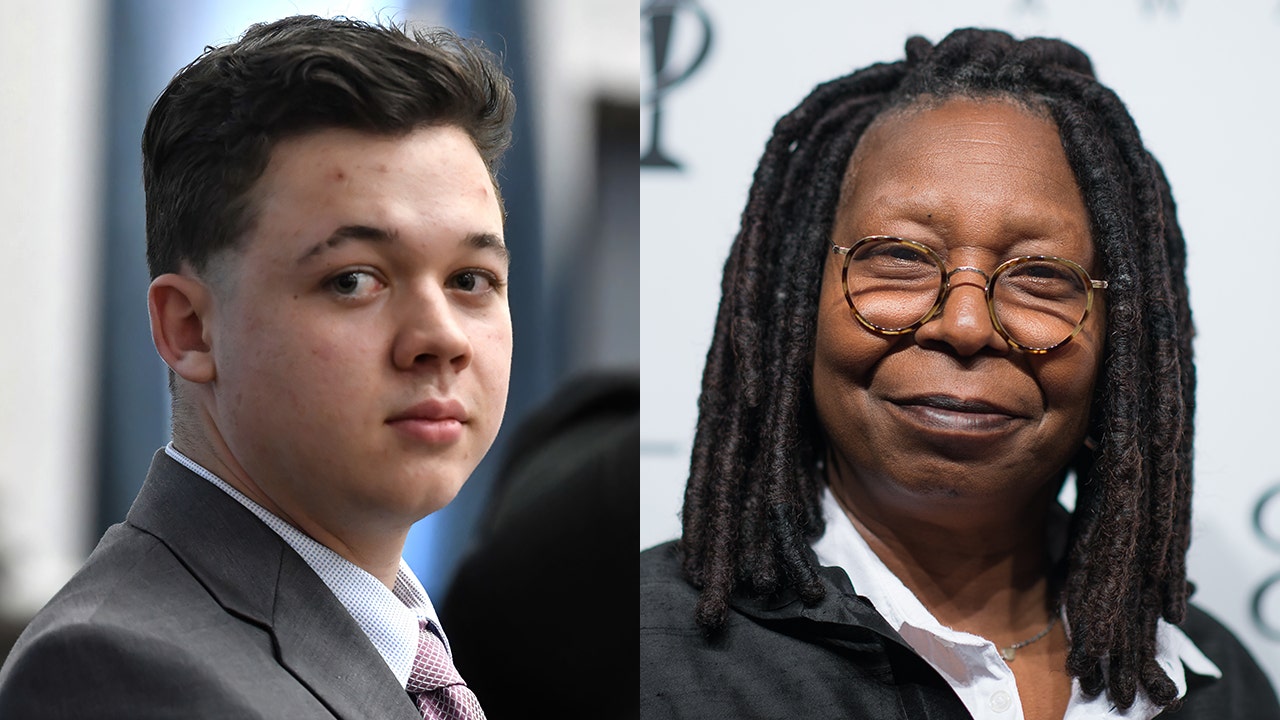
You’ve probably seen the headlines or the fiery clips on social media. For a long while, it felt like you couldn't scroll through X (formerly Twitter) without seeing something about Kyle Rittenhouse "bankrupting" the hosts of The View. People love a David vs. Goliath story, especially when it involves a polarizing young man and one of the most outspoken women in daytime television.
But honestly? Most of what you’ve read is probably a mix of wishful thinking, internet rumors, and a whole lot of legal nuance that gets lost in a 30-second soundbite.
The friction between Whoopi Goldberg and Kyle Rittenhouse isn't just a celebrity spat. It’s a case study in how we talk about justice, the First Amendment, and the very real consequences of what people say on live TV. If you're looking for the simple "who won" answer, it's more complicated than a scoreboard.
The Comments That Sparked the Fire
It all started in the aftermath of Rittenhouse’s 2021 trial. To refresh your memory: a jury in Kenosha, Wisconsin, found him not guilty on all counts, including first-degree intentional homicide. He had argued self-defense after shooting three people, killing two, during the civil unrest in 2020.
The verdict was a lightning rod.
On The View, Whoopi Goldberg didn't mince words. Even after the "not guilty" verdict came in, she famously said on air, "To me, it’s murder. I’m sorry."
She wasn't alone in her sentiment, but her platform is massive. Rittenhouse took notice. In early 2022, he sat down with Tucker Carlson—who was still the king of Fox News at the time—and basically put Whoopi on notice. He announced the launch of the Media Accountability Project (TMAP). Its stated goal? To fund lawsuits against people who "lied" about him.
"Whoopi Goldberg is on the list," Rittenhouse told Carlson. "She called me a murderer after I was acquitted by a jury of my peers."
Did He Actually Sue Her?
Here is the part where things get messy. If you search for "Whoopi Goldberg Kyle Rittenhouse lawsuit" right now, you’ll find a sea of articles claiming he filed a $60 million suit, or a $100 million suit, or that she was fired because of it.
None of those specific claims were true.
At the time of the peak viral rumors, fact-checkers like the AP had to step in because the "lawsuit" was purely a verbal threat. Rittenhouse’s own spokesperson, David Hancock, eventually had to clarify that they hadn't actually filed anything against The View hosts in those early stages.
Does that mean it's over? Not necessarily. Legal battles involving public figures are slow. Like, glacially slow.
Why Defamation is a Nightmare to Prove
In the U.S., suing a celebrity like Whoopi Goldberg for something she said on a talk show is an uphill battle. It all comes down to a legal standard called "actual malice." Because Rittenhouse is a public figure, his lawyers would have to prove not just that Whoopi was wrong, but that she knew she was lying or acted with a reckless disregard for the truth.
Also, there’s the "opinion" defense.
Courts have historically protected people who say "I think" or "To me, it feels like..." Whoopi used that exact framing: "To me, it's murder." In the eyes of a judge, that often moves the statement from a "fact" that can be proven false to a "protected opinion."
The Reality of Rittenhouse’s Legal Landscape
While the internet was busy meme-ing about Whoopi, Rittenhouse was actually dealing with a different set of legal problems. He hasn't just been the one threatening to sue; he's been sued himself.
- The Huber Family Lawsuit: The estate of Anthony Huber (one of the men killed in Kenosha) filed a civil wrongful death suit. This is a big deal because the burden of proof in civil court is lower than in criminal court.
- Gaige Grosskreutz: The man who survived the shooting also filed a lawsuit against Rittenhouse and several law enforcement officials.
By 2025 and moving into 2026, the focus for Rittenhouse seemed to shift. He recently took a massive step back from social media, even deleting his personal X and Instagram accounts. He mentioned needing to "restructure" and focus on his business interests and Second Amendment advocacy rather than the day-to-day combat of celebrity lawsuits.
What Most People Get Wrong
People often think that a "not guilty" verdict means the media has to stop talking about the case entirely. That's just not how the law works. You can still disagree with a jury's decision. You can still call it "murder" in a moral sense, as long as you aren't claiming someone was convicted of a crime they weren't.
Whoopi Goldberg never faced a suspension or a firing specifically over the Rittenhouse comments. She was suspended from The View for two weeks in 2022, but that was for controversial comments she made about the Holocaust, not for her stance on the Kenosha shootings.
The two stories got tangled up in the "outage cycle," and suddenly the internet decided she was being punished for Rittenhouse.
Actionable Insights for the Digital Age
If you’re trying to keep track of these kinds of high-profile legal feuds, here is how to spot the fluff:
- Check the Docket: A lawsuit doesn't exist until it's filed in a court. If a headline says "Celebrity X Sued," look for a case number. If it isn't there, it's just a rumor.
- Watch the Phrasing: Pay attention to words like "plans to sue" or "considering legal action." These are often used to generate headlines without the risk of actually losing in court.
- Understand Opinion vs. Fact: In the U.S., saying "That guy is a jerk" is protected. Saying "That guy stole $500 from the register on Tuesday" is actionable if it's false. The Whoopi Goldberg situation sits right on that blurry line.
The "Whoopi vs. Kyle" saga is a reminder that the court of public opinion moves a lot faster than the actual court of law. While the viral posts might say one thing, the reality is a stalemate of words, high legal bars, and a public that is still deeply divided over what happened that night in Wisconsin.
Keep an eye on official court filings rather than social media graphics if you want the real story.