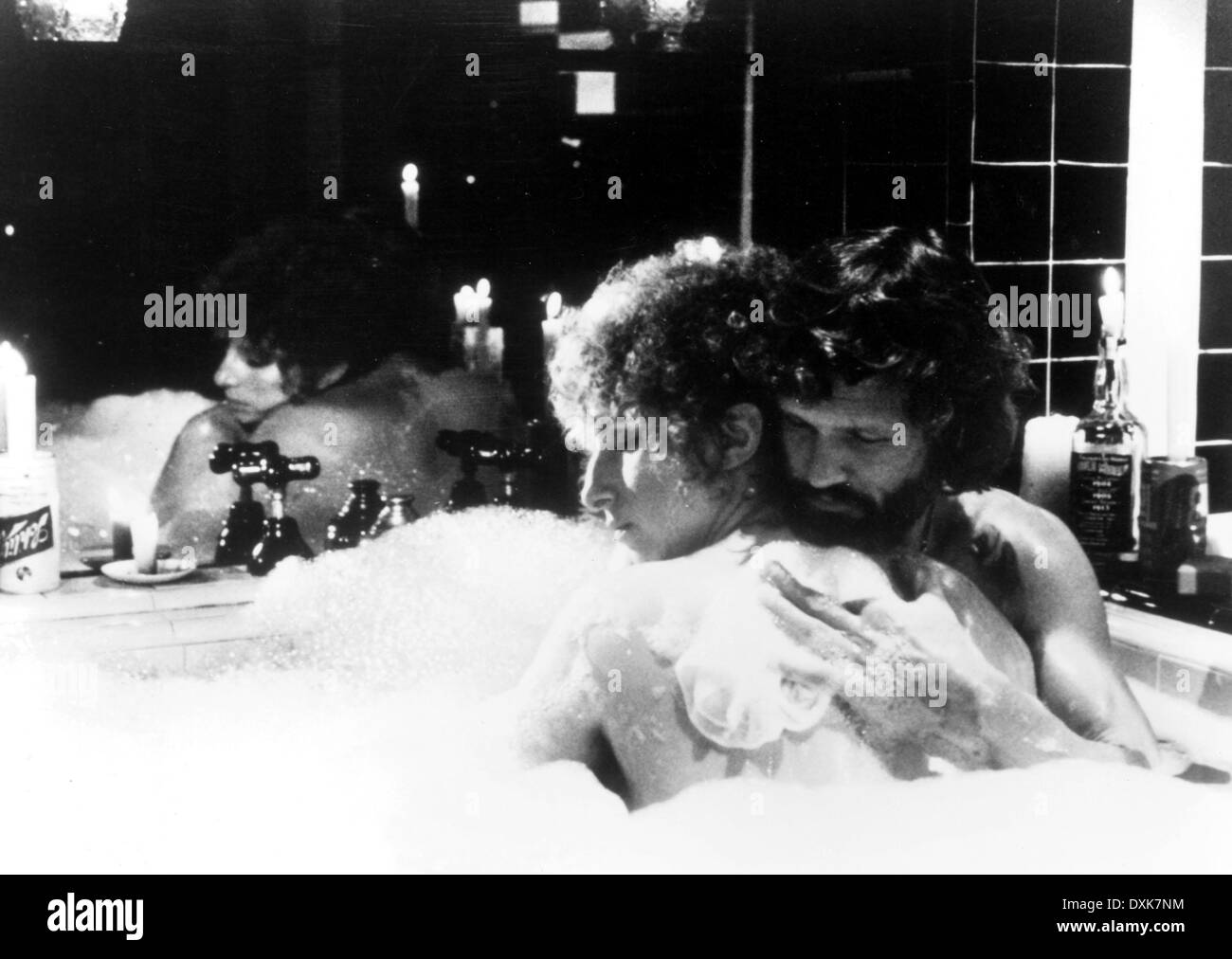
Let’s be honest. When most people think of A Star Is Born, they’re picturing Lady Gaga’s raw vocals or Judy Garland’s heartbreaking vulnerability. But there is a massive, glittery, and deeply polarizing middle child in this cinematic lineage: the 1976 version starring Barbra Streisand and Kris Kristofferson.
If you haven’t seen it lately, or ever, you might just think of it as "the one with the perm." But there is so much more to the story. This wasn't just another remake; it was a total cultural takeover that redefined what a Hollywood powerhouse looked like. It was messy. It was loud. And honestly? It was kind of a miracle it got finished at all.
The Rock 'n' Roll Pivot
Before this version, the story was always about the movie business. Actors, sets, the silent-to-sound transition—that was the vibe. Streisand and her then-boyfriend (and first-time producer) Jon Peters decided to blow that up. They moved the whole thing into the stadium rock era of the 70s.
It was a brilliant move, really. Rock stars were the new royalty. Casting Kris Kristofferson as John Norman Howard was a stroke of genius because he wasn't just playing a grizzled musician—he was one. He had that Rhodes scholar brain mixed with a Nashville soul and a face that looked like it had seen a few too many sunrises from the wrong side of a barroom floor.
On the other side, you had Barbra. She was already a titan. By taking on the role of Esther Hoffman, she wasn't just playing a rising star; she was asserting her dominance over the entire production. She was the executive producer. She wrote the music. She basically directed the thing from the sidelines, even if Frank Pierson had his name on the chair.
What Really Happened on That Set?
If you’ve heard rumors that the set was a war zone, you’ve heard right. The "chemistry" we see on screen was often fueled by genuine, high-stakes tension.
- The Control Factor: Barbra is a perfectionist. Everyone knows this. On set, she was everywhere. She was picking out her own clothes (many of which came straight from her personal closet) and telling the director how to frame shots.
- "Kris Pissed-Off-Erson": That was the nickname the crew gave Kristofferson. He wasn't used to the rigid, micro-managed world of a Streisand production. He was a guy who liked to show up, feel the vibe, and perform. Having a co-star tell him how to move or how to sing did not go over well.
- The Elvis Factor: Can you imagine if Elvis Presley had taken the role? He was actually the first choice. Streisand went to Las Vegas to pitch him personally. He wanted to do it, but his manager, Colonel Tom Parker, made demands that were so ridiculous (including a massive salary and top billing) that the deal died. In a weird way, Kristofferson’s casting saved the movie’s authenticity. He brought a "real" singer-songwriter energy that Elvis might have turned into a caricature.
The "Evergreen" Legacy
You can’t talk about Barbra Streisand and Kris Kristofferson in A Star Is Born without talking about that song. "Evergreen" is the heartbeat of the film.
Funny enough, Barbra actually learned to play the guitar specifically for the movie. There’s a scene where she plays the melody for Kris, and that was a huge deal for her. She was terrified of it. She even cut her famous nails short on one hand so she could fret the chords.
When she won the Oscar for Best Original Song, she became the first woman to ever win as a composer. That’s the kind of history people forget when they’re busy making fun of the 70s hairstyles. She didn't just sing a hit; she built the architecture of the film’s emotion.
Why It Still Hits Different in 2026
Looking back at it now, especially after the Bradley Cooper version, the 1976 film feels like a time capsule of a very specific kind of ego and glamour. It’s "big" in a way movies aren't anymore.
The ending—without spoiling it for the three people who don't know it—was controversial even then. Jon Peters and Barbra fought for a specific, lingering shot of her singing "With One More Look at You / Watch Closely Now." It’s nearly seven minutes of a single, unbroken take. Critics at the time called it self-indulgent. Today? It looks like a masterclass in screen presence.
Kristofferson, who we sadly lost recently, always spoke of the film with a mix of exhaustion and pride. He knew it made him a global superstar. He and Barbra eventually made peace, even performing together at Hyde Park in 2019. It turns out, that "tension" was just two massive stars trying to occupy the same orbit.
Actionable Insights for Fans and Cinephiles
If you're going to revisit this classic, or watch it for the first time, do it right.
- Watch the 2018 Special Cut: If you can find the version Streisand re-edited for Netflix a few years back, watch that. It includes a restored scene of her playing "Evergreen" on the guitar, which adds a lot of depth to her character's relationship with John Norman.
- Listen to the Soundtrack First: The album was a monster hit for a reason. Listen to "Lost Inside of You" and "Hellacious Acres" to get the full range of the rock-meets-ballad vibe.
- Compare the "Grammy" Scene: Unlike the earlier versions where the leads win Oscars, this one uses the Grammys. It’s a fascinating look at 70s music industry politics.
- Look for the "Real" People: Many of the people in the concert scenes aren't extras—they’re real fans. They filmed at massive festivals like the one at Sun Devil Stadium in Arizona to get that authentic, sweaty rock energy.
The 1976 A Star Is Born isn't perfect. It’s messy, it’s a bit too long, and it definitely thinks it’s the most important thing ever filmed. But that’s exactly why it works. It has a pulse. It has Barbra. And it has Kris Kristofferson at the absolute peak of his rugged, tragic powers.