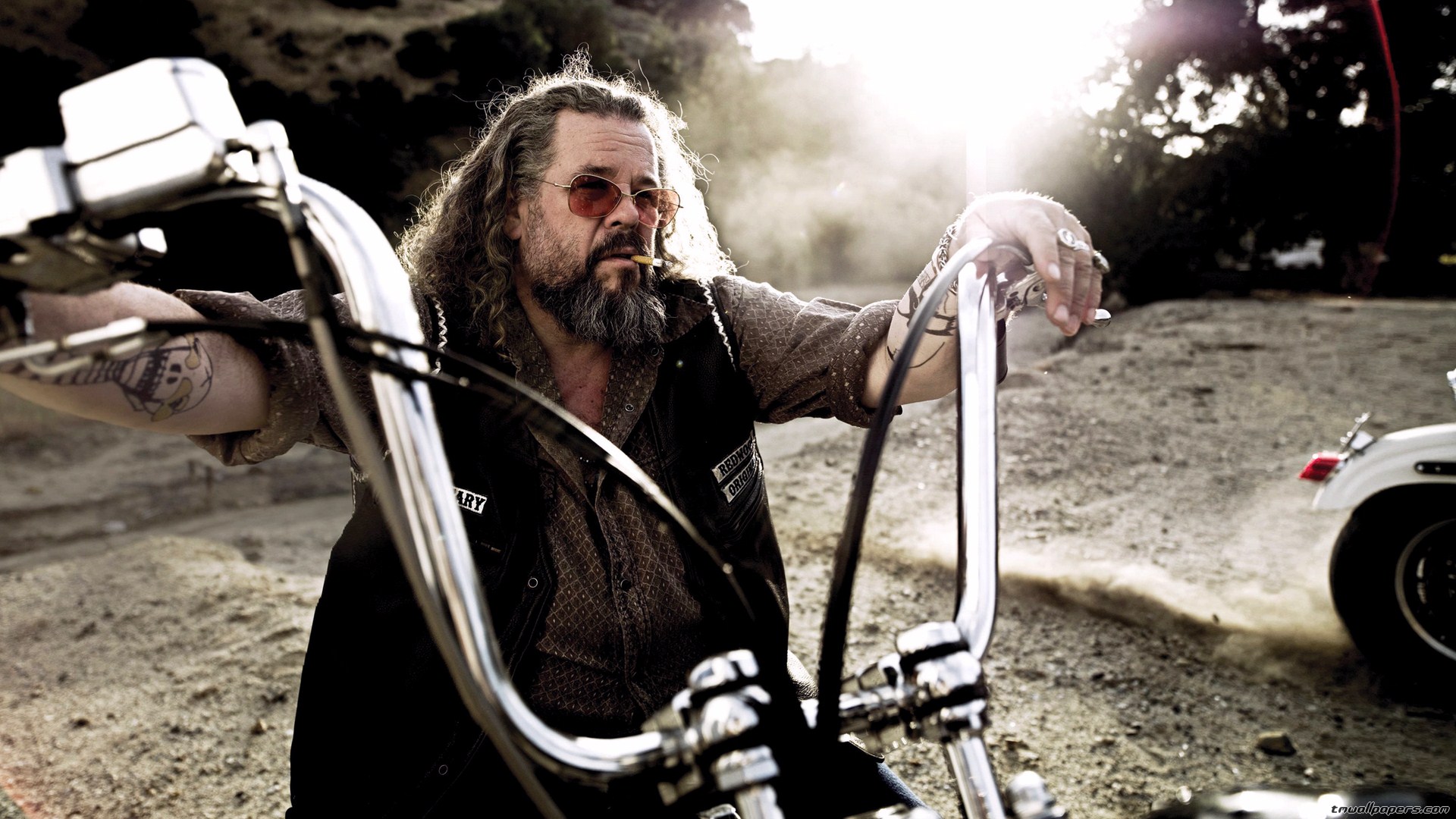
Robert "Bobby Elvis" Munson wasn't the guy you expected to be the moral compass of a murderous outlaw motorcycle club. He was an Elvis impersonator. He was portly, soft-spoken, and spent a lot of his time hunched over accounting ledgers. But if you look at the trajectory of SAMCRO across seven seasons, it’s pretty clear that Sons of Anarchy Bobby was the only thing keeping the club from flying off the rails much sooner than it did. Mark Boone Junior played him with this weary, soulful gravitas that made you forget he was wearing sequins in his side gig.
Most fans focus on the Shakespearean tragedy of Jax Teller or the manipulative genius of Gemma. Honestly, though? Bobby was the glue. He was the Secretary, the Treasurer, and eventually the Vice President, but his real job was being the grown-up in the room. When Clay Morrow started losing his mind to greed and when Jax started losing his soul to vengeance, Bobby was the one holding the mirror up to them. He didn't always like what he saw.
The Secretary and the Soul of the Club
Bobby Munson’s role in the Sons of Anarchy was unique because he balanced the books in more ways than one. He handled the money, sure, but he also kept the club’s "moral" debt in check. In the early seasons, you see him as the voice of reason. He wasn't a coward—the man was a patched-out member of a 1%er club—but he believed in the code. He believed in what John Teller wrote in that manuscript.
While others were quick to pull a trigger, Bobby was the one calculating the fallout. He understood that every violent action had a reaction that usually cost the club money, blood, or brothers. It’s a bit ironic, isn't it? The guy who made a living mimicking a dead rock star was the most authentic person in Charming. He didn't have the ego problems that Jax and Clay suffered from. He just wanted the club to survive.
Why the Elvis Gimmick Actually Mattered
It’s easy to write off the Elvis impersonation as a quirky character trait. It wasn't just a gag. It showed a side of Sons of Anarchy Bobby that was capable of joy and performance outside the grim reality of gunrunning. It gave him a life. It made him human. Most of these guys had nothing but the patch. Bobby had the stage.
That duality is what made his eventual descent so painful to watch. As the show got darker, the Elvis suits disappeared. By the time we hit the final seasons, the humor was gone. The sequins were replaced by prison jumpsuits and, eventually, bandages. Kurt Sutter, the show's creator, used that hobby as a barometer for the club's health. When Bobby stopped singing, you knew the club was dying.
The Great Rift: Bobby vs. Clay
One of the most intense arcs for Bobby was his refusal to just "go along" with Clay’s leadership. When the club was voting on whether to get into the drug business with the Galindo cartel, Bobby was the loudest "No." He knew it was a death sentence. He saw the greed in Clay’s eyes and recognized it for what it was: a betrayal of everything SAMCRO stood for.
He didn't just bitch about it, though. He took action.
Bobby went to Otto Delaney. He tried to manage the legal fallout. He even stepped down as Secretary because he couldn't put his name on the books anymore. That’s real integrity in a world where "loyalty" usually just means "do what the boss says even if it’s stupid." Bobby's loyalty was to the club, not the man wearing the President's patch. That’s a massive distinction. Many characters in the show confused the two. Bobby never did.
Jax Teller’s Vice President and the Cost of Vengeance
When Jax finally took the gavel, we all thought things would get better. Bobby thought so too. He stepped up as VP because he believed in Jax’s vision of getting the club "legit." But Jax turned out to be a more effective monster than Clay ever was.
Watching Bobby’s face during Season 6 and 7 is like watching a man watch his house burn down. He stayed because he thought he could temper Jax’s rage. He was the only one Jax would actually listen to, at least for a while. There’s a scene where Bobby tells Jax, "You're a better man than your father. Don't let the gavel tell you otherwise." It’s a heartbreaking moment because we know Jax is already gone.
Bobby’s role shifted from advisor to protector. He wasn't just managing the club anymore; he was trying to save Jax from himself. He took the hits—literally. He went to prison. He dealt with the Irish. He did the dirty work because he hoped it would eventually lead to a clean ending. He was wrong, of course. In the world of Sons of Anarchy, no one gets a clean ending.
The Brutal End of Robert Munson
We have to talk about the eye. And the fingers.
The death of Sons of Anarchy Bobby is arguably the most traumatic moment in the entire series. It wasn't a quick shootout. It was a slow, agonizing dismantling of a man. August Marks didn't just want to kill a member of SAMCRO; he wanted to break their spirit. And since Bobby was the spirit of the club, he was the target.
The way Bobby handled that torture defined his character. No screaming. No begging. No giving up secrets. He just sat there, losing pieces of himself, and when he finally saw Jax again, his concern wasn't his missing eye. It was the club.
His death at the hands of Moses Cartwright (and later August Marks) was the final nail in the coffin for SAMCRO’s humanity. Once Bobby was gone, there was no one left to say "maybe we shouldn't do this." Jax lost his last tether to the light. The silence that followed Bobby’s death was deafening. It’s the point in the show where you realize there is no happy ending coming for anyone.
What Most People Get Wrong About Bobby
People often think Bobby was "soft" because he was the peacemaker. That’s a total misunderstanding of how power works in an outlaw hierarchy. Being the guy who says "no" to a room full of armed, angry men takes way more guts than being the guy who pulls a trigger.
Bobby was the toughest guy in the room because he could carry the weight of the club's sins without breaking—until the very end. He killed when he had to. He went to "The Hole" in Stockton. He never flinched. He just preferred a world where those things weren't necessary. He was a realist in a world of fanatics.
The Legacy of the Elvis Impersonator
If you're rewatching the series, pay attention to the background of scenes in the chapel. Look at how Bobby watches the other members. Mark Boone Junior does this incredible job of acting with his eyes (while he still had both of them). You can see him calculating the cost of every decision.
He represented the middle ground. Between the old school violence of Clay and the idealistic (and eventually psychopathic) vision of Jax, Bobby was the reality. He knew the club was a criminal enterprise, but he wanted it to be a family. In the end, the enterprise destroyed the family.
Lessons from the Life of Bobby Munson
If you’re looking for the "actionable" takeaway from a fictional outlaw, it’s about the value of the "Number Two." Everyone wants to be the President. Everyone wants the gavel. But the President is nothing without a Bobby Munson.
- The Power of Dissent: Every organization needs a Bobby—someone who isn't afraid to lose their position to tell the truth. If you're in a leadership role, find your Bobby. If you're a "VP," be brave enough to speak up when the "President" is wrong.
- Integrity Over Rank: Bobby stepped down when he didn't agree with the direction of the club. He didn't quit the family, but he refused to be complicit in the rot. Knowing where your line is—and refusing to cross it—is the only way to keep your soul in a high-stakes environment.
- Managing the "Books": Whether it's a business or a personal life, the "accounting" always matters. You have to keep track of what you owe, both financially and morally. Neglecting the "moral ledger" eventually leads to a bankruptcy that no amount of money can fix.
The tragedy of Sons of Anarchy Bobby is that he was the right man in the wrong world. He had the wisdom to lead, but he was too loyal to usurp. He stayed until the end, and he paid the ultimate price for a patch that had long since lost its meaning. If you want to understand what the Sons of Anarchy were supposed to be, look at Bobby in Season 1. If you want to see what happened to that dream, look at him in Season 7.