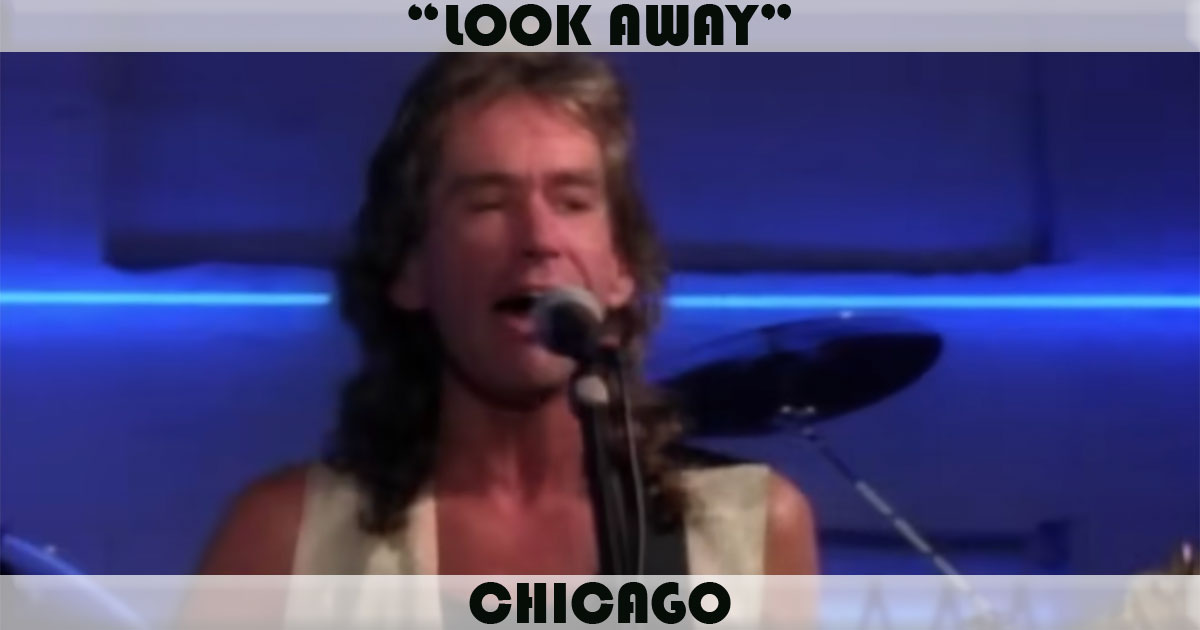
It was 1988. Bill Champlin was at the mic, not Peter Cetera. People still get that confused. Honestly, if you close your eyes, you can hear why. But Look Away by Chicago didn't just climb the charts; it parked itself at the very top of the Billboard Year-End Hot 100 for 1989. It beat out Bobby Brown. It beat out Madonna. It even outlasted Poison's "Every Rose Has Its Thorn."
Funny thing is, the band almost didn't record it.
Chicago was a horn band. That was their "thing" since the late sixties. Brass, jazz-fusion, grit. But by the late eighties, the landscape had shifted toward the polished, synth-heavy production of Diane Warren. She wrote "Look Away." If you're a fan of eighties power ballads, you know her name. She’s the queen of the heartbreak anthem. When she handed this track to Chicago, it became the centerpiece of Chicago 19.
It’s a song about a guy trying to act tough while his ex moves on. Simple. Brutal. Effective.
The Diane Warren Magic and the Chicago Shift
Diane Warren has this weirdly specific talent for writing songs that feel like a gut punch wrapped in velvet. By the time 1988 rolled around, Chicago had already survived the departure of Peter Cetera, which many thought would be the death of the group. They’d leaned into the "ballad band" persona with "You're the Inspiration" and "Hard to Say I'm Sorry."
But "Look Away" was different.
It was moodier. Darker. The production by Chas Sandford—who also worked with John Waite and Stevie Nicks—stripped away the signature Chicago horns for most of the track. This caused some serious tension. Imagine being a world-class trombone player and being told to sit out the biggest hit of the decade. Lee Loughnane and James Pankow weren't exactly thrilled about the shift toward synth-pop, but the numbers didn't lie.
The song hit number one on the Billboard Hot 100 on December 10, 1988. It stayed there for two weeks. But its real power was its longevity. It stayed on the charts so long that it became the number one song of the entire following year.
Why Bill Champlin Was the Secret Weapon
Most casual listeners hear that gravelly, soulful rasp and think "Cetera." Nope. Bill Champlin joined Chicago in 1981, bringing a R&B sensibility that the band desperately needed. On "Look Away," his vocal delivery is basically a masterclass in restrained agony.
He starts low. Almost a whisper.
"When you called me up this morning..."
By the time he hits the bridge, he’s tearing the roof off. He captured the specific "tough guy" heartbreak that the eighties excelled at. You know the vibe: denim jackets, rainy windows, and the sheer terror of seeing an ex-lover with someone new. Champlin’s voice gave the song a weight that a higher, poppier tenor might have missed.
It’s also worth noting that the song features some stellar guitar work. It wasn't just a synth wash. The texture of the track felt modern for '88 but has aged surprisingly well compared to some of its contemporaries that relied too heavily on gated reverb drums.
The Chart Anomaly of 1989
Here is a bit of trivia that usually wins pub quizzes: Look Away by Chicago is one of the few songs to be the #1 song of the year without ever being #1 in the month of January of that year.
How does that happen?
It’s all about the "long tail." The song was a massive radio staple. It didn't just peak and vanish. It lingered. It was the soundtrack to every high school prom, every awkward breakup, and every late-night drive for months on end. In an era dominated by hair metal and the rise of New Jack Swing, Chicago managed to hold the middle ground. They were the "safe" choice for radio programmers, yet the song had enough edge to keep it from being boring.
The Music Video: A Time Capsule
If you haven't watched the video lately, go find it on YouTube. It’s peak 1980s aesthetic. Dim lighting. Dramatic shadows. Bill Champlin looking intensely into the camera. It lacks the narrative complexity of some of the era's bigger videos, but it didn't need it. The song did the heavy lifting.
Interestingly, the video emphasizes the band as a unit, even though the horns are virtually absent from the mix. It was a branding move. They needed the public to see that Chicago was still Chicago, even if they sounded more like Starship or REO Speedwagon at the time.
The Controversy Among Hardcore Fans
Let’s be real: some people hate this song.
If you grew up with Chicago Transit Authority (1969) or Chicago II, "Look Away" feels like a betrayal. The early fans wanted the 10-minute experimental jazz suites. They wanted the political edge of "Dialogue (Part I & II)." To them, "Look Away" was the ultimate sell-out moment.
But music is a business. By the mid-eighties, Chicago was struggling to find their place. Their collaboration with producer David Foster had saved their careers, but it also pigeonholed them into the "adult contemporary" bracket. "Look Away" was the final evolution of that journey. It was a slick, professional, perfectly engineered hit machine.
Whether you love it or hate it, you can't deny the craft. The chord progression in the chorus—the way it builds tension before the release—is textbook songwriting. Diane Warren knew exactly what she was doing. She took a band that was essentially a legacy act and made them the most relevant artists in the country for a year.
The Technical Breakdown
Musically, the song relies on a minor-key verse that shifts into a soaring, major-key chorus. This is a classic "tension and release" tactic. The synths provide a pad that creates a sense of space, making the listener feel the loneliness the lyrics describe.
- Drums: Crisp, programmed-feeling but with a live energy.
- Vocals: Layered harmonies in the chorus that give it that "wall of sound" feel.
- Lyrics: Relatable. Everyone has had that phone call they didn't want to take.
When Champlin sings, "If you see me walking by and the tears are in my eyes," it’s melodramatic as hell. But in 1988, melodrama was the currency of the realm. We loved it. We ate it up.
What Happened After "Look Away"?
The success of the song was a bit of a double-edged sword. It kept the band on the road and in the charts, but it also moved them further away from their roots. They continued to release albums, but they never quite captured lightning in a bottle like this again.
Bill Champlin eventually left the band in 2009. The horns eventually came back to the forefront of their live shows. Today, when Chicago plays "Look Away" in concert, the arrangement is often tweaked to include more of the brass section, bridging the gap between their two identities.
Actionable Insights for the Music Fan
If you want to truly appreciate what "Look Away" did for the industry and how it fits into your own playlist, here is how to dive deeper:
Compare the "Two Chicagos" Listen to "25 or 6 to 4" and then immediately play "Look Away." It’s the same band, but a completely different universe. Understanding this shift helps you understand how the music industry changed between the 70s and 80s.
Study the Diane Warren Catalog If you like the "vibe" of this song, look up other tracks written by Diane Warren. From Aerosmith’s "I Don’t Want to Miss a Thing" to Toni Braxton’s "Un-Break My Heart," you’ll start to hear the "Warren DNA"—the specific way she structures a climax.
Check Out Bill Champlin’s Solo Work If you’re one of the people who thought this was Peter Cetera, do yourself a favor and look up Bill Champlin’s solo albums like Runaway. He’s a blue-eyed soul legend who deserves his own spotlight outside of the Chicago shadow.
Check the Lyrics for Emotional Stoicism Next time you listen, pay attention to the lyrics. It's actually a very "masculine" take on heartbreak—the idea of hiding one's feelings to protect one's pride. "Don't look at me, I'm fine, just keep walking." It's a fascinating contrast to the more vulnerable ballads of today.
"Look Away" remains a polarizing but undeniable landmark in pop history. It’s a song that defined an era of transition, proving that even a band with twenty years of history could reinvent itself and conquer the world one more time.
Next Steps for Your Playlist
To get the full experience of this era of power ballads, curate a "1989 Billboard" playlist. Include "Look Away," then follow it with Mike + The Mechanics' "The Living Years" and Sheriff's "When I'm with You." You'll notice a specific production trend—the "big" snare drum, the lush keyboard layers, and the emotional vocal delivery—that defined the end of the decade.
For a deeper dive into Chicago's technical evolution, compare the studio version of "Look Away" with their A&E Live by Request performance. You'll hear how the band re-integrated their horn section into a song that was originally built to exclude them, effectively reclaiming their identity while honoring their biggest hit.