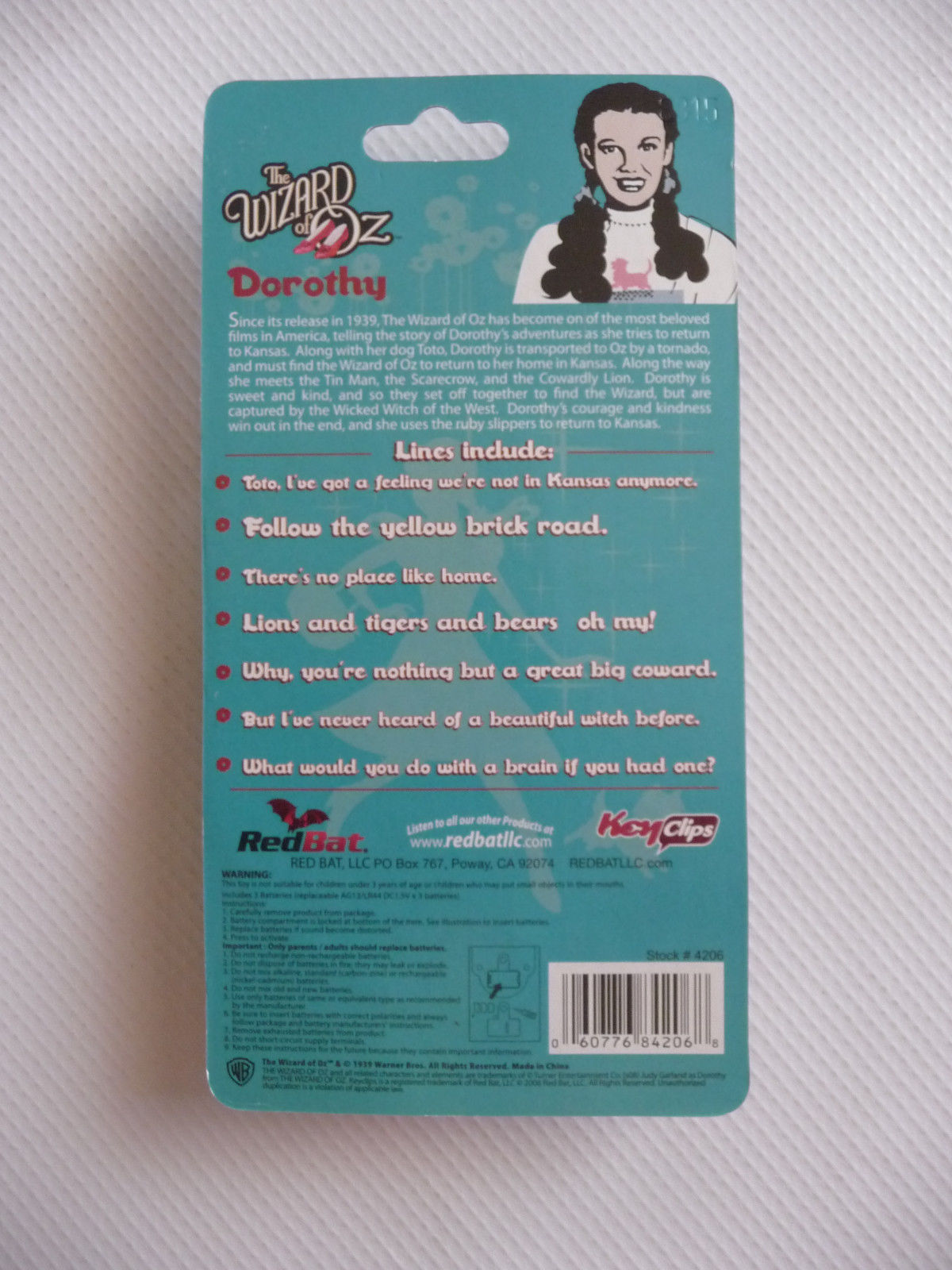
L. Frank Baum probably had no idea what he was starting back in 1900. When Dorothy Gale first stepped out of her wind-blasted farmhouse into the technicolor dreamscape of Munchkinland, she wasn't just a character. She was a quote machine. We’ve all said them. Even if you’ve never actually sat through the 1939 MGM classic from start to finish—which, honestly, how?—you know the lines.
Dorothy sayings from Wizard of Oz have basically become a shorthand for the human experience. Feeling overwhelmed? You’re not in Kansas anymore. Missing your bed? There’s no place like home. It’s simple, but it’s deep.
The thing is, we usually get the context wrong. People treat these lines like greeting card fluff, but in the movie, Judy Garland delivers them with this desperate, shaky-voiced intensity. It’s not just "saying things." It’s a kid trying to survive a fever dream.
The Kansas Problem and That Famous Realization
"Toto, I've a feeling we're not in Kansas anymore."
Most people misquote this. They say, "I don't think we're in Kansas anymore." Nope. Dorothy is more tentative than that. She’s observant. This isn't just a witty observation about the scenery; it’s a realization of total displacement.
Think about the 1930s audience. The world was shifting. The Great Depression was hitting hard. Dust bowls were literal. For Dorothy to look at a world of giant flowers and singing little people and realize her old "normal" was gone—that resonated. It still does. We use it today whenever a situation gets weird or the technology leaves us behind. It’s the ultimate "fish out of water" line.
Interestingly, the American Film Institute (AFI) ranked this as the fourth greatest movie quote of all time. It beat out "May the Force be with you." That’s wild. A teenage girl from a farm in 1939 has more cultural staying power than a space Jedi.
Beyond the Ruby Slippers: The Lines You Forgot
Everyone remembers the big ones, but Dorothy’s dialogue is actually full of these weirdly polite, almost formal pleas for help. She’s remarkably well-behaved for someone who just dropped a house on a lady.
"My! People come and go so quickly here!"
She says this after Glinda floats away in a bubble. It’s such a midwestern thing to say. It captures that feeling of being overwhelmed by the pace of life. One minute you’re a hero, the next you’re alone in the woods with a dog. It’s peak relatability.
Then there’s her interaction with the Scarecrow. When she tells him, "I think I'll miss you most of all," it’s heartbreaking. Why? Because the Scarecrow represents her own brain—her own ingenuity. Throughout the journey, she’s the one making the decisions, even if she thinks she’s just a lost kid.
The Lions, Tigers, and Bears (Oh My!)
Let's be real. This isn't just a Dorothy saying; it's a chant.
It’s rhythmic. It’s a mantra against fear. Dorothy, the Scarecrow, and the Tin Man use it to psych themselves up as they walk through the "wild forest." It’s a perfect example of how humans use repetition to deal with anxiety. You can almost hear the heartbeat in the tempo of that line.
- Lions.
- Tigers.
- Bears.
The "Oh my!" at the end is the release valve. It’s the acknowledgment that, yeah, things are pretty scary right now.
The "No Place Like Home" Paradox
"There's no place like home."
It’s the quintessential Dorothy saying. But let’s look at the facts. Kansas was sepia-toned, dusty, and Aunt Em was basically telling Dorothy to get out of the way because they had chores to do. Miss Gulch was literally trying to kill her dog. Why on earth would she want to go back?
Screenwriter Noel Langley and the legendary duo Florence Ryerson and Edgar Allan Woolf had to make sure the audience understood that "home" isn't a physical location. It’s a state of safety.
When Dorothy clicks her heels three times, she’s not just performing a magic trick. She’s exercising her own agency. Glinda tells her she’s always had the power to go back. That’s the most frustrating part of the whole movie, right? She could have left on Day One. But she had to learn it for herself.
The phrase has been analyzed by psychologists for decades. Salman Rushdie actually wrote a whole British Film Institute monograph on The Wizard of Oz. He argued that the film is actually about the tragedy of leaving home and the impossibility of truly going back. Once you’ve seen the Emerald City, can Kansas ever really be enough?
Why These Quotes Won't Die
You see Dorothy sayings from Wizard of Oz everywhere. Politics. Business. Therapy.
In 2024 and 2025, we saw a massive uptick in "Kansas" references in tech journalism regarding AI. Whenever a new model drops that changes the workforce, the headlines write themselves. We aren't in Kansas anymore. We’re in the future.
The dialogue works because it's grounded in basic human needs.
- Safety.
- Belonging.
- Identity.
When Dorothy asks the Wizard, "I don't like your magic! How can you be so cruel to us?" she’s speaking for every person who has ever been disappointed by a "great" leader. She’s the voice of the little guy.
The Technical Brilliance of the Script
If you look at the screenplay, the lines are incredibly lean. There is no fat.
"I've a feeling we're not in Kansas anymore" is ten words.
"There's no place like home" is five words.
That is why they stick. Our brains love short, punchy, rhythmic sentences. The movie was produced during the Golden Age of Hollywood, where every word cost money and had to justify its existence. You don't get the rambling, improvised dialogue of modern indie films. You get "Follow the Yellow Brick Road." You get "If I ever go looking for my heart's desire again, I won't look any further than my own back yard."
That last one is a bit of a mouthful, but it’s the moral of the story. It’s the "actionable insight" of 1939.
How to Use These Sayings in Your Own Life
Don’t just quote them for the sake of nostalgia. Use them to frame your perspective.
If you’re starting a new job and it feels like a fever dream, lean into the "not in Kansas" vibe. It acknowledges the weirdness without being negative. If you’re feeling powerless, remember that Dorothy had the shoes the whole time. You probably have the tools you need; you just haven’t clicked your heels yet.
And honestly, sometimes the best thing to do when you’re scared is to find a friend and chant about lions and tigers. It worked for her.
Real-World Application and Final Thoughts
To truly understand the power of these lines, you have to look at how they’ve survived 80+ years of cultural shifts. They are resilient. They survived the move from black-and-white to color, from theaters to TV, and from VHS to streaming.
If you want to dive deeper, check out the original book The Wonderful Wizard of Oz by L. Frank Baum. You’ll notice the "sayings" are different. The movie actually improved on the book’s dialogue in many ways, making it more punchy and memorable for a visual medium.
Next time you hear someone say they aren't in Kansas anymore, don't just roll your eyes at the cliché. Think about the farmhouse. Think about the tornado. Think about the fact that we’re all just trying to find our way back to some version of "home" that makes sense.
Actionable Steps for the Oz Enthusiast:
- Audit your quotes: Next time you use a "Kansas" line, try to remember the original context of fear and discovery. It adds weight to the words.
- Watch the transition: Pay attention to the exact moment Dorothy says her most famous line. It’s right as she opens the door. It’s a bridge between two worlds.
- Research the writers: Look up Florence Ryerson and Edgar Allan Woolf. Most people credit the director, but these two crafted the words that defined a century of cinema.
- Revisit the 1939 film: Watch it specifically for the dialogue. Notice how Judy Garland’s breathing changes before she delivers the big lines. That’s the secret sauce.