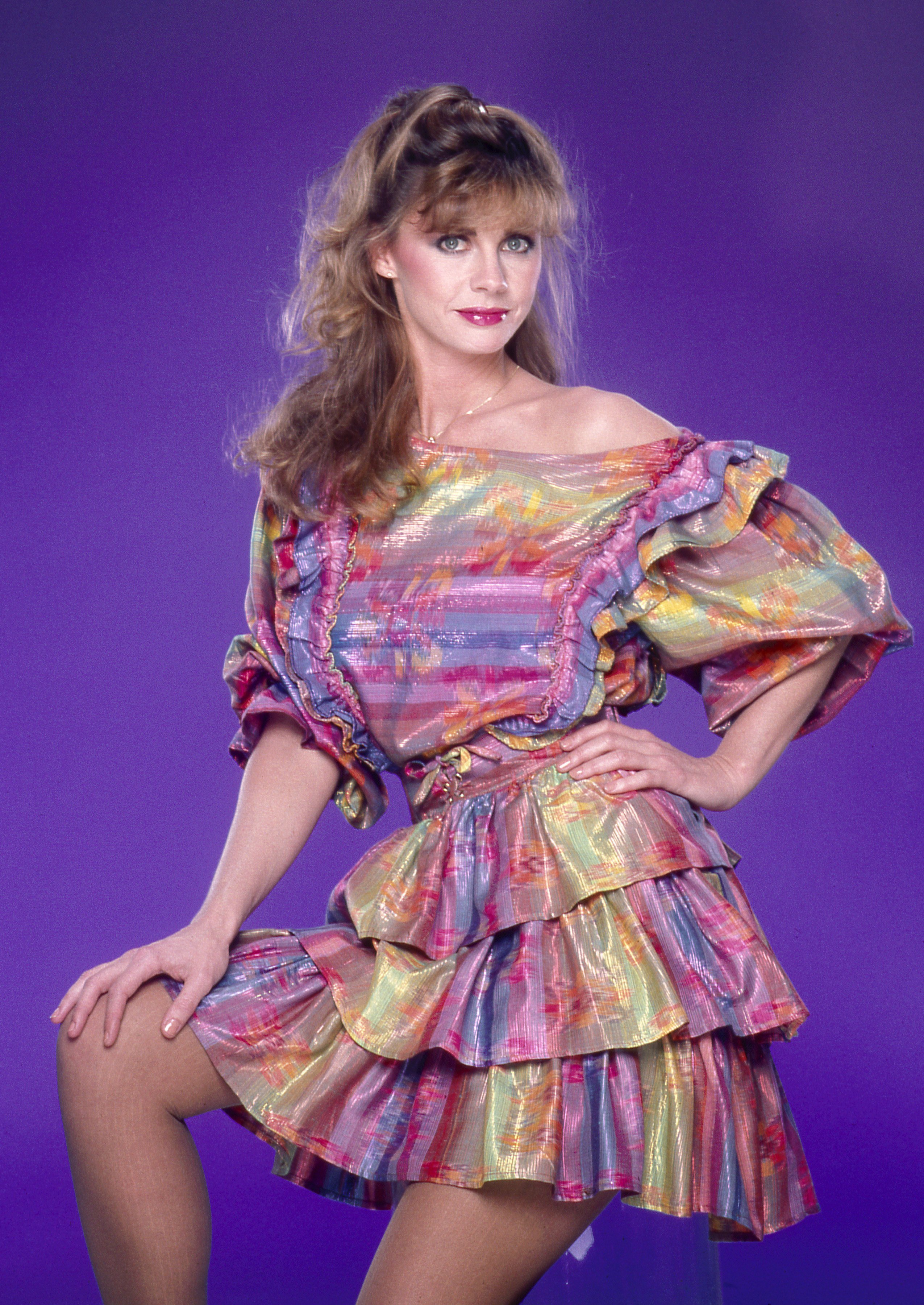
Honestly, if you grew up in the late '70s, you probably fell into one of two camps. You were either a "Jennifer" person or a "Bailey" person. It was the great sitcom debate of the era, right up there with Ginger versus Mary Ann. While Loni Anderson’s Jennifer Marlowe was the "blonde bombshell" everyone talked about, Jan Smithers played Bailey Quarters with a quiet, brainy intensity that actually changed how people saw women on TV.
Jan didn't just play a shy character. She was shy.
That’s what Hugh Wilson, the creator of WKRP in Cincinnati, realized when she walked into the audition. Other actresses were "acting" shy, but Smithers had this genuine, slightly guarded energy. It worked. For four seasons, we watched Bailey go from a nervous wallflower who could barely find her voice to a confident reporter who basically kept the station running.
The Newsweek Cover That Started Everything
Most people assume Jan Smithers was just another Hollywood hopeful who got lucky. Not even close. Her entry into the public eye was almost accidental. Back in 1966, when she was just 16, a guy she went to school with convinced her to ditch class and head to the beach.
Total teen move.
While she was sitting there, two guys from Newsweek approached her. They were doing a story on the "typical American teenager." They took a photo of her on the back of a motorcycle, and that image—wind-blown, natural, and impossibly cool—ended up on the March 21, 1966, cover of the magazine.
That one photo turned her into a sought-after model almost overnight. But it wasn't all sunshine. Jan has been very open about a car accident she had around that time. She swerved to avoid another car and hit a telephone pole. The impact left a permanent scar on her chin.
She was incredibly insecure about it. It’s wild to think that one of the most beautiful women on television was constantly worried about a tiny scar, but it added to that "vulnerable" quality that made Bailey Quarters so relatable.
Why Jan Smithers in WKRP in Cincinnati Was Revolutionary
Let’s talk about the station dynamic. WKRP was a mess. You had Dr. Johnny Fever (Howard Hesseman) living in a permanent cloud of classic rock and confusion. You had Herb Tarlek (Frank Bonner) in those hideous polyester suits. And then you had Bailey.
Initially, the writers didn't give her much to do. She was the "traffic manager"—the person who schedules the commercials. Boring, right? But Jan Smithers pushed for more. Slowly, the character evolved. Bailey went to Ohio State (Go Buckeyes). She had a journalism degree. She wanted to do more than just push paper.
The Evolution of Bailey Quarters
- Season 1: Rarely speaks, hides behind large glasses, wears bulky sweaters.
- Season 2-3: Starts getting on-air opportunities. The glasses come off more often. The hair gets a bit more "70s chic."
- Season 4: She’s a full-blown reporter and an equal to the rest of the crazy crew.
What most fans remember is her relationship with Johnny Fever. It was never this "Ross and Rachel" dramatic thing. It was subtle. It was a "did they or didn't they?" friendship that felt like a real-world crush. Jan once said in an interview that the chemistry was easy because the cast was actually a family. They liked each other. You can’t fake that.
Leaving Hollywood Behind
By 1987, Jan was basically done with the industry. A lot of people wonder where she disappeared to, and the answer is pretty simple: she chose a different life.
She married actor James Brolin in 1986 after meeting him on the set of Hotel. They had a daughter, Molly Elizabeth, in 1987. Jan has always been very clear that motherhood was her priority. While Loni Anderson stayed in the headlines, Jan moved to Nova Scotia for a while. She wanted peace. She wanted to raise her daughter away from the paparazzi.
They eventually divorced in 1995, but Jan never really looked back at the Hollywood lifestyle. She traveled to India. She got involved in meditation, environmental activism, and clean energy. She basically became the real-life version of the "woke" Bailey Quarters we saw in the later seasons of WKRP.
The Legacy of the "Girl Next Door"
It’s funny—if you look at Reddit threads or TV forums today, the love for Jan Smithers is stronger than ever. Fans in 2026 are still debating why Bailey was the superior character. People loved that she wasn't "manufactured." In a world of hairspray and heavy makeup, Jan Smithers looked like someone you actually knew.
She’s 76 now, living a quiet life in Ojai, California. She doesn't do the convention circuit. She doesn't have a verified Instagram. She’s just Jan.
If you're looking to revisit her work, start with the episode "The Baby," where Bailey has to handle a woman giving birth at the station. It shows everything that made her great: the nerves, the competence, and that flash of "I can handle this" that made us all root for her.
Practical Insights for Fans:
- Where to Watch: WKRP in Cincinnati can be tricky because of music licensing issues, but the Shout! Factory DVD sets are the way to go if you want the original soundtrack.
- The Rare Film Stuff: Look for the 1974 film Where the Lilies Bloom. It’s a beautiful, gritty drama where Jan shows she had way more range than just sitcom timing.
- The Newsweek Cover: You can still find copies of that 1966 issue on eBay. It's a genuine piece of pop culture history.
Jan Smithers proved that you didn't have to be the loudest person in the room to be the one everyone remembered. She took a character that could have been a footnote and turned her into a feminist icon for the 70s. Not bad for a girl who ditched school to go to the beach.