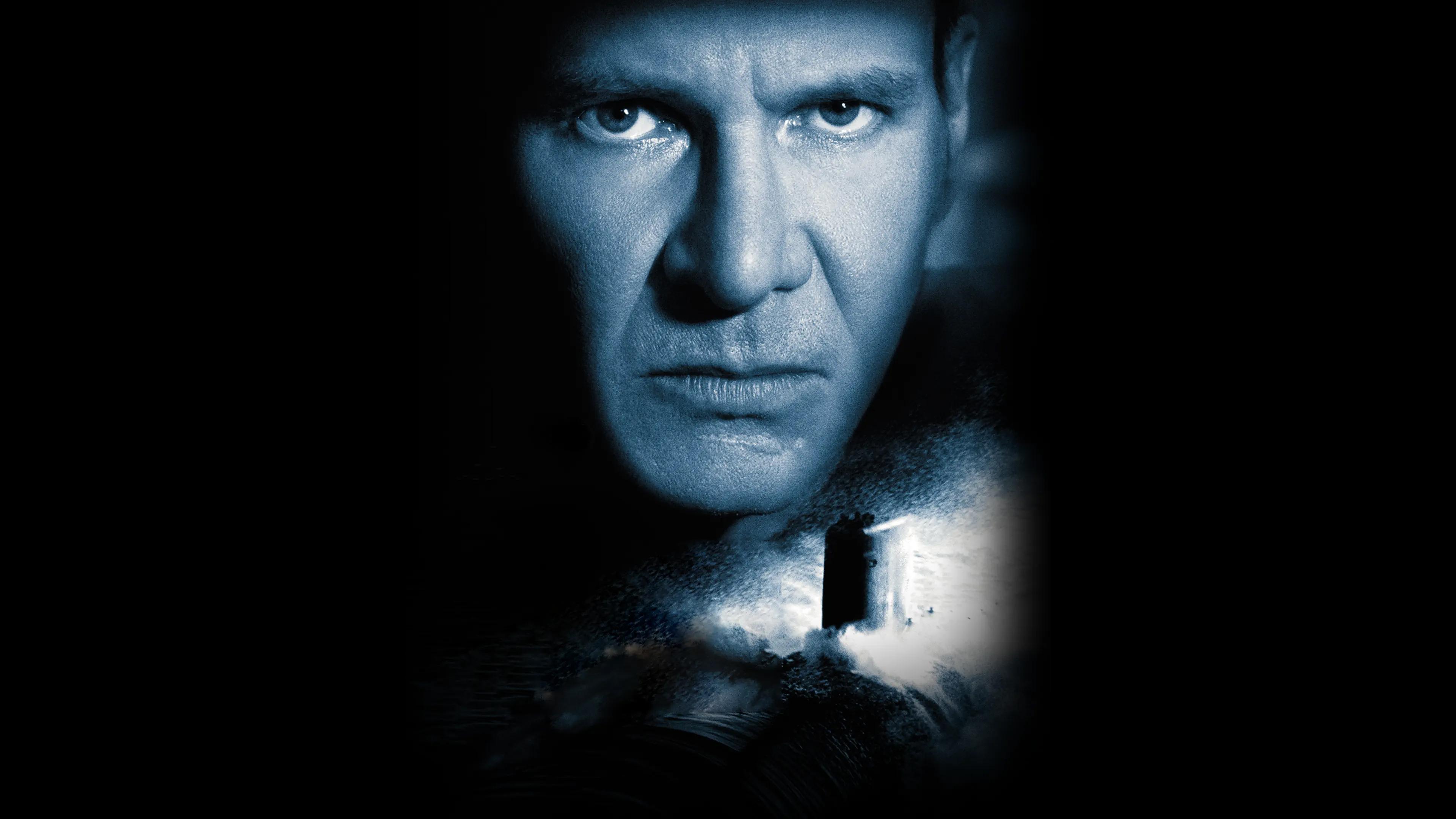
The ocean is a heavy, silent weight. It presses down on the hull of a submarine with a force most of us can't even wrap our heads around. But for the crew of the K-19, the real pressure wasn't coming from the North Atlantic. It was coming from inside the walls.
You’ve probably seen the 2002 movie starring Harrison Ford and Liam Neeson. It’s a tense, sweaty, claustrophobic piece of cinema. But the movie, while dramatic, honestly barely scratches the surface of how terrifying the actual events of 1961 were. The real K-19 was the Soviet Union's first nuclear-powered ballistic missile submarine. It was a technological marvel that was also, quite frankly, a deathtrap.
They called it "The Widowmaker." That wasn't just a catchy Hollywood title. The crew actually started calling it that before the main disaster even happened. Why? Because the boat felt cursed from the day it was built.
The Cursed Birth of K-19: The Widowmaker
Submariners are a superstitious bunch. You kind of have to be when you live in a metal tube under a mile of water. The bad vibes started during the christening. Usually, a woman breaks a bottle of champagne against the bow. For K-19, a man was chosen. He swung the bottle. It hit the padded hull and just... bounced. It didn't break.
In the naval world, that’s a neon sign screaming "Turn back now."
The construction was rushed. Insanely rushed. The Soviets were desperate to keep pace with the American George Washington-class subs. Because of the frantic pace, safety standards were basically non-existent. During construction, a fire killed two workers. Later, six women died from fumes while gluing rubber lining to the water tanks. An electrician was crushed by a missile tube cover. An engineer fell between two hulls and died. This wasn't a ship; it was a graveyard in the making.
By the time it finally set off on its first major mission in 1961, the crew was already on edge. They were headed for the North Atlantic for an exercise called "Polar Circle." They had no idea they were about to face a nightmare that would nearly trigger World War III.
What Happened Near Greenland: The 1961 Disaster
On July 4, 1961—ironically, American Independence Day—everything went south. The K-19 was cruising off the coast of Greenland when the starboard reactor's cooling system developed a major leak.
The pressure in the primary cooling circuit dropped to zero.
Without coolant, the nuclear fuel rods would reach temperatures over 800 degrees Celsius. We’re talking about a potential nuclear meltdown. If the reactor exploded, it could have destroyed the sub and, because of the proximity to a NATO base, potentially looked like a nuclear strike. The world was on a knife-edge.
Captain Nikolai Zateyev had a choice. He could ask for help from nearby American ships, which would mean surrendering his top-secret vessel and defecting. Or he could try to fix it.
The Suicide Mission Under the Deck
There was no backup cooling system. It hadn't been installed. To save the ship, the crew had to engineer a solution on the fly. They decided to cut a valve off a ventilation pipe and weld it into the reactor's cooling system to pump in fresh water.
But here’s the kicker. To do this, men had to enter the reactor compartment.
They didn't have radiation suits. Not real ones. They wore chemical suits that offered exactly zero protection against gamma rays. They worked in small teams, spending only a few minutes at a time in the high-radiation zone. They were breathing in radioactive gas. They were literally watching the atmosphere turn a weird, ionized blue.
Eight men died within days. Their skin turned black. They suffered from agonizing radiation sickness that is too horrific to describe in polite conversation. But they succeeded. They jury-rigged the cooling system and stopped the meltdown.
Separating Hollywood from Reality
Kathryn Bigelow’s film K-19: The Widowmaker does a decent job with the atmosphere, but it takes some liberties. In the movie, there’s a near-mutiny. In reality, Zateyev did worry about a mutiny, so he actually threw most of the small arms overboard, keeping only a few pistols for himself and his loyal officers.
The film also simplifies the technical failure. It wasn't just one bad weld; it was a systemic failure of a rushed project.
The survivors were sworn to secrecy. For decades. They weren't allowed to tell their families how their friends died. They weren't treated as heroes; they were treated as inconveniences. The Soviet government didn't want the world to know their flagship sub was a failure. It wasn't until the 1990s, after the fall of the Soviet Union, that the full story of the K-19: The Widowmaker actually came to light.
The Lingering Ghost of the Cold War
The most insane part? They didn't scrap the boat after the 1961 disaster.
They towed it back, decontaminated it (mostly), replaced the reactor section, and sent it back out. The "Widowmaker" nickname stayed earned. In 1969, it collided with the USS Gato in the Barents Sea. In 1972, a fire broke out on board, killing 28 more sailors. The boat was finally decommissioned in 1990.
It’s a story about the cost of ego. The Soviet leadership wanted a win so badly they sent men to sea in a machine that was fundamentally broken.
Actionable Insights from the K-19 Saga
Looking back at the history of K-19: The Widowmaker provides more than just a history lesson. It offers some pretty heavy takeaways for anyone interested in engineering, leadership, or even just basic safety.
- Never bypass the "Christening" of a project. If the metaphorical bottle doesn't break—meaning, if early tests show systemic failures—stop. Rushing a launch to beat a competitor (whether it's a sub or a software app) usually leads to "fires" later on.
- Redundancy is life. The K-19 lacked a backup cooling system. In any high-stakes environment, if you don't have a Plan B that is independent of Plan A, you don't have a plan at all.
- Transparency saves lives. The secrecy surrounding Soviet nuclear tech meant that lessons learned on K-19 weren't shared, leading to further accidents in the submarine fleet.
- Check out the primary sources. If you want the real, gritty details, look for Captain Nikolai Zateyev’s memoirs, which were released posthumously. They provide a much darker, more nuanced view than the movie.
The legacy of K-19: The Widowmaker isn't just about the radiation or the deaths. It's a testament to the crew's bravery. Those eight men who walked into the reactor room knew they were going to die. They did it anyway, not for the Soviet state, but for the guys standing next to them. That’s the part of the story that actually matters.
If you're interested in visiting naval history, some parts of the K-19 were preserved, though most was scrapped. The sail of the submarine was saved by a former crew member and turned into a memorial near Moscow. It stands as a quiet reminder of a time when the world almost ended inside a leaking pipe near Greenland.