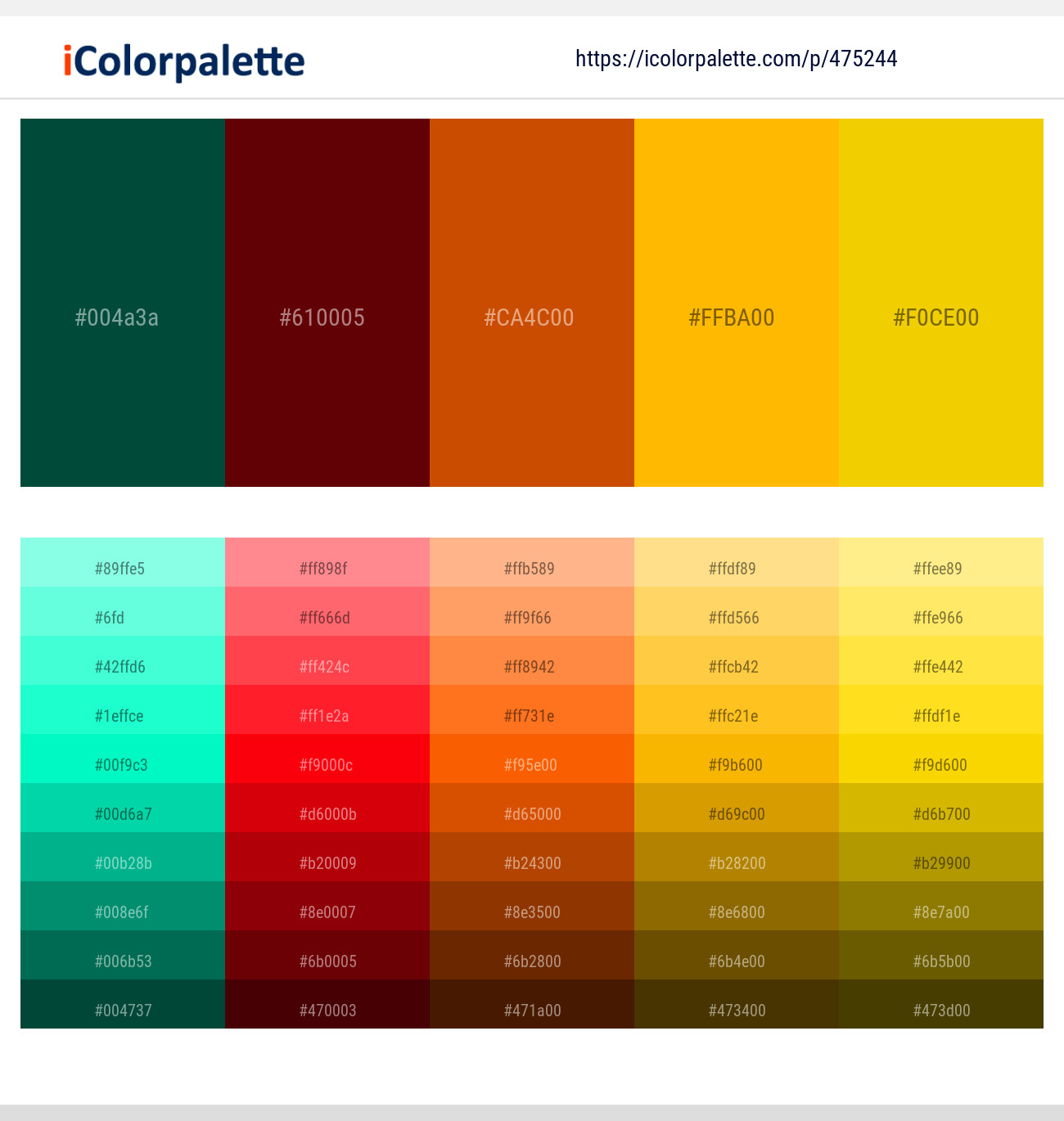
You’ve probably seen it and winced. That jarring, high-visibility vest look where a neon orange hits a grassy green and suddenly your eyes hurt. But then you walk into a high-end mid-century modern living room or look at a classic Hermès-style scarf, and the orange and green color palette feels like the most sophisticated thing on the planet. Why?
It’s about the vibration. Seriously.
When you put these two together, you're playing with secondary colors that sit in a weird spot on the color wheel. They aren't opposites—that would be red and green—but they share a complex relationship because they both contain yellow. If you mess up the "temperature," the whole thing falls apart. If you get it right, you've captured the essence of a Mediterranean citrus grove or a retro 1970s aesthetic that actually feels expensive rather than dated.
The Science of Why This Combo Actually Works
Most people think color is just about "vibes," but there’s a biological reason why our brains react to this specific pairing. Humans are evolutionarily hardwired to spot fruit against foliage. Think about it. An orange hanging on a leafy branch is a high-contrast signal that food is available. We are literally programmed to find this combination stimulating.
In color theory, orange and green are part of a "triadic" relationship if you include purple, but on their own, they create what designers call a "near-complementary" clash. This isn't a bad thing. It creates energy. According to the Pantone Color Institute, orange radiates warmth and energy, while green provides the grounding, stable element of nature.
But here’s the kicker: the saturation matters more than the hue.
If you take a burnt orange and pair it with a deep forest green, you get an earthy, sophisticated look. It feels like autumn in Vermont. Take a bright tangerine and pair it with a lime green? Now you’re at a 90s rave or looking at a Nickelodeon logo. Both are valid, but they serve completely different masters.
Stop Making Everything Fifty-Fifty
One of the biggest mistakes DIY decorators and brand designers make is the "equal split" error. If you use 50% orange and 50% green, your brain won't know where to rest. It’s chaotic. It’s too much.
Professional designers usually lean on the 60-30-10 rule. You pick one as the dominant force. Maybe a deep, moody hunter green covers the walls (60%). Then you bring in a rust orange leather chair (30%). The last 10%? That should be a neutral like cream or a metallic like brass to break up the tension.
Honestly, it’s about relief. You need white space. Or wood tones. Wood is the "secret" third color in almost every successful orange and green color palette. Whether it’s walnut, oak, or teak, the brown tones act as a bridge because they naturally contain the DNA of both colors.
Real World Examples That Nailed It
Look at the branding for British Petroleum (BP). They use green and yellow, but their sub-brands often lean into those citrusy oranges. Or look at the iconic "Gucci" aesthetic under various creative directors. They’ve mastered the art of the "clash." By using a very specific shade of emerald green against a burnt sienna or a bright orange, they create a sense of maximalism that feels intentional.
In interior design, look at the work of Justina Blakeney of Jungalow. She lives and breathes this palette. She’ll layer a bright terracotta floor with massive monstera plants. It works because the orange is "earthy" (terracotta) and the green is "living" (the plants). It doesn't feel like paint; it feels like an ecosystem.
When This Palette Goes Horribly Wrong
Ever been to a fast-food joint that felt... greasy? Often, they use high-saturation orange and green because it triggers hunger and a sense of urgency. It’s not meant to be comfortable. It’s meant to get you in and out.
If you’re trying to design a bedroom, avoid high-chroma versions of these colors. You will not sleep. A bright neon green wall with orange bedding is a recipe for a migraine. Instead, you'd want to "desaturate" them. Think sage green and a muted peach. It’s still technically an orange and green color palette, but it’s been whispered instead of shouted.
The Lighting Trap
This is something nobody talks about: Metamerism.
Colors look different under different light bulbs. Orange is notorious for this. Under a warm incandescent bulb, a subtle copper might look like a flaming carrot. Green, meanwhile, can turn muddy or greyish under low-quality LED lights. If you're painting a room this way, you have to test the swatches at 10 AM, 2 PM, and 8 PM. If you don't, you might end up living inside a pumpkin that’s rotting.
How to Actually Use This Today
If you're looking to implement this, don't go buy a gallon of orange paint yet. Start small.
- The "Organic" Route: Get a bunch of large-leaf green plants. Put them in terracotta pots. You’ve just successfully used the palette. It’s foolproof.
- The "Moody" Route: Paint a small powder room a very dark, midnight green. Use brass fixtures (which read as a metallic orange/yellow). Add a single piece of art with an orange pop. It’s sophisticated and "dark academia."
- The "Retro" Route: Look for vintage 1970s patterns. They knew how to do this. Usually, they added a heavy dose of cream or beige to keep the orange and green from fighting.
Different cultures see these colors differently, too. In many Western cultures, orange is seen as "cheap" or "extroverted." In others, like in saffron robes, it's deeply spiritual. Green is almost universally seen as "life" or "money." When you combine them, you’re essentially mixing "spiritual energy" with "grounded life." That’s a heavy combo.
Actionable Steps for Your Next Project
Forget the Pinterest boards for a second and look at a piece of fruit. Seriously. Grab an orange. Look at the stem. Look at the leaves. Notice how the green isn't just one shade? It’s got yellows and browns in it. That’s your guide.
- Check your undertones. If your green is a "cool" green (like a mint), your orange should be a "cool" orange (like a blood orange or a pinkish-coral).
- Use texture to break the tension. A flat orange wall is aggressive. An orange velvet sofa? That’s inviting. The texture creates shadows, and shadows add different shades of the color, making it easier on the eye.
- Neutralize the background. If you’re going bold with these two, your floor should probably be neutral. Grey, wood, or white. Give the colors room to breathe.
- The 10% Rule. If you’re scared, make 90% of the room neutral and use orange and green only for the "10%"—pillows, a rug, or a single lamp.
The orange and green color palette isn't for the faint of heart, but it's the most rewarding pairing for anyone bored of the "all-grey" trend that's been suffocating design for the last decade. It’s time to bring some actual life back into your space. Just don’t make it look like a construction site.
Next Steps for Implementation:
Start by identifying the "base" of your space. If you have lots of wooden furniture, you already have the "orange" component covered via the warm wood tones. Your easiest win is to introduce green through textiles—think olive green linen curtains or a mossy wool throw. This creates the palette naturally without a single drop of paint. If you’re working in digital design, use a site like Adobe Color to lock in a "Muted Autumn" hex code set, ensuring your orange and green share the same black-value levels so one doesn't "glow" more than the other.