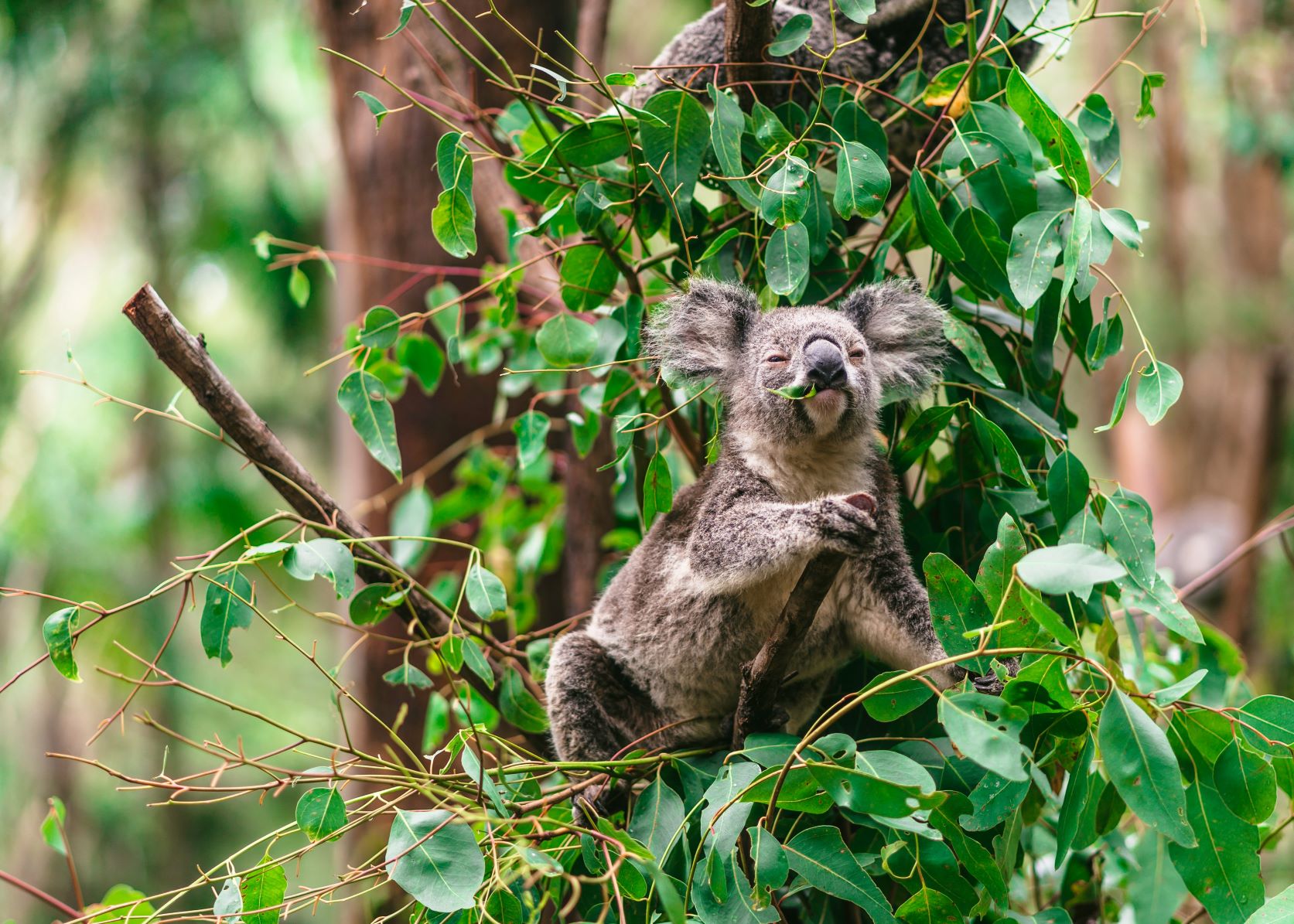
It’s a bit of a biological gut punch. You see a koala, and you think "fluffy marshmallow with a nose." You don't think "venereal disease." But the reality is that koala bears have chlamydia at rates that are, frankly, terrifying for anyone who cares about biodiversity. We’re talking about a crisis where in some specific populations in Queensland or New South Wales, the infection rate has hit 100%. Everyone has it.
The image of the "cuddly" koala is a bit of a lie we tell tourists. In reality, these animals are facing a multi-front war involving habitat loss, climate-driven heatwaves, and this relentless bacterium.
Chlamydia isn't just a footnote in their biology. It’s a primary driver of their potential extinction.
The brutal reality of how koala bears have chlamydia
First off, let’s clear up the "how." It's not exactly the same bug that affects humans. While humans deal with Chlamydia trachomatis, our eucalyptus-munching friends are mostly dealing with Chlamydia pecorum. It’s nastier for them.
It spreads through mating, sure. But it also passes from mother to joey through "pap." If you don't know what pap is, it’s a specialized form of diarrhea the mother produces that the joey eats to get the right gut bacteria for digesting toxic eucalyptus leaves. It's a necessary part of their development, but it’s also a direct highway for the bacteria to move from the mother’s digestive tract into the baby.
The symptoms are gruesome. We often call it "dirty tail" or "wet tail."
Basically, the urinary tract gets so inflamed and scarred that the animal loses bladder control. The fur on their hindquarters becomes stained brown, matted, and constantly damp. It smells. It's painful. Beyond the visible mess, the disease causes massive cysts in the reproductive tract. This leads to infertility.
A population of koalas can look healthy on the surface, but if they are all "reproductively dead," that population is already a ghost.
Why is it so bad right now?
You might wonder why this is suddenly a massive headline. Chlamydia has actually been in the koala population for a long time—possibly introduced by livestock brought over by European settlers in the 1700s or 1800s. But for a century, it was manageable.
The reason koala bears have chlamydia outbreaks of this scale today is stress.
Think about your own immune system. If you’re sleeping well and eating right, you might fight off a cold. If you’re stressed, sleep-deprived, and living in a construction zone, that cold turns into pneumonia. Koalas are living in a permanent construction zone.
Australia’s land clearing is aggressive. When a bulldozer takes down a corridor of trees, the koalas are forced into smaller patches of land. They get crowded. They fight. They can't find enough food. Their cortisol levels—the stress hormone—skyrocket.
High cortisol suppresses the immune system.
When the immune system takes a dive, the latent chlamydia infection that the koala was "handling" suddenly flares up. It becomes clinical. It becomes contagious. It’s a feedback loop of misery.
The Retrovirus Complication
There is another player in this tragedy: Koala Retrovirus (KoRV).
Think of KoRV as the koala version of HIV. It’s an endogenous virus, meaning it has actually integrated itself into the koala’s DNA. Researchers like Professor Peter Timms from the University of the Sunshine Coast have found that KoRV makes the chlamydia much, much worse. It weakens their ability to fight off the bacteria.
It’s a "syndemic"—two diseases working together to destroy the host.
Can we just give them antibiotics?
It's complicated. You can't just drop some pills in the woods.
Koalas have a very specific digestive system. They survive on eucalyptus, which is fibrous and toxic. They rely on a highly specialized "microbiome" in their gut to break down those toxins. If you give a koala a standard dose of strong antibiotics to kill the chlamydia, you also kill the good bacteria in their gut.
The result? The chlamydia goes away, but the koala starves to death because it can no longer digest its food.
Veterinarians at places like the Australia Zoo Wildlife Hospital have to be incredibly careful. They use targeted treatments, sometimes localized, and they often have to provide supplemental feedings or fecal transplants (yes, literally transferring healthy poop) to keep the koala's gut functioning during treatment.
It's expensive. It’s labor-intensive. And it doesn't solve the problem of the koala going back out into the same stressful environment that made it sick in the first place.
The Hope: A Vaccine
There is actually some genuinely good news. After years of trials, a chlamydia vaccine for koalas is being rolled out in the wild.
Researchers have been conducting trials where they catch koalas, vaccinate them, and track them. The results have been promising. The vaccine doesn't just protect the individual; it reduces the "shedding" of the bacteria, which means a vaccinated koala is less likely to infect its mates or its joeys.
In 2023 and 2024, large-scale vaccination programs began in parts of New South Wales. It's a logistical nightmare—catching a wild koala is not like catching a kitten—but it’s the most viable path we have.
Misconceptions people have about the "Koala STD"
People joke about it. Late-night hosts have made bits about it. But there are a few things people get totally wrong:
- You can't catch it from holding one. Unless you are engaging in some very specific, very illegal, and very weird activities, or you happen to get koala urine directly in your eye, you aren't going to catch C. pecorum. It's a wildlife strain.
- It’s not just about "promiscuity." As mentioned, it’s passed from mother to child. It's a systemic health crisis, not a moral failing of the animals.
- Not all populations are doomed. There are still "chlamydia-free" populations, particularly on islands like Kangaroo Island. However, these populations have their own issues, like massive overbreeding and lack of genetic diversity.
What happens if we do nothing?
If we don't address the fact that koala bears have chlamydia alongside habitat loss, we are looking at localized extinctions within the next 20 to 30 years. In 2022, the Australian government officially listed the koala as "Endangered" in Queensland, NSW, and the Australian Capital Territory.
That was a huge wake-up call. It’s not "vulnerable" anymore. It’s "endangered."
The loss of the koala would be a catastrophe for the ecosystem. They are "ecosystem engineers" in their own way, and they are a flagship species. If we can't save the koala—an animal the whole world loves—what chance do the less "cute" animals have?
Practical Steps and How to Help
If you're reading this and feeling a bit depressed, there are actually things happening that need support.
- Support Habitat Preservation: The disease is a symptom of stress. The stress comes from losing homes. Organizations like the Australian Koala Foundation focus on the "No Tree, No Me" campaign.
- Wildlife Hospitals: Facilities like the Curumbin Wildlife Hospital or Australia Zoo Wildlife Hospital treat thousands of chlamydia cases a year. They rely heavily on donations to fund the expensive, long-term care these animals need.
- Citizen Science: If you live in Australia, using apps like "QWildlife" to report sightings helps researchers track the spread of the disease and identify which populations need urgent intervention.
- Advocate for Wildlife Corridors: Pressure on local governments to include wildlife overpasses and protected corridors in urban planning reduces the stress that triggers these outbreaks.
The chlamydia crisis is a human-made problem because we created the environment that allowed it to spiral out of control. It’s going to take a massive, human-led effort—vaccines, habitat protection, and better policy—to fix it.