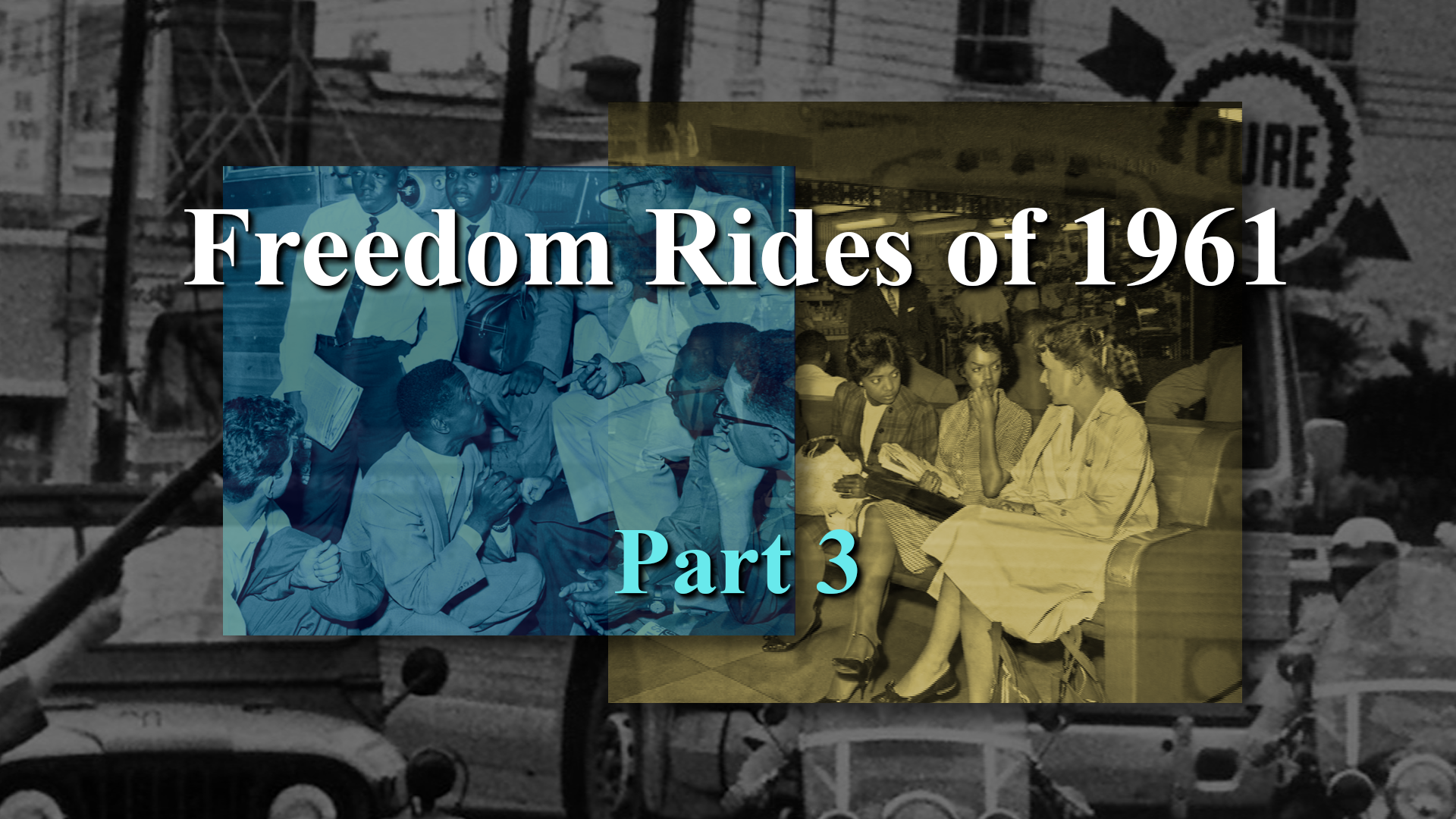
Thirteen people. That is how it started. On May 4, 1961, a small, integrated group boarded two buses in Washington, D.C., headed for New Orleans. They weren't looking for a fight, technically, but they knew one was coming. They were testing a Supreme Court decision that most of the Deep South was simply ignoring. It’s one thing for a judge in D.C. to say segregation in interstate travel is illegal; it’s a whole different thing to try and sit in a "whites-only" waiting room in Rock Hill, South Carolina, or Anniston, Alabama.
The 1961 Freedom Rides weren't just a polite protest. They were a deliberate provocation of a system that relied on silence. Most people today think of the Civil Rights Movement as this inevitable march toward progress, but in the moment? It felt like a suicide mission.
By the time the buses reached Alabama, the atmosphere wasn't just tense. It was lethal. In Anniston, a mob of white supremacists surrounded a Greyhound bus, smashed the windows, and slashed the tires. When the bus finally sputtered to a stop outside of town, someone tossed a firebomb through a broken window. The images of that charred, skeletal bus frame became the definitive visual of the 1961 Freedom Rides, showing the world that the "law of the land" didn't mean much once you crossed the Mason-Dixon line.
The Strategy Behind the Chaos
James Farmer, the director of the Congress of Racial Equality (CORE), was the architect here. He understood something crucial: the federal government, specifically the Kennedy administration, was dragging its feet. JFK was focused on the Cold War and didn't want a domestic PR nightmare. Farmer decided to give him one. The goal was to force the Department of Justice to actually enforce the Boynton v. Virginia ruling, which had theoretically desegregated interstate bus and rail stations.
It’s easy to forget how young these riders were. John Lewis was only 21. He’d already been through Nashville’s sit-in campaigns, but the 1961 Freedom Rides were a different beast. You have to imagine the psychological toll. Every time the bus pulled into a new town, you didn't know if you were getting off to a quiet terminal or a group of men holding lead pipes and baseball bats.
There was a specific discipline to it. They practiced non-violence until it was instinctive. If someone spits on you, you don't flinch. If someone hits you, you curl into a ball to protect your vitals. You don't strike back. This wasn't because they were passive; it was because they knew the media was watching. They wanted the contrast between the dignity of the riders and the savagery of the mobs to be undeniable.
What Happened in Birmingham and Montgomery
When the second bus—a Trailways—reached Birmingham, the violence reached a fever pitch. Public Safety Commissioner Bull Connor claimed he didn't have any officers at the station because it was Mother's Day and they were all visiting their moms. In reality, he had given the Ku Klux Klan fifteen minutes to do whatever they wanted before the police would show up.
The riders were beaten mercilessly. James Peck, a white rider, required fifty stitches in his head. The brutality was so bad that the original CORE riders actually had to stop. They couldn't find a bus driver willing to take them further. They were stranded, bleeding, and surrounded.
This is where the story usually ends in high school textbooks, but the 1961 Freedom Rides didn't die in Birmingham. Diane Nash and the Student Nonviolent Coordinating Committee (SNCC) in Nashville refused to let the movement stall. She famously told organizers that if the rides stopped because of violence, the message would be that "violence can overcome nonviolence." She sent a fresh wave of students to Alabama.
When these new riders reached Montgomery, they were met by an even larger mob. Even federal officials weren't safe. John Seigenthaler, a personal assistant to Robert Kennedy, was knocked unconscious and left on the pavement for nearly half an hour while trying to help a rider. It was total anarchy.
Key Figures You Should Know
- Diane Nash: The backbone of the Nashville movement. She didn't take "no" for an answer, even from the Kennedys.
- James Peck: A white pacifist who bore the brunt of the Birmingham beating to show that racial justice was a human issue, not just a Black issue.
- Hank Thomas: One of the original riders who barely escaped the burning bus in Anniston.
- Robert Kennedy: The Attorney General who went from being annoyed by the riders to eventually sending in 400 federal marshals to restore order.
The Turning Point in Jackson
By the time the rides reached Mississippi, the tactic changed. The Kennedy administration made a "backroom deal" with the governors of Alabama and Mississippi. The deal was simple: the feds wouldn't intervene in the arrests, as long as the state prevented more mob violence.
In Jackson, the riders were arrested the moment they stepped into the "wrong" waiting room. They didn't post bail. They adopted a "Jail, No Bail" policy. They wanted to clog the prison system and bankrupt the county. Mississippi responded by sending them to Parchman State Penitentiary, one of the most notorious work farms in the South.
They were stripped of their clothes, given meager rations, and kept in cells next to Death Row. But they kept coming. By the end of the summer, over 400 people had joined the 1961 Freedom Rides. Students, priests, teachers, and activists from all over the country took buses to Jackson just to get arrested.
Why This Actually Worked
It wasn't the moral weight of the argument that changed the law; it was the logistics. The Interstate Commerce Commission (ICC) finally stepped in because the situation had become a massive international embarrassment. On September 22, 1961, the ICC issued a ruling that gave the riders exactly what they wanted.
By November 1st, the signs came down. "White Only" and "Colored Only" signs were literally ripped off the walls of bus and train stations across the South. It was one of the first major, concrete legislative victories of the civil rights era that actually changed daily life for millions of people.
You can't overstate how much this shifted the momentum. It proved that direct action worked. It showed that the federal government could be forced to act if you made the status quo uncomfortable enough. It also solidified the leadership of the younger generation, like John Lewis, who would go on to lead the March on Washington just two years later.
Lessons for Today
If you’re looking at the 1961 Freedom Rides as just a history lesson, you're missing the point. The mechanics of the movement offer a blueprint for modern advocacy.
First, they focused on a specific, winnable goal. They didn't just ask for "equality"; they asked for the enforcement of a specific Supreme Court ruling regarding bus terminals.
Second, they understood the power of the image. The firebombed bus did more to move public opinion than a thousand speeches could. In a world of short attention spans, the visual of a "wrong" being committed is still the most powerful tool in the shed.
Third, they were willing to sacrifice. "Jail, No Bail" wasn't a slogan; it was a grueling physical reality. They took the power away from the state by refusing to fear the punishment.
How to Engage With This History
If you want to understand the 1961 Freedom Rides beyond the surface level, you should start by looking at local archives in the cities they passed through. Many of these locations, like the Greyhound station in Montgomery, are now museums.
- Visit the Freedom Rides Museum: Located in Montgomery, Alabama, it’s built into the actual station where the May 20, 1961 attack occurred.
- Read 'Freedom Riders' by Raymond Arsenault: This is the definitive text on the subject. It’s dense, but it names almost every rider and tracks every bus route.
- Watch the PBS American Experience Documentary: It features interviews with the original riders and shows the actual footage from the terminals.
The story of the 1961 Freedom Rides is ultimately a reminder that the law is just words on paper until someone has the courage to live like those words are true. It took people putting their bodies on the line to bridge the gap between what the Constitution promised and what the South practiced.
Start by researching your own city's connection to the movement. You'd be surprised how many "freedom riders" returned to their hometowns and spent the next fifty years working in local government or education. The movement didn't end in 1961; it just changed clothes.
Go to the Civil Rights Trail website. Map out the route from D.C. to New Orleans. Understand that these weren't superheroes; they were twenty-somethings who were terrified but got on the bus anyway. That’s the real takeaway. Courage isn't the absence of fear; it's the realization that something else is more important.
Check out the digitized records at the Library of Congress for the original CORE planning documents. Seeing the handwritten notes and the logistics of how they coordinated these arrivals without cell phones or the internet puts the entire achievement into perspective.