Knoxville was an underdog. Honestly, most people in the early eighties thought the idea of a world’s fair in a mid-sized Appalachian city was a joke. It wasn't Chicago. It wasn't Paris. It was a scrappy river town that some critics called a "scruffy little city." But then May 1982 rolled around, and suddenly, 11 million people showed up.
That's a lot of people.
The 1982 World's Fair in Knoxville Tennessee wasn't just some local festival with funnel cakes and a Ferris wheel. It was a massive, high-stakes gamble on the future of energy. You had the United States, China, Japan, and Australia all descending on a former rail yard to talk about "Energy Turns the World." It was the first time China had participated in a World's Fair in decades. That's a huge deal. They even brought over actual bricks from the Great Wall. People stood in line for hours just to touch them.
The Sunsphere and the architecture of optimism
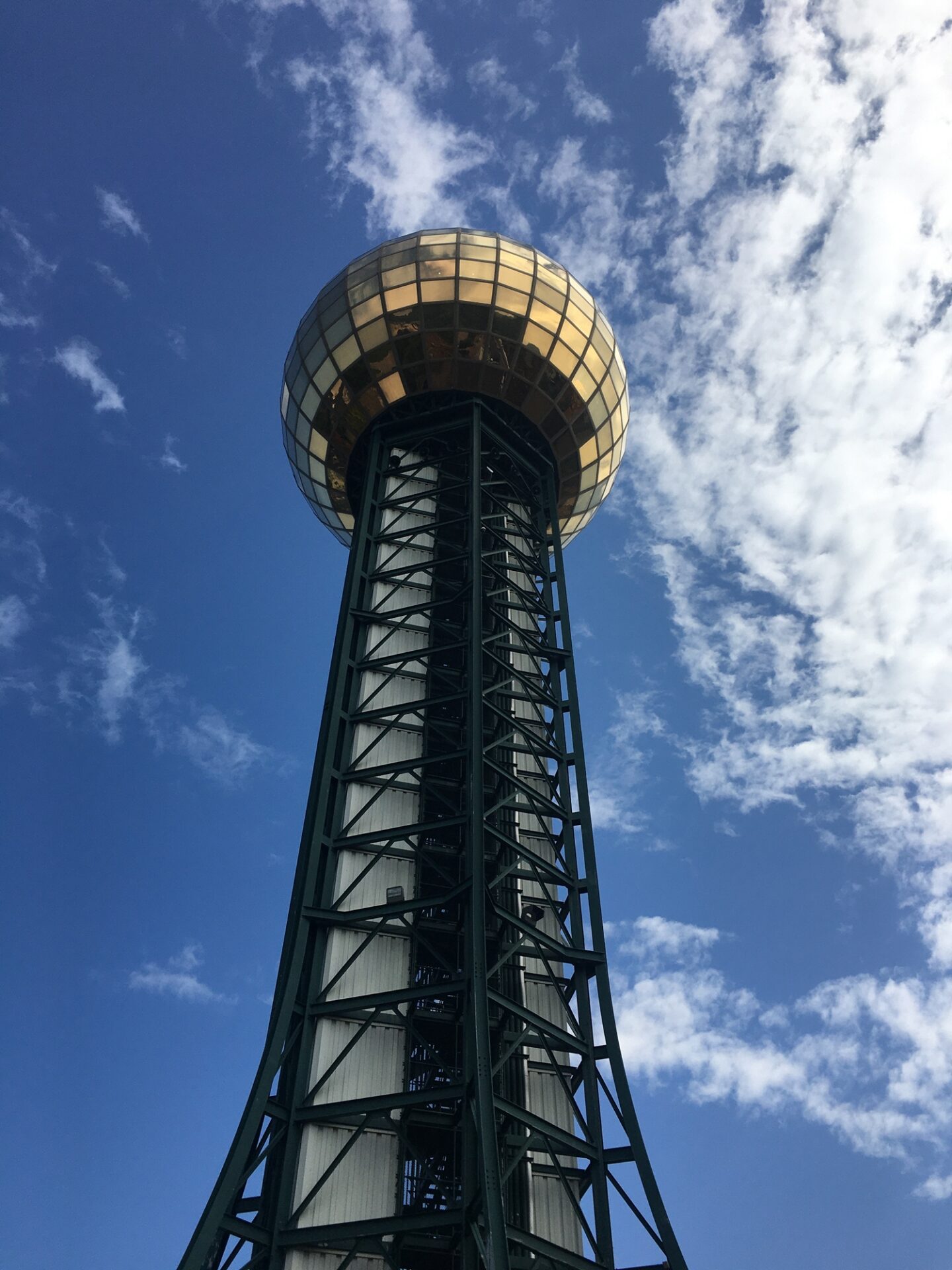
You can't talk about the fair without talking about the Sunsphere. It’s that giant gold disco ball in the sky. It stands 266 feet tall. The glass is actually layered with 24-karat gold dust. Back then, it was the symbol of the future. It’s still there today, standing over World's Fair Park like a sentry from a version of the future that never quite arrived the way we thought it would.
The design was meant to represent the sun—the ultimate energy source.
Inside, there was a restaurant and an observation deck. It was high-tech for 1982. But the fair wasn't just one tower. The site covered 72 acres. It was a mess of pavilions, corporate showcases, and a massive gondola system called the Swiss Sky Ride that hauled people across the grounds. It felt like Tomorrowland, but with more Tennessee hospitality.
Petroleum companies like Texaco and Shell had huge presences. This makes sense when you remember the 1970s energy crisis was still fresh in everyone’s minds. People were terrified of running out of oil. The fair was supposed to show us the way out through nuclear, solar, and "new" coal technologies.
What really happened behind the scenes?
It wasn't all sunshine and gold dust. The logistics were a nightmare for a city of Knoxville's size. Hotels were booked solid for a hundred miles in every direction. Some locals started renting out their backyards for campers. There were rumors—some true, some exaggerated—of "price gouging" that made national headlines. The Wall Street Journal famously took a jab at the city, which led to locals proudly wearing "Scruffy Little City" t-shirts. They leaned into the insult.
The fair was officially opened by President Ronald Reagan. Think about that for a second. The leader of the free world flew into Knoxville to kick off a six-month party centered on energy conservation and global cooperation.
But here’s the thing: while the fair had over 11 million visitors, it barely broke even. In fact, it technically ended with a tiny surplus, but the legal and financial fallout afterward was messy. A few years later, United American Bank—run by Jake Butcher, the man who was arguably the driving force behind the fair—collapsed. Butcher eventually went to prison for bank fraud. It’s a classic story of ambition, success, and a very hard landing.
Why the 1982 World's Fair in Knoxville Tennessee was a tech pioneer
Everyone remembers the Sunsphere, but few remember that the 1982 World's Fair in Knoxville Tennessee was where a lot of us first saw a touchscreen.
Seriously.
IBM had a pavilion there. They showcased a prototype of a touch-sensitive screen. It was clunky. It was slow. But it worked. Visitors could poke a monitor to get information about energy. To a kid in 1982, that felt like actual magic. We were used to rotary phones and television sets that required you to get up and turn a physical knob.
There was also the debut of Cherry Coke. It was a test market for the fair. People loved it. It’s also where many Americans first saw a "large format" cinema experience that wasn't quite IMAX but was heading in that direction. The fair was a testing ground for how we would consume media and interact with machines for the next forty years.
The fallout and the legacy
When the fair ended in October 1982, the city had a problem. What do you do with 72 acres of specialized pavilions and a giant gold ball?
For a long time, the answer was "not much." The site sat somewhat derelict for years. The structures were torn down one by one. The Tennessee Amphitheater stayed. The Sunsphere stayed. But the rest? It became a park, which is nice, but it lacks the neon energy of that summer.
The Sunsphere actually closed to the public for a long stretch of time. It became a bit of an eyesore to some, a relic of a bygone era. It wasn't until the early 2000s and later that the city really reinvested in the park. Now, it’s the centerpiece of a revitalized downtown. You’ve got the Knoxville Convention Center right next to it. You’ve got festivals and marathons.
But you still meet people in Knoxville who talk about 1982 like it was yesterday. They remember the heat. They remember the lines. They remember the "Petroleum" pavilion which was basically a giant immersive movie theater. It changed the city's DNA. It turned Knoxville from a quiet college and river town into a city that knew how to host the world.
Visiting the site today: What’s left?
If you go to Knoxville now, you can still feel the ghost of the fair. You should definitely go. It’s a weird, cool piece of American history that doesn't get enough credit compared to the bigger fairs in New York or Seattle.
- The Sunsphere: You can go up to the observation deck. It’s free (usually) or very cheap. The 360-degree view of the Smoky Mountains and the Tennessee River is legit. The gold tint on the windows is still there, though some of the panels have been replaced over the years.
- The Tennessee Amphitheater: This is one of the few original structures left. It’s been renovated and still hosts performances. It has that distinct 80s architectural vibe—lots of concrete and bold angles.
- The Foundry: Once part of the fair's industrial showcase, it's now a popular event space and restaurant.
- World's Fair Park: The site itself is a massive green space now. There are splash pads for kids and monuments that explain the history of the event. It’s a great place for a walk, even if you aren't a history nerd.
The verdict on 1982
Was it a success? Economically, it's complicated. Culturally? Absolutely. It put Knoxville on the map. It proved that a "scruffy" city could pull off a global event. It left behind an icon that defines the skyline.
Most importantly, it captured a very specific moment in time. It was a bridge between the analog world and the digital one. It was the last great American World's Fair before the internet made the idea of traveling thousands of miles just to see a "new invention" feel a bit redundant.
If you want to understand the modern South, you have to understand these moments of explosive growth. The 1982 World's Fair was Knoxville's "coming out" party. It was loud, it was expensive, and it was a little bit weird.
Basically, it was perfect.
Actionable steps for history buffs
If you're planning to dive deeper into this or visit the site, here is what you should actually do:
- Check out the McClung Historical Collection: If you're in Knoxville, this library has the definitive archives. We're talking original brochures, uniforms, and architectural plans. It's way more interesting than just googling photos.
- Visit the Sunsphere early: The observation deck can get crowded on weekends. Go on a weekday morning to have the view (and the history) to yourself.
- Look for the commemorative bricks: All around the park, there are bricks with names of people who contributed or attended. It’s a small, human touch that reminds you 11 million individuals actually stood where you're standing.
- Watch the "Simpsons" episode: Season 7, Episode 20. "Bart on the Road." They travel to the 1982 World's Fair (the "Wig Sphere") only to find it's a bit past its prime. It’s a hilarious, if slightly mean, pop culture touchstone for the event.
- Scan the QR codes in the park: The city has done a decent job putting up historical markers with digital links that show what specific spots looked like in 1982 versus now.
Don't just look at the Sunsphere from the highway. Park the car, walk the grounds, and try to imagine 100,000 people a day crammed into that space, staring at a touchscreen for the very first time. It changes how you see the city.