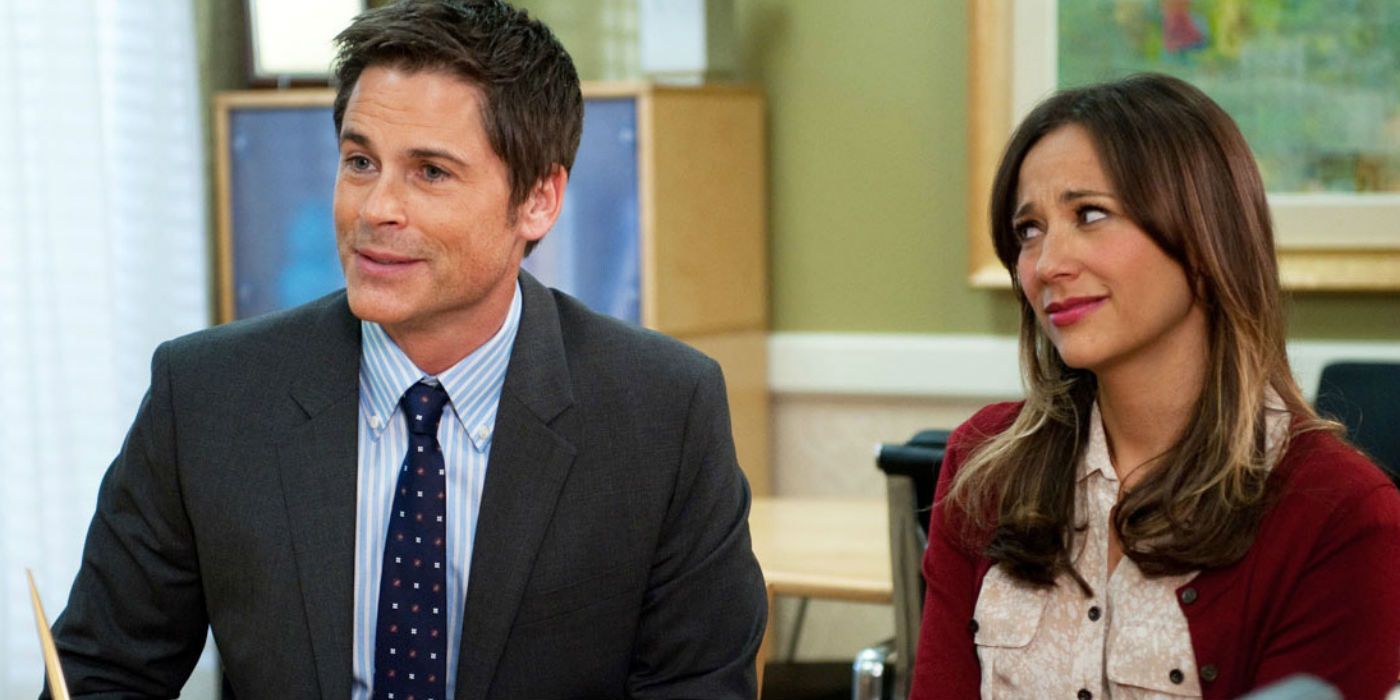
Let's be real: when Chris Traeger first jogged into Pawnee, he was less of a human being and more of a sentient Vitamin C supplement. He was intense. He was "literally" the most energetic person on the planet. And then there was Ann Perkins. Ann, the beautiful, poetic tropical fish, was usually the grounded one, the person who functioned as the audience's surrogate in a town full of lunatics. When you put Ann and Chris from Parks and Rec together, it shouldn't have worked. Honestly, for a long time, it didn't.
Their relationship is one of the weirdest arcs in sitcom history because it wasn't a linear "will-they-won't-they." It was a "they-did-then-he-dumped-her-then-she-got-weird-then-they-had-a-baby" situation. It’s messy. It’s deeply human despite Chris being basically a cyborg fueled by almond butter.
Looking back at the show’s legacy in 2026, the way fans view Ann and Chris has shifted. We’re no longer just looking at them as the "stable" couple compared to Andy and April or Leslie and Ben. We're looking at them as two people who had to fix themselves before they could actually be together.
The Ann and Chris Parks and Rec Dynamic: A Disaster in Slow Motion
When they first started dating in Season 3, it was a total mismatch of energy. Chris was at his peak "Literally!" phase. Ann was just coming off the chaos of Andy Dwyer and the blandness of Mark Brendanawicz. She was vulnerable. Chris, meanwhile, was a man who viewed a 10-point drop in his heart rate as a brush with death.
The problem? Ann started morphing.
If you watch those early episodes, Ann does this thing she always does—she adopts the personality of the guy she’s dating. She started wearing fitness gear. She tried to keep up with his insane positivity. It was exhausting to watch because it wasn't authentic. When Chris broke up with her after only a few weeks, it wasn't just a breakup. It was a psychological hit to Ann because she hadn't even realized he was dumping her. He was too positive. He made a breakup sound like a promotion.
That "breakup" is actually a masterclass in writing. It highlighted the fundamental flaw in Chris Traeger: his relentless optimism was actually a wall. He used it to keep people at a distance. He couldn't handle the "mess" of a real relationship, so he just stayed on the surface. Ann, meanwhile, was so desperate for stability that she didn't see the red flags.
The "Single Ann" Era and the Sperm Donor Saga
One of the best things the writers ever did was keep them apart for a while. After the breakup, Ann went through a genuine identity crisis. She dated half the town. She dated Dougie Howser (not really, but she dated a lot of guys). She even dated Tom Haverford, which was... a choice.
Then came the baby plot.
When Ann decided she wanted to be a single mother, she didn't immediately go to Chris. She did her research. She looked at options. But eventually, the logic of the show brought her back to the "finely tuned microchip" that was Chris Traeger.
This is where the Ann and Chris Parks and Rec story gets interesting. It stopped being about romance and started being about a business transaction. They were going to have a baby together as "co-parents." No feelings. Just genetics. Of course, that’s not how human beings work. You can't spend that much time discussing prenatal vitamins and nursery colors with Rob Lowe without catching some kind of feeling.
Why Chris Traeger Had to Break Down to Move Forward
We have to talk about Chris’s mental health. It’s a huge part of why the relationship eventually succeeded.
Chris Traeger was a man terrified of death. He was born with a blood disorder and told he wouldn't live past three weeks. Every jog, every supplement, every "literally" was a defense mechanism against the inevitable. When he finally hit rock bottom—the episode where he realizes he’s lonely and starts seeing Dr. Richard Nygard (who we never actually see)—the character becomes three-dimensional.
He couldn't be a good partner to Ann until he admitted he was falling apart.
There’s a specific scene where he’s just... sad. He’s not "literally" anything. He’s just a guy who realized that living forever isn't the point if you're living alone. That vulnerability is what finally allowed Ann to see him as a partner rather than a challenge or a specimen.
The Reality of Their Departure
When Rashida Jones and Rob Lowe left the show in Season 6, it felt like the end of an era. "Ann and Chris" (the episode) is a tear-jerker, not just because of the friendship between Leslie and Ann, but because it felt like Chris and Ann had finally earned their happy ending.
They didn't just ride off into the sunset. They moved to Michigan. They chose a life that was quiet and focused on their family. For two characters who spent so much of the show being defined by their jobs or their quirks, it was a grounded conclusion.
What Most Fans Get Wrong About Ann and Chris
People often say they were the "boring" couple. I disagree.
They were the most realistic couple in terms of growth. Leslie and Ben were a fairy tale. Andy and April were a cartoon (a brilliant one, but still a cartoon). Ann and Chris were two people in their late 30s dealing with real-world baggage.
- Ann’s struggle with losing herself in partners.
- Chris’s clinical anxiety and fear of mortality.
- The complicated ethics of choosing a friend to be a co-parent.
- The realization that your hometown might be holding you back.
These aren't sitcom tropes. They're mid-life crises. The show handled them with a lot of heart, but it didn't shy away from the fact that these two had to work incredibly hard to be together.
The Chemistry Factor
We also have to credit Rob Lowe and Rashida Jones. Their chemistry was less about "heat" and more about "comfort." By the end, they looked like a couple that actually liked talking to each other. When Chris is helping Ann through her weird cravings or Ann is calming Chris down during a health scare, it feels earned.
It's also worth noting that their relationship survived the "Parks and Rec" curse of secondary characters. Often, when two main-ish characters get together, the writers run out of things for them to do. But with Ann and Chris, the baby plot gave them a trajectory that felt separate from the Pawnee City Council drama. It gave them a reason to leave.
The Legacy of the Relationship in 2026
Rewatching the series now, the Ann and Chris Parks and Rec arc feels surprisingly modern. In an era where we talk openly about mental health and non-traditional family structures, their journey from "donor and recipient" to "romantic partners and parents" feels ahead of its time.
They proved that you don't have to be perfect to be in a healthy relationship. You just have to be willing to see a therapist (shoutout to Dr. Nygard) and stop trying to be someone else for your partner.
Ann finally stopped being a chameleon. Chris finally stopped being a machine.
They became human.
Actionable Insights for Fans and Rewatchers
If you're diving back into the series or just finishing a binge-watch, here is how to actually process the Ann and Chris arc without getting lost in the "literally" of it all:
- Watch for the Wardrobe Shifts: Notice how Ann’s style changes when she’s with Chris versus when she’s single. It’s a subtle bit of character acting by Rashida Jones that highlights Ann's struggle with identity.
- Focus on Season 4 Chris: This is when the cracks start to show. Pay attention to his interaction with Jerry/Gerry/Terry. His need for perfection starts to crumble, and it makes his eventual reunion with Ann much more satisfying.
- The "Ann and Chris" Farewell Episode: Pay attention to the boxes. The way they pack up their lives reflects how much they’ve grown. Chris isn't just bringing his supplements; he's bringing a life.
- Analyze the "Co-parenting" Dialogues: If you're interested in how sitcoms handle modern family dynamics, the episodes leading up to the pregnancy are fascinating. They treat the decision with a mix of humor and genuine weight that you don't often see in 22-minute comedies.
The story of Ann and Chris isn't just a subplot. It's the story of two people who were "literally" terrified of being alone and found a way to be together by finally being themselves. It’s messy, it’s a bit weird, and it involves a lot of jogging—but it’s one of the best things the show ever did.