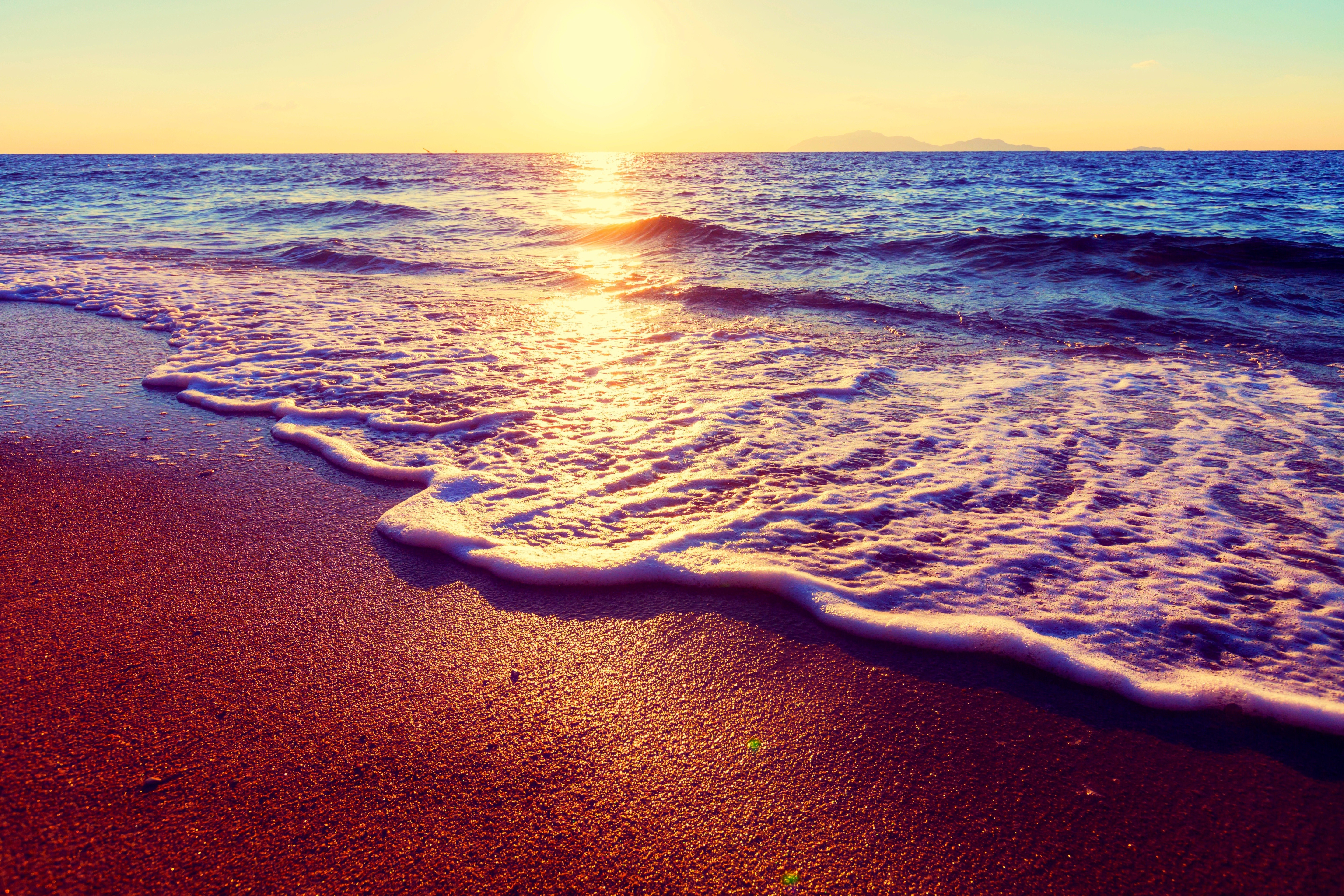
Walk onto any shoreline and you think you’ve seen it. Sand. Waves. Maybe a few dunes. But honestly, the landscape of a beach is a violent, shifting, and deeply complex geological battlefield that most tourists completely ignore while they’re busy reapplying SPF 50.
It’s alive.
Geologists like Orrin H. Pilkey, a legend in coastal studies, have spent decades trying to explain that beaches aren't static postcards. They are "river of sand" systems. If you stand still long enough—well, a few decades—the ground beneath your towel would be miles away. Most people look at a beach and see a place to relax, but if you actually look at the morphology, you’re seeing a high-stakes tug-of-war between the ocean’s energy and the land’s resistance.
The invisible anatomy of the landscape of a beach
Most people think the beach starts where the grass ends and stops where the water hits your toes. That’s wrong. The actual landscape of a beach extends way out into the surf zone and back into the secondary dune systems.
You’ve got the berm. That’s the flat part where you actually sit. It’s built by "constructive" waves that gently deposit sand. But then there’s the foreshore, the tilted area where waves actually break and run up. This is the "intertidal zone," a brutal environment where creatures like coquina clams and mole crabs spend their entire lives being tumbled around like rocks in a dryer.
Then there are the longshore bars. You can’t always see them, but they’re massive underwater ridges of sand running parallel to the shore. They are the first line of defense. When a massive winter swell hits, these bars trip the waves, forcing them to break early and lose energy before they can eat the boardwalk. Without these submerged features, the visible landscape of a beach would vanish in a single season.
Why sand isn't just "sand"
Ever notice how some beaches feel like powdered sugar while others are basically just piles of broken rocks? It's all about the source material. In the Florida Keys or the Bahamas, the landscape of a beach is essentially made of "poop" and skeletons—specifically, calcium carbonate from ground-up shells and the excretions of parrotfish who munch on coral.
Compare that to the Pacific Northwest. There, the sand is often dark, heavy, and volcanic. It’s "lithic," meaning it comes from the erosion of inland mountains and basalt flows. The grain size determines the slope. Finer sand creates those massive, flat, drivable beaches like Daytona. Coarse sand or pebbles? That leads to steep, "reflective" beaches where the waves slam directly into the shore because the water drains through the gaps in the stones rather than rushing back down the surface.
The war on the dunes
Dunes are the most disrespected part of the beach. People walk on them, build houses on them, and let their dogs dig them up. Big mistake.
In a healthy landscape of a beach, the dunes act as a savings account. During a storm, the ocean "withdraws" sand from the dunes to flatten out the beach profile, which helps dissipate wave energy. When the weather gets nice, the wind blows the sand back, and the sea oats (or American beachgrass) trap it to rebuild the bank.
If you build a sea wall, you kill this process.
According to the National Oceanic and Atmospheric Administration (NOAA), "armoring" a shoreline with concrete might protect a specific house for a minute, but it eventually starves the beach. The wave energy hits the wall, bounces back with double the force, and scours all the sand away. You end up with a wall and a pile of rocks, but no actual beach. This is why places like North Carolina have largely banned permanent sea walls—they realized you can have the houses or the beach, but eventually, you can't have both.
The weirdness of "Beach Nourishment"
Since we keep building hotels in places where the ocean wants to be, we’ve started "nourishing" the landscape of a beach. This is basically just giant pipes sucking sand from the seafloor and blasting it onto the shore.
It’s expensive. It’s temporary. And it’s kinda weird for the ecosystem.
The "new" sand is often a different color or grain size, which can mess with sea turtle nesting. If the sand is too compact, the mamas can't dig. If it's the wrong color, it changes the temperature of the nest, which—since turtle sex is determined by heat—can result in an entire generation of just one gender. It’s a classic example of how humans trying to "fix" a landscape often just create a different, weirder problem.
What creates the "Perfect" beach?
Is it the water color? The sand? Most of it is actually down to fetch. Fetch is the distance wind blows over open water without hitting anything. The bigger the fetch, the bigger the waves, the more aggressive the landscape of a beach becomes.
On the Gulf Coast of Florida, the fetch is limited. The waves are small, the sand stays put, and you get those calm, turquoise shallows. On the North Shore of Oahu, the fetch is thousands of miles of empty Pacific. The energy that hits those beaches is immense, carving out deep trenches and moving millions of tons of sand in a single week.
- Winter Profiles: Waves are frequent and high-energy. They strip sand off the berm and move it offshore. The beach looks narrow and rocky.
- Summer Profiles: Waves are smaller and further apart. They slowly push that offshore sand back onto the beach. The berm grows wide and fluffy.
It’s a seasonal lung. The beach breathes in and out.
The Rip Current factor
You can’t talk about beach landscapes without mentioning the "engine" of the surf zone: the rip current. These aren't "undertows" that pull you under; they are narrow channels of water flowing back out to sea.
They actually shape the shoreline. If you see a "scalloped" shoreline with little rhythmic curves (called beach cusps), you’re looking at the handiwork of water circulation. These rips create gaps in the longshore bars, which in turn dictates where the waves break and how the sand is distributed. It’s all connected.
How to actually "Read" a beach next time you go
Stop just looking for a spot to put your cooler. Look at the wrack line—that's the pile of seaweed and debris left at high tide. It’s a tiny, crucial ecosystem. It’s where birds like piping plovers forage, and it’s the primary source of nutrients for the dune plants.
Check the slope. Is it steep? You’re likely looking at a high-energy "reflective" beach. Is it almost flat for a hundred yards? That’s a "dissipative" beach, where the energy is spread out over a long distance.
Also, look for the "heavy minerals." If you see streaks of black or red in the sand, that’s not oil or pollution. It’s usually magnetite, garnet, or ilmenite. These grains are denser than the common quartz sand, so when a wave washes over, the lighter quartz gets pulled away, leaving a "placer deposit" of these beautiful, heavy minerals behind.
Actionable insights for your next trip
If you want to experience the landscape of a beach without ruining it or getting yourself into trouble, follow these rules:
- Stay off the dunes. Seriously. One person walking over a dune can kill the "pioneer" plants that hold the whole thing together. Use the designated boardwalks.
- Identify the Rip. Look for a gap in the waves where the water looks darker, deeper, or "calmer." That’s usually the rip current. It’s not where you want to swim, but it’s a fascinating part of the beach’s drainage system.
- Check the tide charts. Don't just show up. A beach can look like a vast playground at low tide and completely disappear at high tide. Use an app like Magicseaweed or Surfline to see what the water is actually doing.
- Leave the "Treasures." Shells are part of the sand cycle. When they break down, they provide the calcium carbonate needed for the next generation of the beach. Take photos, leave the shells.
- Observe the "Beach Cusp." Look for those half-moon shapes in the sand at the water's edge. They are a sign of "edge waves" and show exactly how the ocean is sculpting the land in real-time.
The landscape of a beach isn't a place; it's a process. It’s a never-ending conversation between the geology of the earth and the physics of the ocean. Once you start seeing the bars, the berms, and the mineral streaks, you'll never be able to just "sit on the sand" again. You'll be sitting on a moving, breathing, geological masterpiece.