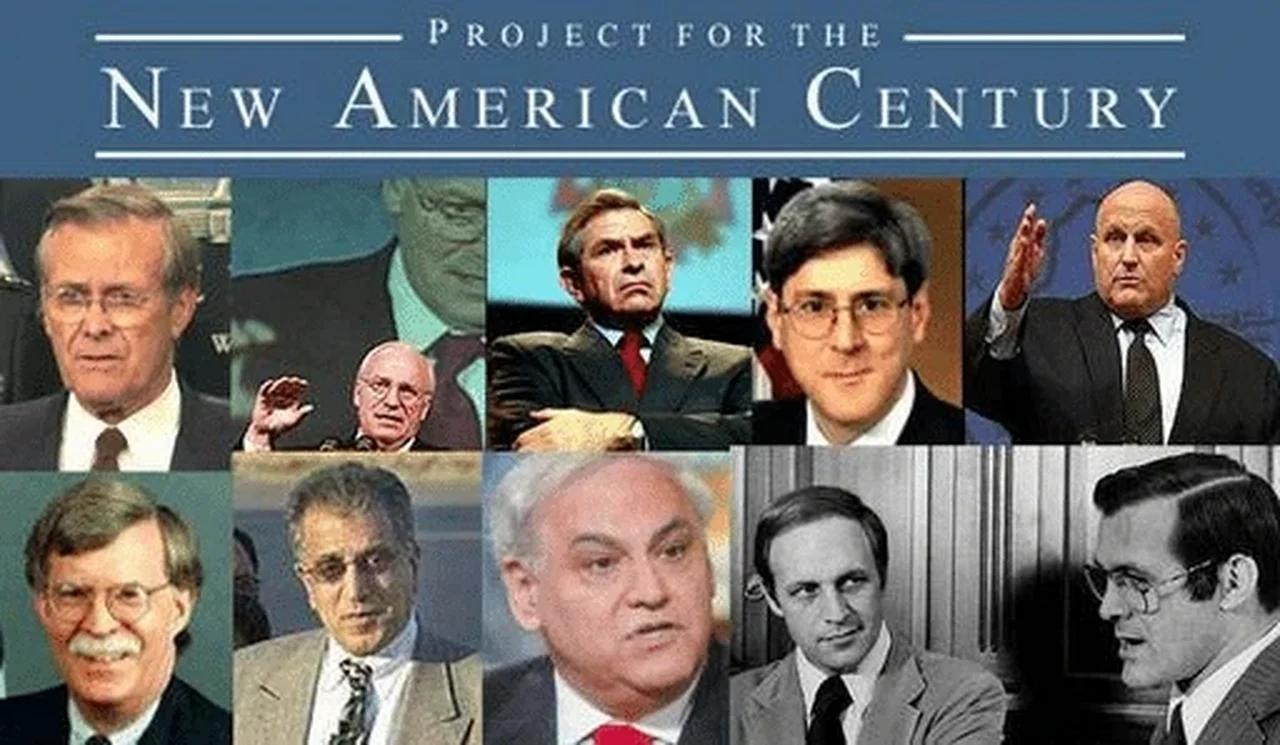
You probably haven't thought about the Project for a New American Century in years. Or maybe you never heard of it. But if you've looked at a map of the Middle East lately and wondered why things look the way they do, you're looking at its fingerprints. It wasn't some shadowy, underground cabal operating in a basement. It was a think tank. They had a website. They had letterhead. They had a very clear, very loud plan for how the United States should run the world after the Cold War ended.
The Project for a New American Century, or PNAC as everyone called it, basically argued that the U.S. shouldn't just be a superpower—it should be the only superpower, forever.
What was PNAC actually trying to do?
Founded in 1997 by William Kristol and Robert Kagan, PNAC emerged at a weird time in American history. The Soviet Union was gone. The "End of History" felt real to a lot of people in D.C. PNAC’s core philosophy was simple: American leadership is good for America and good for the world. They believed in "Reaganite" policies of military strength and moral clarity.
But it wasn't just vague talk about freedom.
They were specific. In their 1997 Statement of Principles, signed by people who would later become household names—Dick Cheney, Donald Rumsfeld, Jeb Bush, Paul Wolfowitz—they argued for a significant increase in defense spending and the promotion of "political and economic freedom abroad." They wanted to challenge regimes they felt were hostile to U.S. interests. They didn't want to wait for a crisis to happen; they wanted to shape the world so that crises wouldn't start in the first place. Or, if they did, the U.S. would be in a position to end them instantly.
The Letter that Changed Everything
The most famous thing the Project for a New American Century ever did happened in 1998. They sent a letter to President Bill Clinton.
In that letter, they told Clinton that the policy of "containment" regarding Iraq was failing. They urged him to shift toward "regime change." They argued that Saddam Hussein's potential possession of weapons of mass destruction was an unacceptable threat. Remember, this was 1998. This was three years before 9/11. When we look back at the 2003 invasion of Iraq, many people think it was a sudden reaction to the Twin Towers falling. It wasn't. The intellectual groundwork had been laid years earlier by PNAC. They were obsessed with Iraq. They saw it as the primary obstacle to a stable, pro-Western Middle East.
Honestly, it's kind of wild to read those documents now. The confidence is staggering.
Rebuilding America's Defenses
In September 2000, PNAC released a report titled Rebuilding America's Defenses. This is the document that conspiracy theorists love to quote, mostly because of one specific, haunting phrase. The report argued that the process of transforming the U.S. military into a dominant 21st-century force would be a long one, "absent some catastrophic and catalyzing event – like a new Pearl Harbor."
A year later, 9/11 happened.
Did PNAC cause 9/11? No. That’s nonsense. But did 9/11 provide the "catalyzing event" they said they needed to implement their vision? Absolutely. Suddenly, the ideas that had been sitting on the fringes of the Clinton-era GOP became the official policy of the George W. Bush administration. Because the guys who wrote the PNAC papers were now the guys running the Pentagon and the Vice President’s office.
Why it all fell apart
The Project for a New American Century basically got everything it wanted. It got the military budget increases. It got the regime change in Iraq. It got the aggressive "pre-emptive" strike doctrine.
But the reality of the Iraq War didn't match the PNAC white papers. They expected to be greeted as liberators. They expected a quick transition to democracy. They didn't really account for insurgency, sectarian violence, or the sheer cost of nation-building. By 2006, the brand was toxic. The "New American Century" was looking more like a quagmire.
The group officially shut down in 2006.
Gary Schmitt, who was the executive director, basically said the group had done its job. But the truth was more complicated. The neoconservative movement that birthed PNAC was being blamed for the biggest foreign policy disaster in a generation. The "moral clarity" they championed had led to Abu Ghraib and a trillion-dollar price tag. Even within the Republican party, a new wave of isolationism began to grow—a direct reaction to PNAC's brand of global interventionism.
The lingering legacy of PNAC
You can't understand modern American politics without understanding PNAC. It explains the "pivot to Asia." It explains why the U.S. still spends more on its military than the next several countries combined.
Even though the organization is dead, its ideas still float around. You see them in the way the U.S. handles Iran or how it talks about China. The idea that the U.S. must maintain "full-spectrum dominance" is still the baseline for many in the defense establishment.
But there’s a lesson here.
PNAC proved that you can have all the intellectual firepower in the world, the best-laid plans, and all the "right" people in power, but you can't predict how the world will actually react to your force. They thought they could engineer history. History had other ideas.
What you can learn from the PNAC era
If you're looking at this from a historical or even a business strategy perspective, there are a few takeaways that aren't just about politics.
- Policy isn't accidental. Most of what happens in government is the result of years of "waiting in the wings" by think tanks.
- The danger of "Groupthink." PNAC was a closed loop of people who all agreed with each other. They ignored the experts who warned about the complexities of Middle Eastern sociology.
- The "New Pearl Harbor" problem. Be careful what you wish for. A crisis can give you the power to do what you want, but it also strips away your ability to control the outcome once things get moving.
To really dig into this, you should look at the original documents. Don't take a commentator's word for it. Read the 1997 Statement of Principles. Read the letter to Clinton. You'll see a level of transparency that is almost shocking by today's standards. They told everyone exactly what they were going to do. And then they did it.
The Project for a New American Century wasn't a conspiracy. It was a plan. And we are still living in the world that plan created, for better or worse.
Moving forward
If you want to understand today's geopolitical tension, stop looking at the news for a second and look at the archives.
- Research the signatories. Look at where the people who signed the PNAC documents are today. Many are still influential in think tanks and media.
- Compare the 2000 report to modern budgets. You'll see that the "transformation" PNAC called for—space-based weapons, drone warfare, and cyber dominance—is now the reality of the U.S. Space Force and Cyber Command.
- Study the "Realist" vs. "Neoconservative" debate. Understanding why PNAC disagreed with "realists" like Brent Scowcroft will help you understand the current split in the Republican party's foreign policy.
The "American Century" might not have turned out exactly how PNAC envisioned it, but their attempt to build it changed the trajectory of the 21st century.