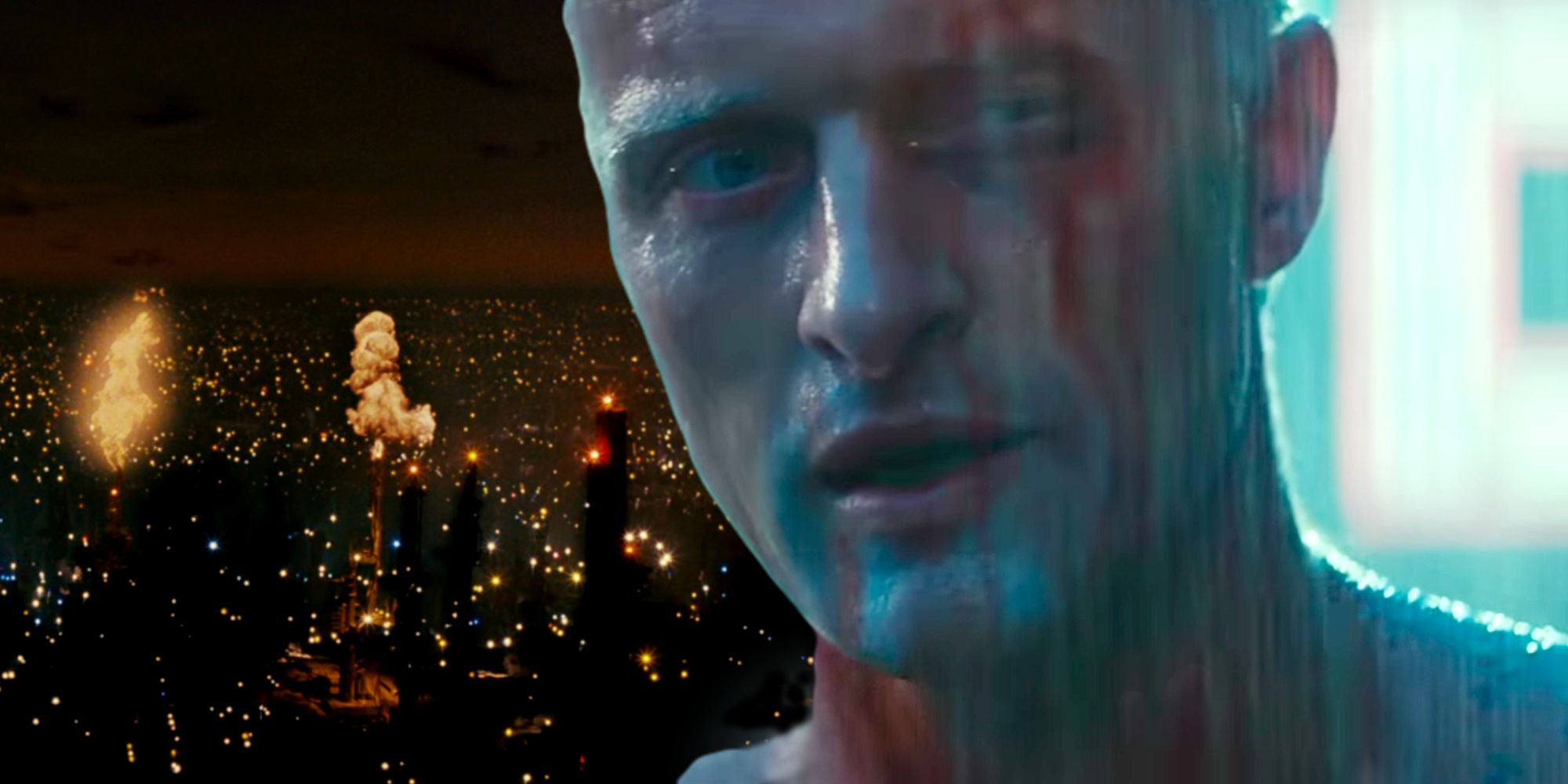
It was unscripted. Well, mostly. When fans talk about the speech from Blade Runner, they are almost always talking about those final, haunting seconds on a rainy rooftop in a dystopian Los Angeles. Roy Batty, a "replicant" designed for slave labor, is dying. He has every reason to kill Rick Deckard. Instead, he saves him. Then, he speaks.
What follows is perhaps the most famous monologue in science fiction history. It wasn’t just the writing on the page that made it work; it was the late Rutger Hauer’s decision to take a chainsaw to the original script. He felt the initial draft was too "operatic" or high-brow for a dying soldier. So, he trimmed the fat and added that one final, devastating line: "All those moments will be lost in time, like tears in rain."
The Moment Everything Changed for Sci-Fi
The speech from Blade Runner didn't just happen in a vacuum. You have to remember the context of 1982. Science fiction was often about lasers, aliens, and clear-cut heroes. Then came Ridley Scott’s messy, neon-soaked vision. It was dirty. It felt lived-in. When Batty delivers his soliloquy, he isn't a villain anymore. He’s a poet. He’s a victim of a corporate machine that gave him a soul but no time to use it.
"I've seen things you people wouldn't believe," he begins.
It’s such a simple hook. Honestly, it’s a bit of a flex, right? He’s traveled the stars while Deckard has been hunting shadows in a gutter. Batty mentions Attack ships on fire off the shoulder of Orion and C-beams glittering in the dark near the Tannhäuser Gate.
Here’s the kicker: we don’t know what a C-beam is. We have no clue where the Tannhäuser Gate is. And that is exactly why it works. It creates a sense of a massive, sprawling universe that we, the audience, will never get to see. It makes the world of the film feel real because it hints at a history that exists outside the frame of the camera. It’s world-building through exclusion.
Why Rutger Hauer Changed the Script
David Peoples wrote the initial draft of the scene. It was good. It was solid. But Hauer, being the eccentric and brilliant actor he was, realized that a dying man wouldn't give a three-minute lecture on his life experiences. He’d be gasping. He’d be desperate to convey the essence of his existence before his "on-switch" was flipped off.
Hauer reportedly cut several lines from the script the night before filming. He didn't tell Ridley Scott until he was on set. He wanted it to be punchy. He wanted it to be human. By adding the "tears in rain" line, he turned a sci-fi villain's death into a universal meditation on mortality. We are all Roy Batty. We all have memories that define us, and we all fear the day those memories vanish.
The production was a nightmare, by the way. It was raining—not real rain, obviously, but Hollywood rain, which is basically high-pressure hoses. It was cold. Harrison Ford was exhausted. The crew was grumpy. Yet, when Hauer finished that take, the story goes that the crew actually applauded. Some even cried. You can’t fake that kind of resonance.
The Philosophical Weight of the Replicant's Words
If you look at the speech from Blade Runner through a philosophical lens, it’s basically an argument for personhood. The Turing Test is one thing, but Batty’s speech is a testimony. He’s proving he has an inner life.
Philip K. Dick, who wrote the source novel Do Androids Dream of Electric Sheep?, unfortunately passed away before the film was finished, but he did see some early footage. He was blown away by how Hauer captured the "android" soul. The irony is thick: the most "human" moment in the entire movie comes from a machine.
Memory as the Anchor of Identity
Why does he talk about what he’s seen?
Because in the world of Blade Runner, memories are the only thing that separates a human from a replicant—except the humans have "real" memories and the replicants have implants. But Batty’s memories? Those were earned. He bled for them.
When he says those moments will be lost, he’s highlighting the tragedy of the artificial life. He was built to be a tool, but he lived as a witness to the wonders of the galaxy. It's a heavy concept. It’s why people still write dissertations on this one minute of film forty years later.
Misconceptions About the Tannhäuser Gate
You've probably seen the memes or heard the references in other shows. People love the "Tannhäuser Gate" line. Some fans spent years trying to find a "Tannhäuser Gate" in real astronomical charts or deep lore.
The truth? It doesn't exist.
David Peoples took the name from Richard Wagner’s opera Tannhäuser. It was a bit of "flavor text." It wasn't meant to be a literal place you could find on a map. It was meant to sound epic. It’s a classic example of "show, don't tell," or in this case, "mention, don't explain." By leaving it a mystery, the speech from Blade Runner retains its magic. If we knew exactly what a C-beam was, the mystery would evaporate.
The Impact on Modern Cinema
Without this speech, would we have Ghost in the Shell? Would we have The Matrix? Probably, but they’d look a lot different. The "tears in rain" moment cemented the idea that "Cyberpunk" wasn't just about high-tech and low-life; it was about the existential dread of being alive in a world that views you as a product.
Every time a robot in a movie starts questioning its purpose, it’s chasing the ghost of Roy Batty. The monologue has been sampled in music, quoted in books, and parodied a thousand times. But the original still holds up because it’s so raw. There’s no CGI fluff in that scene. It’s just an actor, a pigeon, and some very cold water.
How to Experience the Legacy Today
If you really want to understand the depth of the speech from Blade Runner, you shouldn't just watch the clip on YouTube. You need the build-up. You need to see Batty as the terrifying force of nature he is throughout the film to appreciate his grace at the end.
- Watch the Final Cut. Avoid the original theatrical release if you can. The voiceover in the 1982 version kind of ruins the mood. The Final Cut lets the silence and the rain do the heavy lifting.
- Listen to Vangelis. The score during this scene is just as important as the words. The synthesizers mimic a heartbeat that’s slowing down. It’s atmospheric perfection.
- Read the Script History. Look into the David Peoples drafts versus what Hauer delivered. It’s a masterclass in how actors can improve a story by understanding their character’s soul.
- Compare it to Blade Runner 2049. Denis Villeneuve’s sequel handles memory and legacy in a different way, but it clearly bows its head to the "Tears in Rain" moment.
The brilliance of the scene lies in its brevity. "Time... to die." He doesn't fight it. He doesn't scream at the heavens. He accepts the end of his four-year lifespan with a dignity that his creators never intended for him to have.
Next time you’re watching a big-budget sci-fi flick and it feels a bit hollow, come back to this. It’s a reminder that the biggest spectacles aren't explosions or planet-sized ships. They’re the small, quiet realizations of what it means to be alive, even if you were made in a lab.
Actionable Insight for Fans and Writers: To truly appreciate the craft behind this moment, try writing a character description using only "unseen" events like the Tannhäuser Gate. It forces you to build a world through the power of suggestion rather than info-dumping. For those looking to dive deeper into the production, seek out the documentary Dangerous Days: Making Blade Runner, which provides the most accurate account of how Rutger Hauer’s improvisation changed cinema forever.