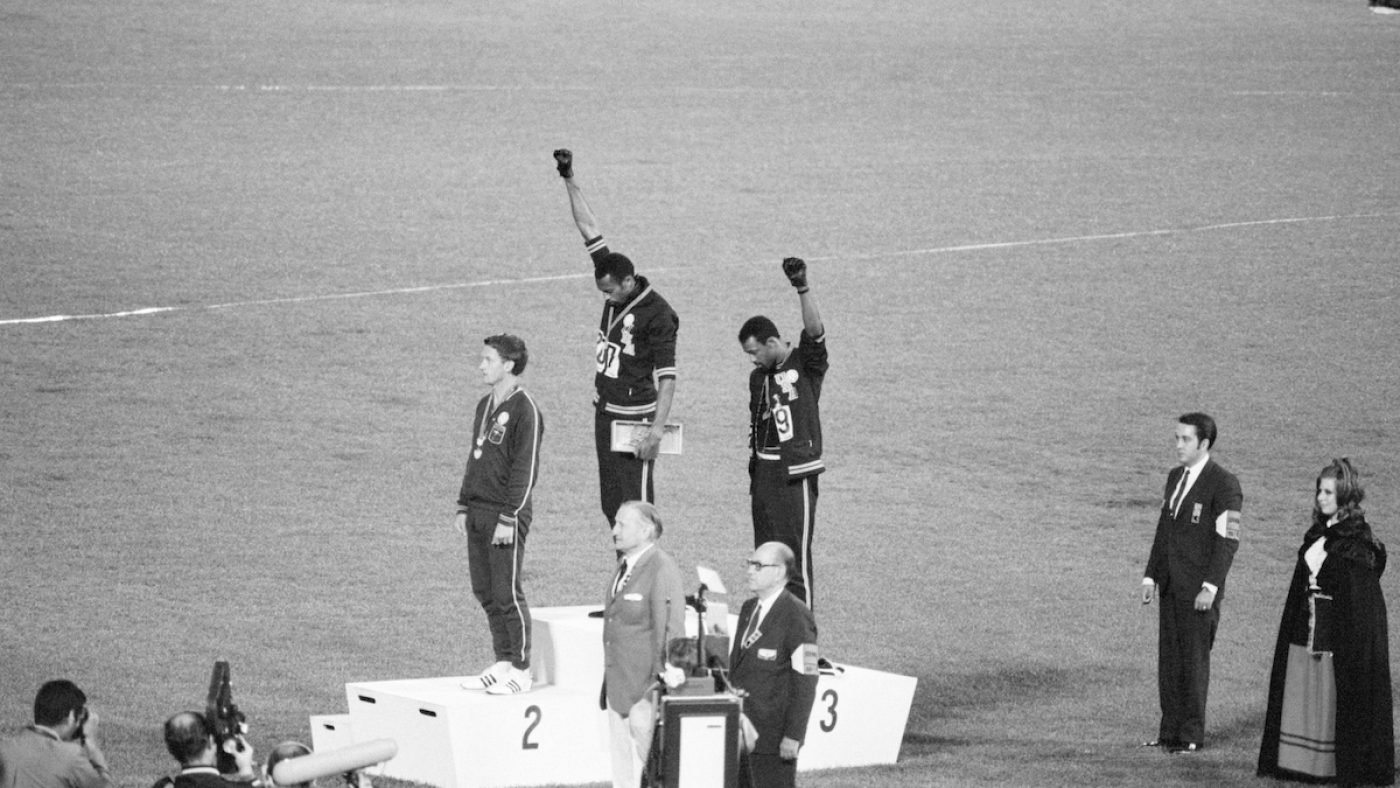
Mexico City, 1968. The air was thin, the tension was thick, and the world was watching. You’ve seen the photo. It’s iconic. Two men standing on a podium, heads bowed, black-gloved fists thrust into the sky. It’s a moment frozen in time that we often treat like a museum piece, something safely tucked away in the past. But honestly? The reality of the Tommie Smith and John Carlos 1968 Olympics protest was way messier, more calculated, and far more costly than the high school history books lead you to believe.
It wasn’t just a "spontaneous" act of defiance. It was a desperate cry from athletes who felt like they were being used as window dressing for a country that didn't actually love them back.
The OPHR: More Than Just a Gesture
People often forget that this wasn't some solo mission. Smith and Carlos were part of the Olympic Project for Human Rights (OPHR), an organization founded by sociologist Harry Edwards. The OPHR actually considered boycotting the games entirely. They were fed up. They wanted South Africa and Rhodesia uninvited because of apartheid. They wanted Muhammad Ali’s heavyweight title restored. They wanted more Black coaches.
Eventually, the boycott fell through. Most athletes decided they’d worked too hard to stay home. So, Smith and Carlos decided to use the biggest stage on earth—the 200-meter medal ceremony—to make sure nobody could ignore what was happening back in the States.
The details of what they wore that day were basically a language of their own. Smith wore a black scarf to represent Black pride. Carlos had his tracksuit top unzipped to show solidarity with blue-collar workers and wore a string of beads. Those beads? They weren't jewelry. They were a reminder of the people who had been lynched or killed, those whose lives were ended by violence that nobody seemed to want to talk about in polite society.
Then there were the socks. They stood there in black socks, no shoes. Why? To highlight the crushing poverty that Black Americans were facing. It was a visual map of struggle, all packed into a few minutes of television airtime.
The White Man in the Photo
There’s a third guy on that podium. Peter Norman. He was an Australian sprinter who took the silver, splitting the two Americans. For decades, people kind of looked past him, assuming he was just some bystander caught in the crossfire of history.
He wasn't.
Norman was a vocal supporter of their cause. When he saw what they were planning, he asked how he could help. He ended up wearing an OPHR badge on his jacket to show he stood with them. He knew the risks. Australia had its own deeply racist "White Australia" policies at the time, and when he got home, he was treated like a pariah. He was never picked for the Olympics again, despite being the fastest sprinter his country had ever produced.
When Norman died in 2006, Smith and Carlos were his pallbearers. That tells you everything you need to know about the bond they formed in those few minutes of rebellion.
The Immediate Fallout: Not Just a Slap on the Wrist
The reaction was swift and, frankly, brutal. Avery Brundage, the president of the International Olympic Committee (IOC) at the time, was furious. Now, keep in mind, Brundage was the same guy who had no problem with the Nazi salutes during the 1936 Berlin Olympics. He claimed those were just "national salutes." But two Black men raising their fists for human rights? That was "politicizing" the games.
The IOC threatened to ban the entire US track team if Smith and Carlos weren't suspended and kicked out of the Olympic Village. The US Olympic Committee buckled. Within 48 hours, the two fastest men in the world were sent packing.
Back home, it got worse. Death threats became a regular part of their lives. Their families were harassed. Smith was discharged from the Army for "un-American" activities. They struggled to find work. People called them traitors. It’s easy to celebrate them now that they have statues and honorary degrees, but for years, they were basically outcasts in the country they had just won medals for.
Why We Still Get It Wrong
We like to sanitize this story. We want to believe that they protested, the world realized they were right, and progress followed. That’s a nice fairy tale, but it’s not what happened.
The Tommie Smith and John Carlos 1968 Olympics protest was a precursor to the modern athlete-activist. When you see NFL players taking a knee or WNBA players wearing shirts with social justice slogans, that’s the direct lineage of Mexico City. And notice how the reaction is almost identical? The same arguments about "keeping politics out of sports" are recycled decade after decade.
Sports have never been "just sports." They are a reflection of who we are. Smith and Carlos understood that if they just ran their race and went home, they were validating a status quo that was killing people. They chose to break the mirror instead of just looking at themselves in it.
Surprising Facts Most People Miss:
- The Glove Swap: They only had one pair of black gloves. Carlos forgot his at the Olympic Village. It was actually Peter Norman who suggested they each wear one of the gloves from the single pair Smith had brought. That’s why Smith raised his right hand and Carlos raised his left.
- The Crowd's Response: The stadium didn't go silent. They were booed. It was a wall of sound, a visceral rejection from the spectators as they walked off the field.
- The Career Shift: Both men eventually tried their hand at professional football. Smith played for the Cincinnati Bengals, and Carlos had a stint in the CFL and with the Philadelphia Eagles before an injury ended his career.
The Legacy of the Fist
Eventually, the narrative shifted. In 2005, San Jose State University—where both men had competed—unveiled a massive statue of the protest. In 2019, they were finally inducted into the US Olympic and Paralympic Hall of Fame. It took over 50 years for the institution to officially say, "Yeah, they were right."
But here’s the thing: Smith and Carlos don't regret it. Not even a little. They’ve both said in numerous interviews over the years that they weren't looking for fame; they were looking for a platform. They found it, and they used it, even knowing it might burn their careers to the ground.
Moving Beyond the Image
If you want to truly understand the weight of what happened in 1968, don't just look at the photo. Read the words of the OPHR. Look at the context of the Vietnam War and the assassination of Martin Luther King Jr., which had happened only months before the games.
Actionable Steps for History Enthusiasts and Educators:
- Audit your sources: When looking into the 1968 games, seek out primary source interviews with John Carlos. His perspective is often more raw and focuses heavily on the economic disparity he was protesting.
- Research Peter Norman: Understand that solidarity isn't just a buzzword; it’s a risk. Study the "Salute" documentary to see the Australian perspective on the fallout.
- Connect the Dots: Compare the OPHR’s demands from 1967 with the modern demands of organizations like the Black Players Alliance. You’ll find that many of the systemic issues regarding coaching diversity and athlete representation are still being debated today.
- Visit the National Museum of African American History and Culture: They have an extensive exhibit on this moment that puts the physical artifacts—the actual warm-up suits—into the broader context of the Civil Rights Movement.
The story of Smith and Carlos isn't a "sports story." It’s a human rights story that happened to take place on a running track. It reminds us that the cost of standing up is often high, but the cost of staying silent is higher. They lost their careers, but they won a place in the conscience of the world.