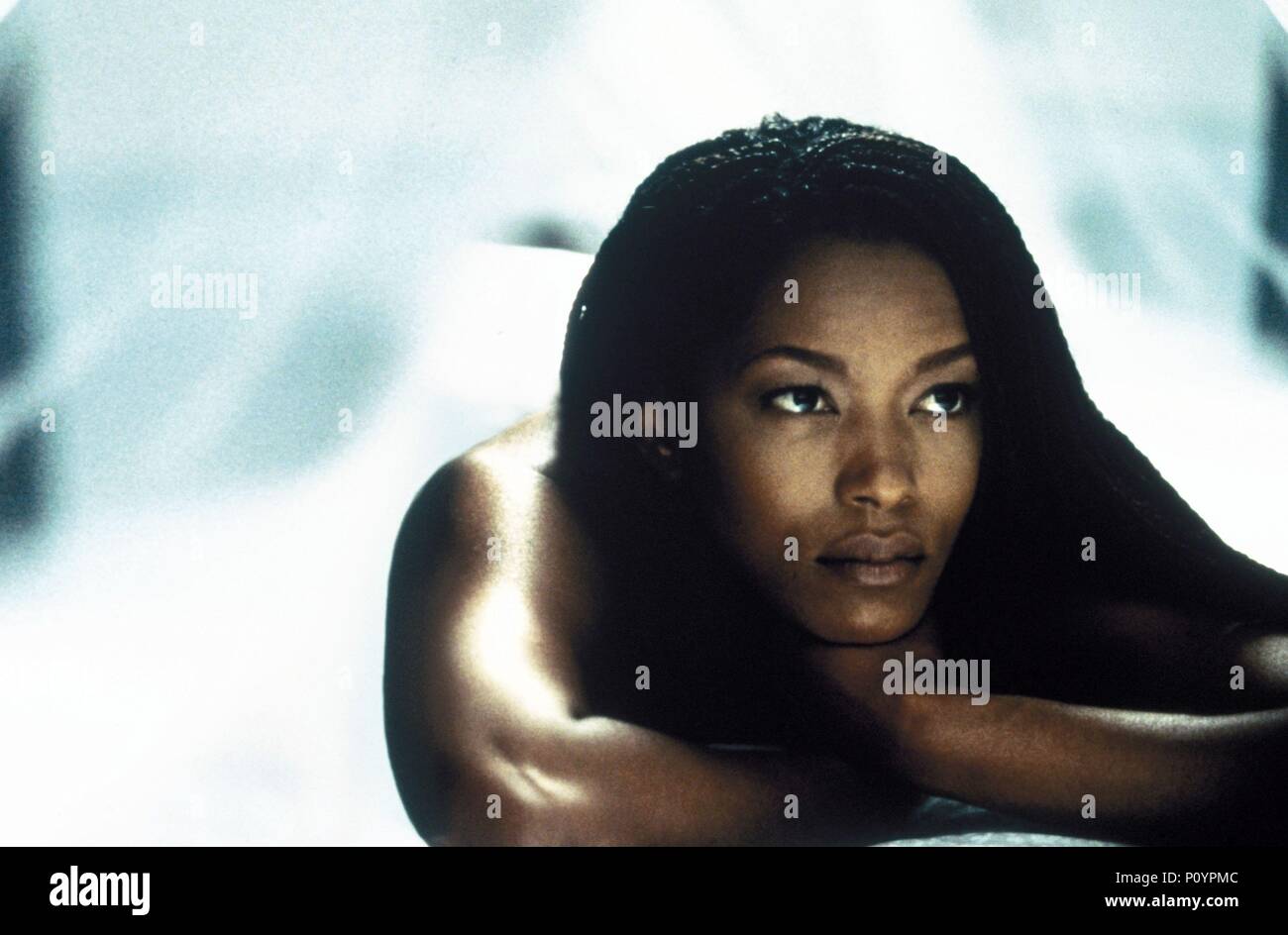
If you were around in the late 90s, you remember the neon-bright aesthetic, the silk slip dresses, and that specific brand of cinematic escapism that felt both aspirational and deeply grounded. It's been over twenty-five years since When Stella Got Her Groove Back sashayed into theaters. It wasn't just a movie. It was a cultural reset for how we viewed Black womanhood, aging, and the radical act of choosing joy over a paycheck.
Honestly, the term "groove" has become such a cliché that we forget what the film was actually doing. It wasn't just about a hot younger guy. It was about a high-powered stockbroker who realized her soul was dying in a cubicle.
The Real Story Behind the Fiction
Terry McMillan didn't just pull this story out of thin air while sitting at a typewriter. She lived it. The 1996 novel was based on her own trip to Jamaica where she met Jonathan Plummer. He was twenty; she was fortyish. The book was a massive success, but the movie adaptation directed by Kevin Rodney Sullivan turned that internal monologue into a visual feast of turquoise water and Angela Bassett’s biceps.
Let's talk about Angela Bassett for a second. Her performance as Stella Payne is basically a masterclass in subtlety. You see her transition from a rigid, "everything is fine" professional to someone who finally exhales. Who could forget that scene where she’s dancing alone? It feels private. It feels like we’re intruding on a woman regaining her pulse.
Then there’s Taye Diggs. This was his film debut. Before he was a household name, he was Winston Shakespeare—the guy with the smile that launched a thousand vacations to Negril. The chemistry wasn't just "movie magic." It was palpable. It shifted the needle on how Hollywood depicted age-gap relationships, specifically when the woman was the older one and the person of color.
Why the Movie Broke the Rules
Back in 1998, the "romantic comedy" or "romance drama" genres were overwhelmingly white. If Black women were on screen, they were often relegated to the "sassy best friend" or the "suffering mother." When Stella Got Her Groove Back flipped that script.
Stella had money. She had a massive, beautiful home. She had a career that she was actually good at. The conflict wasn't about surviving poverty; it was about surviving a mid-life crisis of the spirit.
The Jamaica Factor
Location is a character in this film. Production designer Terence Marsh and cinematographer Jeffrey Jur didn't just film a beach. They filmed a mood. The saturated colors of Jamaica—the deep greens, the shimmering blues—acted as a direct contrast to the cold, sterile greys of Stella’s life in the Bay Area.
When you watch it now, you might notice the pacing is slower than modern films. It breathes. We spend time watching Stella talk to her sisters. Those scenes with Whoopi Goldberg (who played Delilah) provide the emotional spine of the story. Delilah is the one who pushes Stella to stop being so "tight." She’s the proxy for the audience.
The Real-Life Twist
You can't talk about When Stella Got Her Groove Back without acknowledging the real-life drama that followed. Life isn't a 120-minute screenplay. Terry McMillan and Jonathan Plummer actually got married in 1998. They were together for over six years.
Then, the bombshell.
In 2004, Plummer came out as gay. The divorce was messy. It was public. It was the kind of tabloid fodder that threatened to retroactively ruin the "magic" of the book and movie for some fans. McMillan even sued him for $40 million at one point, though they eventually reached a settlement.
Does that change the movie?
Some people say it does. They feel the romance is "tainted." But if you look at it through a different lens, it makes the core message even more vital. The movie isn't really about Winston. It’s about Stella. The man was just the catalyst for her to remember who she was. Even if the relationship ends, the "groove" remains. That’s the nuance people often miss when they focus solely on the heartbreak of the real-life participants.
The Cultural Footprint and the "Groove" Legacy
The phrase "get your groove back" entered the lexicon and never left. It’s used in corporate retreats, self-help books, and bad sitcom jokes. But the actual film handles the concept with more dignity than the memes suggest.
A Soundtrack That Defined an Era
The soundtrack was executive produced by Jimmy Jam and Terry Lewis. It’s a sonic time capsule. You have Mary J. Blige, Boyz II Men, and Shaggy. It didn't just sit in the background; it drove the narrative. The music was soulful, lush, and unapologetically Black. It peaked at number two on the Billboard 200. That doesn't happen by accident. It happened because the music captured the feeling of a late-summer sunset.
Examining the Critique
Not everyone loved it. Some critics at the time found it thin. They called it "travelogue porn." Roger Ebert was famously lukewarm, giving it two and a half stars. He felt the movie didn't delve deep enough into the actual mechanics of the relationship.
Maybe he was right on a technical level. But he wasn't the target audience.
For the women who flocked to the theaters, the "thinness" was actually space. Space for them to project their own desires, their own fatigue, and their own need for a break. It was a fantasy that felt attainable. You didn't need to be a superhero; you just needed a plane ticket and the courage to say "yes" to a drink with a stranger.
The Technical Brilliance of the "Groove"
Look at the editing. The way the film transitions between the hectic trading floor and the stillness of the Caribbean. It’s jarring on purpose. It highlights the physical toll of the American Dream on Black women.
- Stella's Wardrobe: Costuming by Ruth E. Carter (who later won Oscars for Black Panther) was intentional. Stella moves from structured power suits to flowing, translucent fabrics. Her clothes literally loosen up as her heart does.
- The Family Dynamic: The chemistry between Bassett, Goldberg, and Regina King (who played the sister, Vanessa) is the most realistic part of the film. The bickering, the shorthand, the protective nature—it feels like a real family.
What We Get Wrong About the Movie Today
We tend to remember it as a "cougar" movie. That’s a reductive and honestly kind of sexist way to look at it. If a 40-year-old man goes to a resort and meets a 20-year-old woman, it’s a Tuesday in Hollywood. When Stella does it, it’s a "phenomenon."
The movie is actually a critique of the "Superwoman" trope. Stella is tired of being the one who has it all together for everyone else. She’s tired of being the dependable sister, the perfect mother, and the top-tier employee. The "groove" isn't sex. It's autonomy.
Modern Context: 2026 and Beyond
In 2026, we talk a lot about "soft life." We talk about "quiet quitting." Stella was the blueprint for this. She quit before it was a hashtag. She chose her mental health over a bonus check.
If you rewatch it today, skip the parts where you try to analyze if Winston is "the one." Focus on the scenes where Stella is by herself. Watch her face when she looks at the ocean. That is where the actual movie lives. It’s in the quiet realization that she is enough, with or without the guy.
Actionable Takeaways for Your Own "Groove"
If you're feeling burnt out and looking to channel your inner Stella Payne, you don't necessarily need a trip to Jamaica (though it wouldn't hurt). Here is how to apply the "Stella" philosophy to 2026 life:
- Audit Your "Shoulds": Stella was living a life of "shoulds." She should work hard. She should stay in the Bay Area. List your "shoulds" and see which ones are actually serving you.
- Redefine Leisure: In the film, Stella initially doesn't know how to relax. She's checking her watch. Practice radical leisure—doing something with absolutely no productive output.
- Find Your Delilah: You need a friend who will tell you the truth, even if it’s uncomfortable. Surround yourself with people who prioritize your joy over your resume.
- Invest in Your Environment: Whether it’s changing your lighting or buying better sheets, your physical space impacts your "groove." Stella’s house was her sanctuary; make yours one too.
- Embrace the Pivot: Whether it’s a career change or a new relationship, don't fear the disruption. The disruption is usually where the growth happens.
When Stella Got Her Groove Back remains a landmark because it dared to center a mature woman's pleasure. It didn't ask for permission. It didn't apologize. It just showed up, looked incredible in a swimsuit, and reminded us all that life is far too short to spend it behind a desk.
Check the credits. Watch the names. Remember that this film paved the way for shows like Insecure and Girlfriends. It proved there was a massive, hungry audience for stories about Black women just... being. And that is a legacy that won't ever lose its groove.