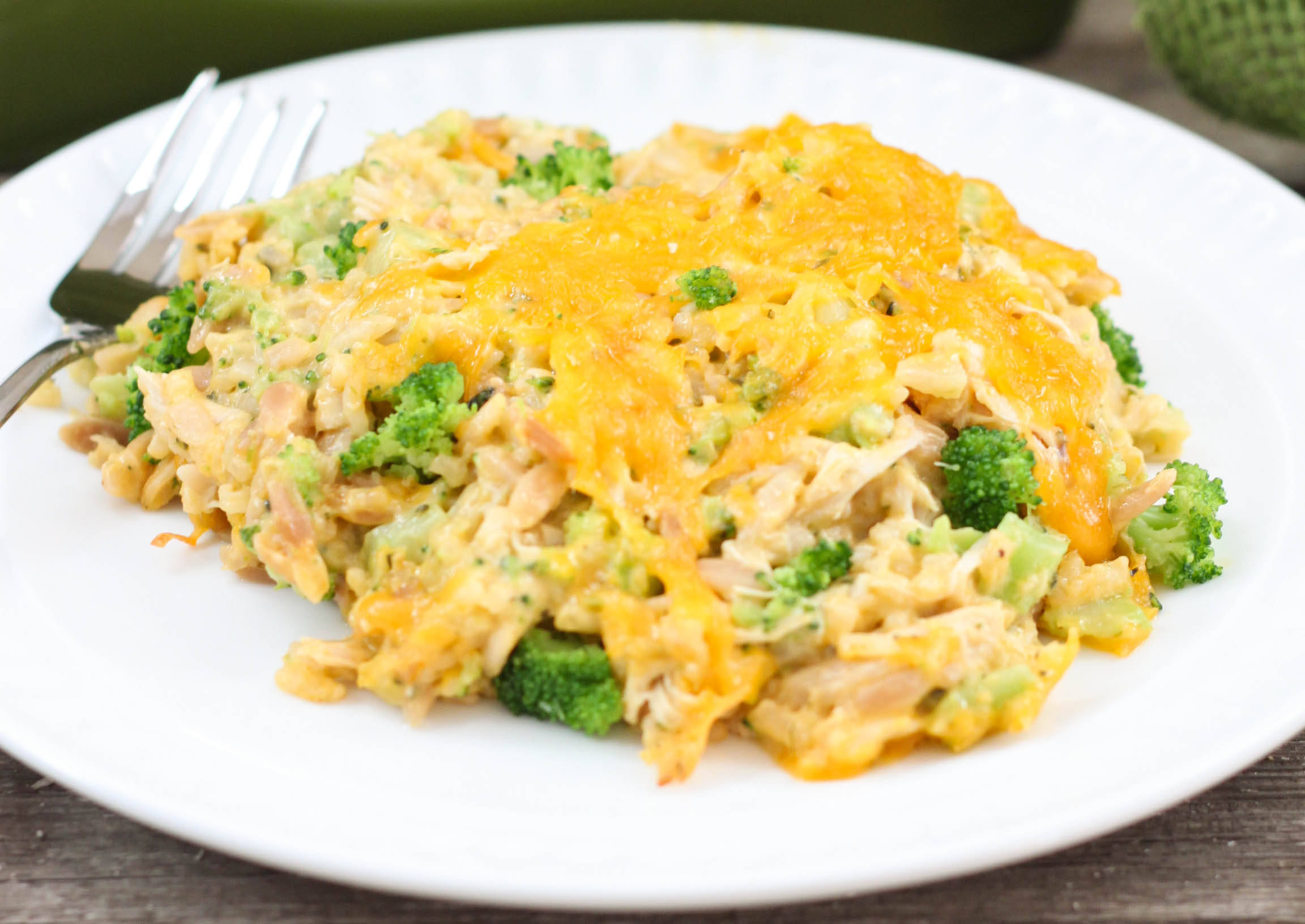
Dinner shouldn't be a struggle. But honestly, most of the time, it is. You come home, the kids are starving, and the thought of standing over a stove for an hour makes you want to order takeout for the third time this week. That’s why the broccoli rice chicken casserole became a suburban legend in the first place. It’s supposed to be the "easy" win. Throw some stuff in a 9x13 dish, bake it, and boom—nourishment.
Except it usually sucks.
Let’s be real. Most versions of this dish are a salt-bomb of canned "cream of whatever" soup mixed with rice that has the texture of wet cardboard. It’s beige. It’s sad. But it doesn't have to be that way. If you understand how moisture behaves in a closed oven environment, you can actually make a version that tastes like real food. We’re talking sharp cheddar, crisp-tender florets, and chicken that isn't reminiscent of a pencil eraser.
The Chemistry of Why Your Casserole Fails
The biggest enemy of a good broccoli rice chicken casserole is water. Specifically, the water trapped inside the broccoli and the starch leaking out of the rice. Most people use frozen broccoli. That’s fine. It’s actually often more nutritious than the "fresh" stuff that’s been sitting on a truck for two weeks. But frozen vegetables are blanched before freezing, which breaks down cell walls. When they thaw in your oven, they dump all that water directly into your sauce.
Result? Soup.
Then there’s the rice. If you’re using long-grain white rice and cooking it all the way before putting it in the oven, you’ve already lost. Rice is a sponge. In a casserole, it continues to absorb liquid as it bakes. If it’s already at maximum capacity when it goes in, it will eventually lose its structural integrity and turn into paste. It's basic thermodynamics, really. You need to "undercook" your grains. Think al dente, but even firmer.
Why the "Cream of" Method is Dying (and What to Do Instead)
For decades, the Campbell’s Soup company essentially owned the broccoli rice chicken casserole market. Their back-of-the-can recipe is ingrained in the American psyche. While it’s nostalgic, it’s also objectively mediocre. Those canned soups are loaded with modified corn starch and enough sodium to make your feet swell.
Modern cooks are moving toward a quick velouté or a simple Mornay sauce. It sounds fancy. It isn't. It’s just melting butter, whisking in flour, and adding broth or milk. It takes five minutes. If you use a sharp white cheddar—something with some actual age—you get a depth of flavor that a can of soup simply cannot replicate.
The Meat Problem: Rotisserie vs. Raw
You have two paths when it comes to the protein in a broccoli rice chicken casserole.
Path one: The Rotisserie Shortcut. This is the "I have 15 minutes before soccer practice" move. You shred a store-bought bird. It’s fast. It’s seasoned. But be careful—rotisserie chicken is often injected with a salt solution (brine) that can make your final dish overly salty if you aren't adjusting your other seasonings.
Path two: Searing raw breasts or thighs. This is the superior method for flavor. Why? The Maillard reaction. By browning the chicken in a skillet before it ever touches the casserole dish, you’re creating complex sugars and savory notes that boiling or baking alone won't achieve. If you just toss raw cubes of chicken into the rice mixture, they’ll cook, sure. But they’ll be pale and tasteless.
Choosing the Right Grain
Not all rice is created equal. If you use Jasmine, your house will smell great, but the casserole might be a bit sticky. Basmati holds its shape better.
Some people swear by brown rice for the "health" factor. Just know that if you go that route, your bake time increases significantly. Brown rice still has the bran layer, which acts like a suit of armor against moisture. You cannot swap white rice for brown 1:1 without adjusting your liquid ratios and timing. If you try it, you’ll end up with crunchy grains in a sea of overcooked broccoli. Nobody wants that.
Elevating the Texture with the "Crunch Factor"
A casserole without a topping is just a hot bowl of mush.
The classic move is Ritz crackers and melted butter. It’s a classic for a reason. The high fat content in the crackers creates a golden, buttery crust that shatters when you bite into it. However, if you want to be a bit more "2026," try panko breadcrumbs mixed with lemon zest and fresh thyme. The acidity of the lemon cuts through the heaviness of the cheese sauce.
Another pro tip: Fried onions. Not just for green bean casseroles anymore. They add a savory, umami hit that pairs perfectly with the sulfureous notes of the broccoli.
Flavor Profiles You Haven't Tried
- The Southwest Twist: Swap cheddar for pepper jack. Add a can of chopped green chiles. Use cilantro instead of parsley.
- The Curry Version: Add a tablespoon of yellow curry powder to your sauce. It sounds weird. It’s actually incredible. The sweetness of the cooked broccoli loves the heat of the cumin and turmeric.
- The Smoked Element: Use smoked gouda instead of cheddar. It makes the whole dish taste like it was cooked over a campfire.
Real Talk: The Nutrition Reality
Let's address the elephant in the room. Is broccoli rice chicken casserole healthy?
It depends. If you’re loading it with three cups of cheese and a sleeve of crackers, it’s comfort food, not health food. But, compared to a burger and fries, it’s a massive step up. You’re getting lean protein, complex carbs, and a hefty dose of Vitamin K and fiber from the broccoli.
According to the USDA, broccoli is one of the most nutrient-dense vegetables we have. Even when baked, it retains a significant portion of its Vitamin C and folate. The key is not to overcook it until it's grey. You want it to still have a hint of green. If your broccoli looks like seaweed, you’ve gone too long.
Common Mistakes and How to Avoid Them
- Too much liquid: If you’re using a recipe that calls for two cups of water and two cups of rice, but you’re also adding "wet" veggies, reduce the water by a quarter cup.
- Skipping the salt in the rice: Rice cooked in plain water is sad. Use chicken bone broth instead. It adds collagen and flavor.
- Using pre-shredded cheese: Stop doing this. Seriously. Pre-shredded cheese is coated in potato starch or cellulose to keep it from clumping in the bag. That coating prevents the cheese from melting smoothly into a sauce. It stays "stringy" or "gritty." Grate your own. It takes two minutes and changes your life.
Step-By-Step Logic for the Perfect Bake
First, preheat your oven to 375°F. Most people go too low at 350°F. You want that top to brown before the rice turns to dust.
Second, par-boil your broccoli for exactly 60 seconds, then shock it in ice water. This sets the color. It stays bright green even after 30 minutes in the oven.
Third, layer properly. Rice and sauce on the bottom. Chicken in the middle. Broccoli tucked in so the tips don't burn. Cheese on top. Breadcrumbs last.
Actionable Next Steps for Dinner Tonight
If you want to master the broccoli rice chicken casserole, don't try to reinvent the wheel tonight. Start with the basics but fix the technique.
- Buy a block of sharp cheddar and grate it yourself. This is the single biggest upgrade you can make.
- Undercook your rice by about three minutes less than the package directions.
- Squeeze the water out of your broccoli if you're using frozen. Wrap it in a clean kitchen towel and wring it like you’re mad at it.
- Use a high-quality chicken stock instead of water. Look for "Low Sodium" so you can control the seasoning yourself.
The beauty of a casserole is that it’s forgiving, but it’s not invincible. Treat your ingredients with a little respect—don't drown them in canned goo—and you’ll actually look forward to the leftovers for lunch the next day. Use a glass or ceramic baking dish for the most even heat distribution, and always let it rest for five minutes after taking it out of the oven. This allows the sauce to thicken and the rice to finish absorbing the residual steam.